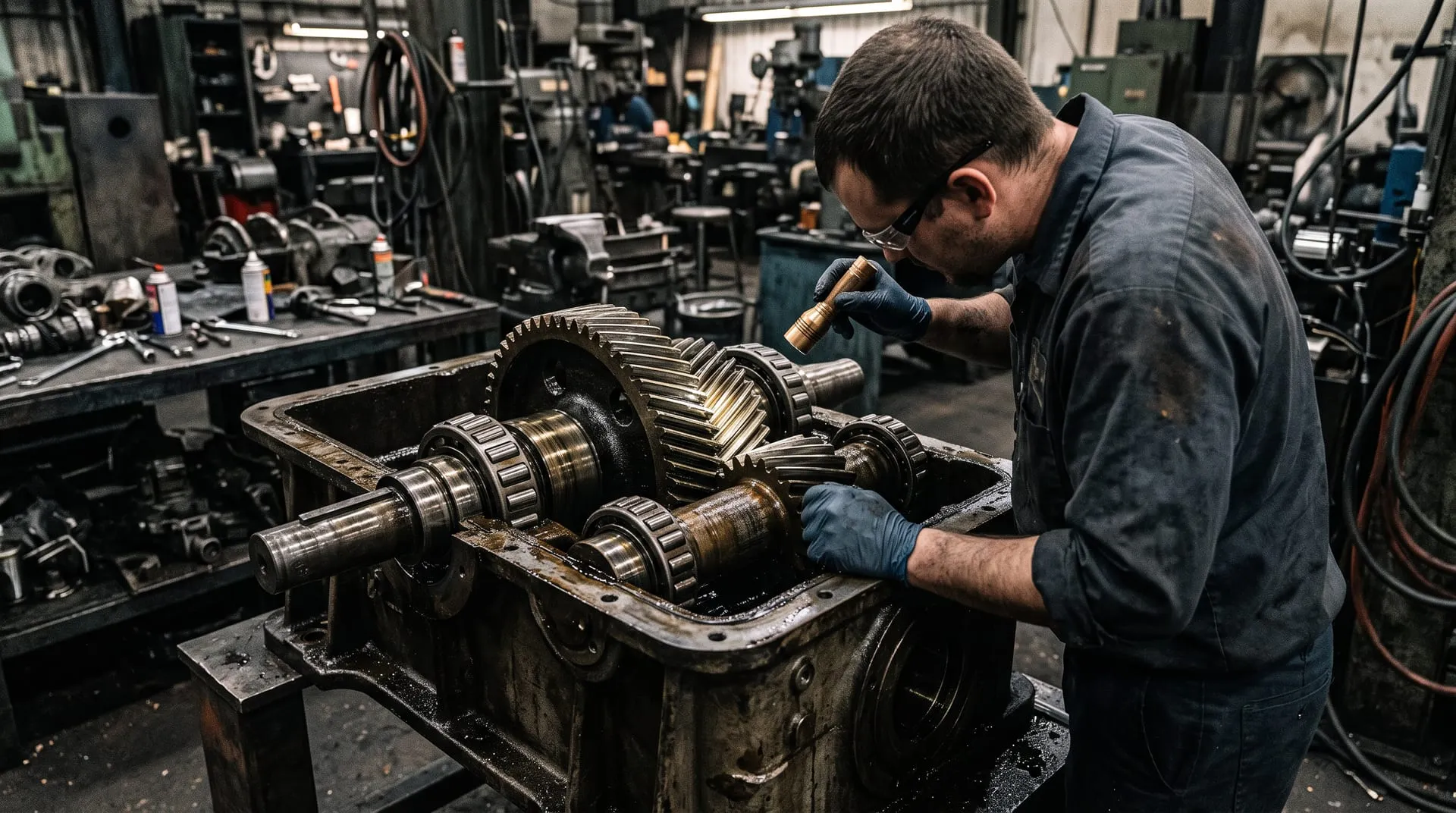
Rebuild an industrial gearbox when the housing is sound, the design still suits the load and parts can be sourced or machined. Replace it when the housing is cracked or distorted, the unit is undersized for the duty, or a rebuild would cost nearly as much as a new unit. In many plants, lead time decides it, because a rebuild often returns faster than a new gearbox ships.
Key takeaways
- Rebuild when the housing is sound and the wear is normal.
- Replace when the housing is cracked, the gears show overload damage or the duty has grown.
- Lead time often decides it. A rebuild can beat a new-unit delivery.
- Find the root cause first, or a new unit fails the same way.
When does rebuilding a gearbox make sense?
Rebuilding makes sense when the housing is intact, the gear set is reusable or repairable, and the gearbox has been doing its job well until it wore out. In that case you replace bearings, seals and worn parts, restore the bores and get a unit that fits your existing base, coupling and piping without changes.
When OEM parts are unavailable, a machine shop can reverse-engineer shafts, sleeves, covers and other components from the worn originals.
When should you replace a gearbox instead?
Replace a gearbox when the core of the unit is no longer worth saving or no longer fits the job. A cracked or distorted housing, a gear set that failed from overload, or a duty that has grown past the unit’s rating are all signs that a rebuild would only bring back the same problem.
Rebuild when
- The housing has no cracks and the bores can be restored to size
- Gear wear is normal, not a sign of overload or a design problem
- The OEM is slow, gone, or quoting long lead times
- The unit is custom or obsolete and a replacement would need a new base
- You want the same footprint, shaft heights and ratio
Replace when
- The housing is cracked, warped or has bores that cannot be restored
- Gears show overload damage such as broken teeth or heavy pitting across the set
- The process has changed and the gearbox is now undersized
- The rebuild quote, with new gears and shafts, comes close to a new unit
- You want to standardize on a model your plant already stocks spares for
How do rebuild and replacement compare?
The decision comes down to condition, cost, lead time and fit. The flow below shows the order most maintenance teams work through it, and the table sums up the trade-offs.
Fig. 1
| Factor | Rebuild | Replace |
|---|---|---|
| Cost | Usually lower when housing and gears are reusable | Higher upfront, predictable |
| Lead time | Often shorter, depends on parts | Depends on OEM stock, can be long for large or custom units |
| Fit | Same footprint, shafts and ratio | May need base, coupling or guard changes |
| Reliability | Matches new when done to spec | New, with warranty |
| Upgrade potential | Limited to materials and seals | Can change ratio, rating or design |
| Best for | Sound units with normal wear, obsolete or custom units | Damaged housings, overloaded units, changed duty |
What does a teardown inspection tell you?
A teardown inspection tells you what failed, why it failed and what it will take to fix. The gearbox is disassembled, cleaned and measured. Gears, bearings, shafts, seals and housing bores are checked against spec. The findings give you a parts list, a cost and a schedule, which is the information you need to decide.
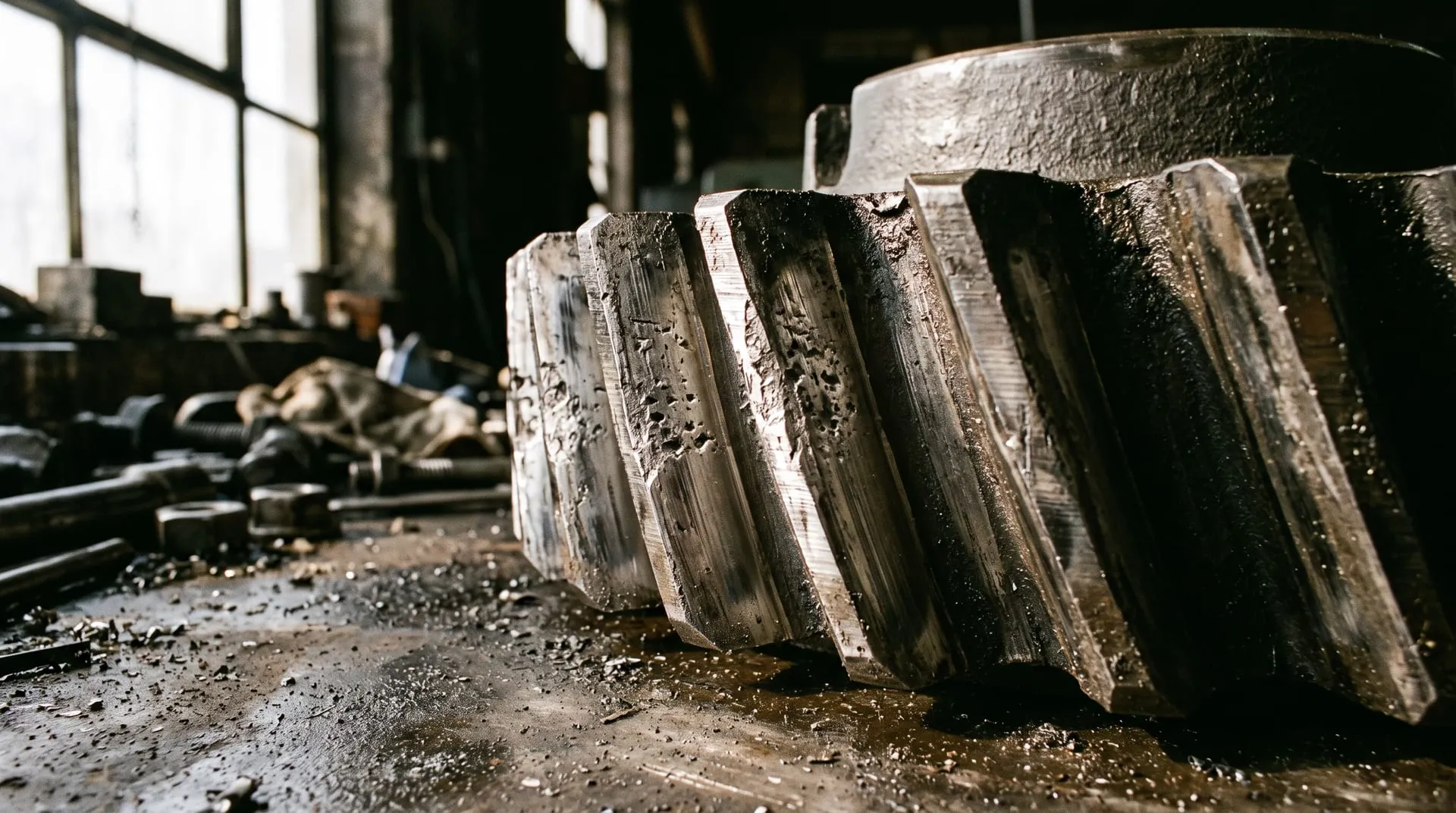
A useful teardown report covers:
- Failure mode. Wear, fatigue, overload, contamination or lubrication failure.
- Gear condition. Tooth contact pattern, pitting, spalling, scoring and broken teeth.
- Bearing condition. Type of damage and whether it points to misalignment or contamination.
- Housing and bores. Cracks, bore wear and fit measurements.
- Shafts. Runout, keyway damage and seal-surface wear.
- Recommendation. Rebuild scope, or a clear reason to replace.
What does a gearbox rebuild include?
A proper rebuild replaces all bearings and seals, restores worn bores and shafts, repairs or replaces damaged gears, and sets backlash and bearing preload to spec. After reassembly, the unit is checked for proper rotation and leaks, then installed and laser aligned to its motor and driven equipment.
Tear down and inspect
Disassemble, clean and measure every part, then write it up in a report.
Bearings and seals
Replace them throughout, not just the ones that failed.
Bores and shafts
Sleeve or machine worn bores. Repair shafts or machine new ones to print.
Gears
Replace the gear set when it is past limits.
Reassemble to spec
Set backlash and bearing preload, then check rotation and leaks.
Install and align
Set the unit and laser align it to the motor and driven equipment.
Is a retrofit a third option?
Yes. Sometimes the best answer is neither a straight rebuild nor a like-for-like replacement. A retrofit adapts a different gearbox to your existing base, or modifies the drive so a standard unit fits. That can solve lead-time problems and let you upgrade the drive without replacing the whole machine.
Equipment retrofitting typically involves base modifications, adapter plates, new couplings and careful alignment. Our Gary steel mill retrofit project is an example of retrofitting a system instead of replacing it outright.
What should you ask before you decide?
Ask about the housing, the gears, the root cause, lead time, fit, cost and duty. Those 7 questions cover nearly every rebuild-or-replace call. Answer them with the teardown report in hand, not from the outside of the housing.
Rebuild or replace: 7 questions
- Is the housing free of cracks and distortion?
- Do the gears show normal wear rather than overload damage?
- Has the root cause of the failure been identified?
- Is a new unit available inside your outage window?
- Will a new unit fit the existing base, shafts and coupling?
- Does the rebuild quote stay well below the price of a new unit?
- Has the duty changed since the gearbox was specified?
If the first 3 answers are yes and the rebuild quote stays well below a new unit, rebuild. A “no” on housing or gear condition, or a duty that has changed, points toward replacement. If a new unit is slow to arrive or will not fit the base, look at a retrofit.
Need a teardown and a straight answer?
Our crews pull, inspect and rebuild industrial gearboxes in our Portage shop, and machine the parts the OEM can no longer supply. See our gearbox rebuild service, or contact us with the make, model and what it is doing. Done right the first time.