
Industrial Equipment Installationin Northwest Indiana
Quick overview
Industrial equipment installation is the work of getting a machine from the truck to running production. SSI millwright crews rig and set the equipment, level and grout it, laser-align the drives, connect piping and mechanical systems, and commission it with your team across Northwest Indiana and Chicagoland.
What does an equipment installation include?
| Stage | What we do | What you get |
|---|---|---|
| Rigging & setting | Lift plans, rigging and moving the equipment into place | Equipment set where the drawings say |
| Leveling | Shim, level and set elevation to the anchor bolts | A flat and stable base |
| Grouting | Prepare the foundation and grout the base | Full support with no soft foot |
| Alignment | Laser alignment of motors and coupled drives | Drives aligned before first start |
| Mechanical tie-in | Piping, chutes, guards and supports fabricated and fitted | Equipment connected to the process |
| Commissioning | Run-in, checks and punch list with your team | A machine ready for production |
- Rigging in-houseOur crew plans and makes the lifts.
- Laser alignedDrives aligned before first start.
- Fabrication on handBrackets and piping built as needed.

How does an installation work?
Step 1: Plan
Review drawings, foundations, access and the lift plan.
Step 2: Rig & set
Move the equipment in and set it on the anchor bolts.
Step 3: Level & grout
Shim, level and grout the base so it can't move.
Step 4: Align & connect
Laser-align drives and tie in piping and supports.
Step 5: Commission
Run in with your team, check readings and close the punch list.
When to call us
When should you bring in an installation crew?
Call us early. The best installs are planned before the equipment ships.
- New equipment on order
- Line expansion or new process area
- Replacing a machine like for like
- Equipment coming from another plant
- In-house crew booked on production
- Install has to fit a shutdown window
What does a good installation look like?
A good installation is a machine that starts on the first try and keeps running. That means it is set on a sound foundation, leveled and grouted, free of pipe strain and aligned before first start. Most early failures on new equipment trace back to one of those steps being rushed.
Our millwright crews handle the whole job, from the truck to commissioning, so there is one contractor responsible for how the machine runs.
How do we rig and set equipment?
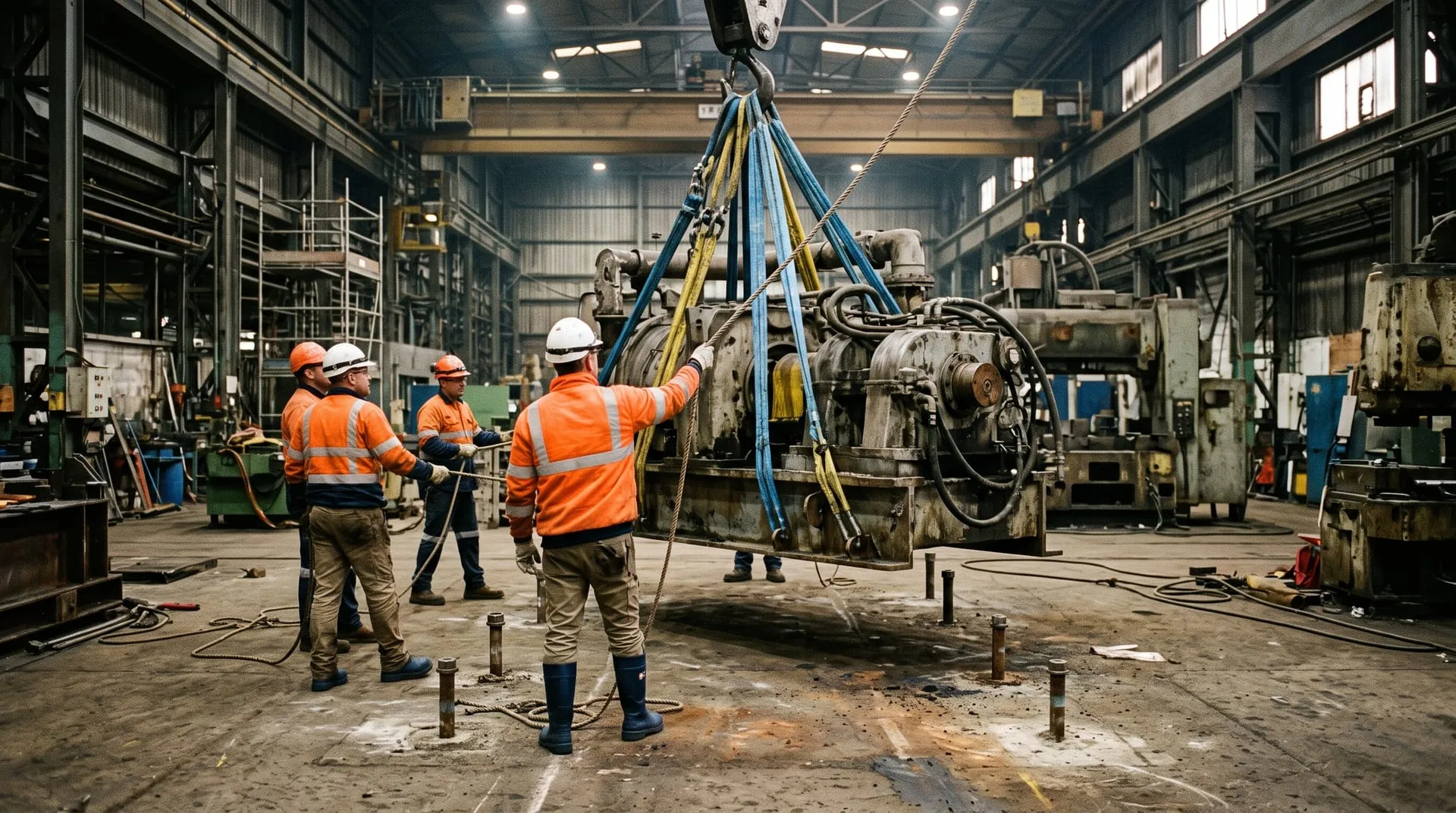
We rig and set equipment with a written lift plan that accounts for the weight, the pick points, the path into the building and anything overhead. Our crews do their own rigging. For tight access inside running plants, we plan the route in advance so the move doesn’t stop production around it.
Once the equipment is in place, we set it on the anchor bolts and bring it to elevation.
Why do leveling and grouting matter?
Leveling and grouting give the machine a stable base, and a stable base is what keeps an alignment from drifting. A base that rocks or flexes creates soft foot. Soft foot pulls the machine out of alignment every time it starts and stops.
We level to the drawings or OEM spec, then prepare the foundation and grout the base. After the grout cures, we check for soft foot before any alignment work begins.
What happens at alignment and tie-in?
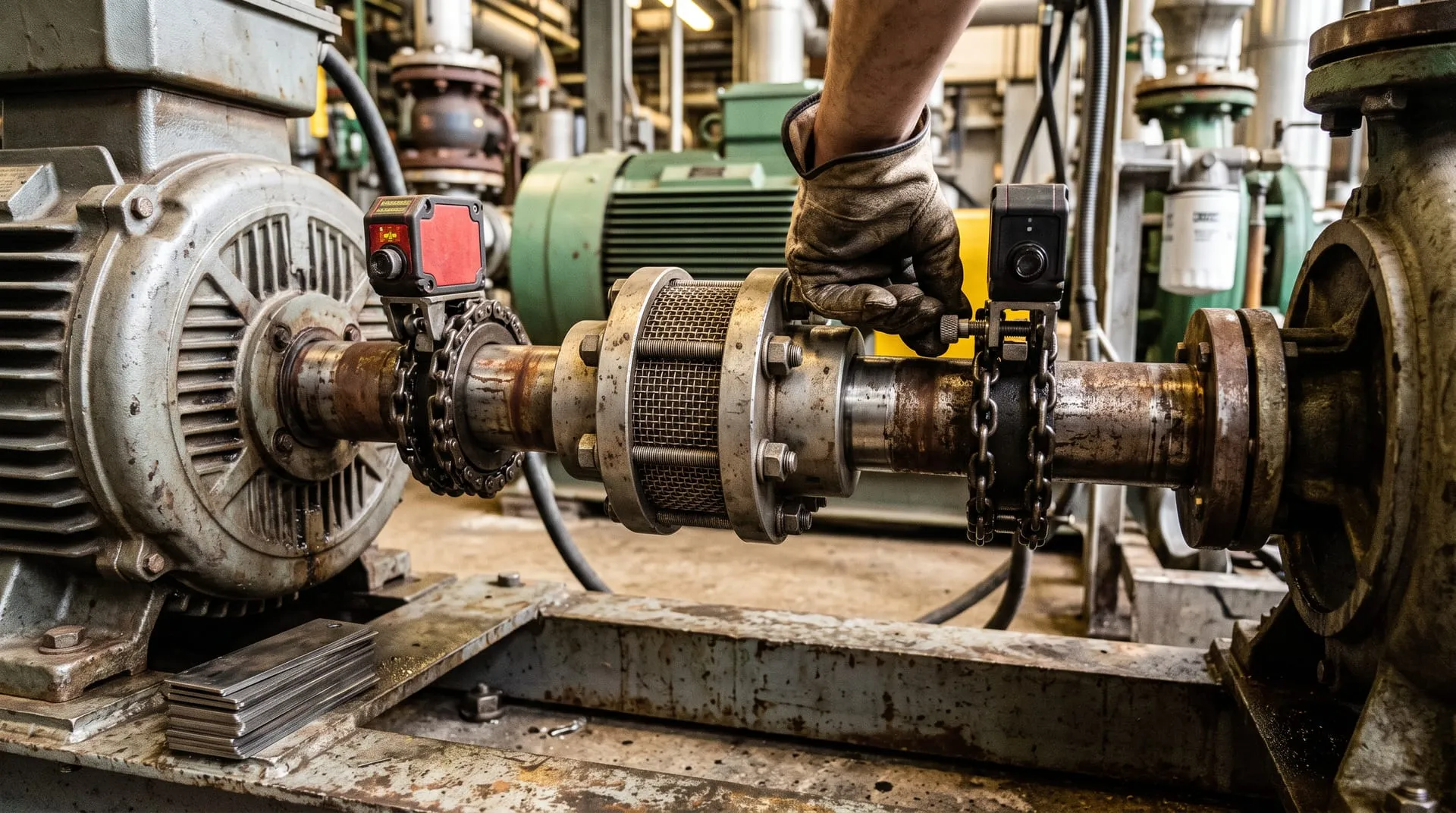
At alignment and tie-in, we connect the machine to the process and then align it. Order matters. Piping, chutes and supports go on first. Then we check for pipe strain, and then we run the laser alignment. Aligning before the piping is connected means the alignment gets pulled out the moment the flanges are bolted up.
| Step | Why it comes here |
|---|---|
| Set and level | Everything else depends on the base |
| Grout and cure | Locks in the level and support |
| Piping and supports | Connect the process without strain |
| Laser alignment | Final step, so it holds |
| Commissioning | Proves it under load |
When the install needs brackets, platforms, chutes or piping, our shop builds them. See fabrication and pipe fabrication.
How do we commission new equipment?
We commission with your operators and maintenance team. That means a run-in, checks of temperature, vibration and lubrication, and a punch list closed before we leave. Our crews can integrate Allen-Bradley controls, and we coordinate electrical tie-in with your electricians so the two trades finish together. See controls and automation.
Installations as part of bigger projects
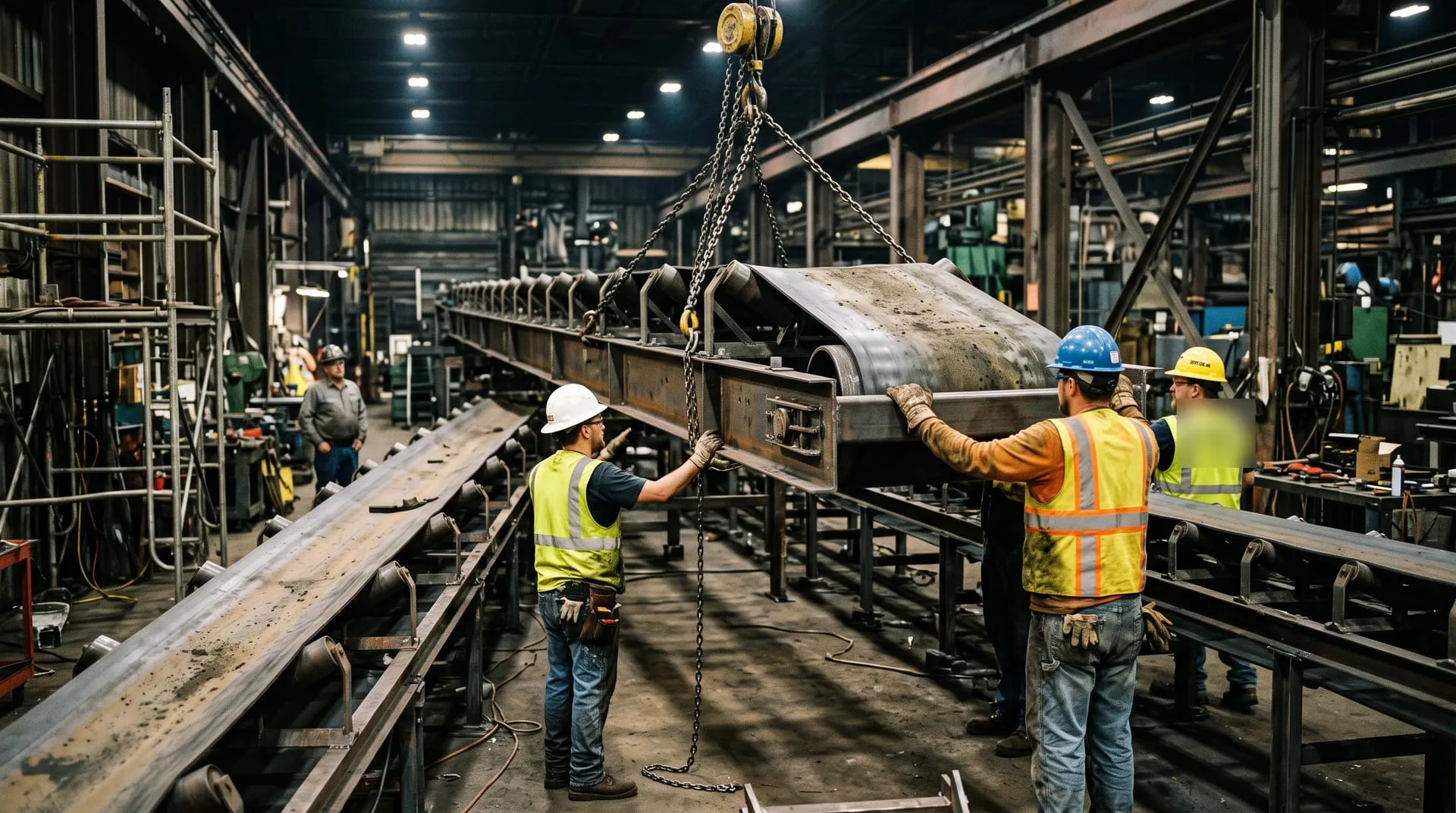
Many installs come with other work. New conveyor systems often go in with the equipment they feed. Equipment moving from another site goes through our plant relocation process. Older lines being upgraded may be a better fit for equipment retrofitting than a full replacement.
Our crews work from Portage across Northwest Indiana and Chicagoland. Every install starts with a job hazard analysis (JHA), and SSI is ISNetworld and Avetta prequalified. Send us the drawings and the date it needs to run.
Equipment Installation across the Region
Tell us about the equipment
Send the make, model and what you're seeing. A crew lead will call you back with next steps.
Start a requestCertified & prequalified
 ISNetworld
member contractor Avetta
prequalified AWS certified
welders
Equipment Installation FAQs
What types of equipment do you install?
We install presses, pumps, motors, gearboxes, fans, conveyors, mixers, material-handling systems and full production lines. That includes refractory presses and their handling equipment, mill equipment and food and process equipment. If it needs to be rigged, set, leveled and aligned, our millwrights can install it.
Why does grouting matter on an equipment install?
Grout fills the gap between the equipment base and the foundation so the machine is supported along its full length. Without it, a base can flex or rock, which causes soft foot, misalignment and vibration. Proper grouting gives the machine a stable base, so alignments hold and bearings last.
Do you align equipment during installation?
Yes. Every coupled drive we install gets a laser alignment before first start, after the base is leveled and grouted and piping is connected. Aligning at the end, once pipe strain is checked, is what makes the alignment hold. You get the before and after readings in writing.
How long does an installation take?
It depends on the size of the equipment, the foundation work, access and how much tie-in is needed. A single pump may take a day. A production line can take weeks. We give you a schedule after we review the drawings and walk the site, and we plan around your production.
How do you keep downtime low during an install?
We plan the install around your production schedule. Foundations, fabricated supports and piping spools are prepared ahead of time, so the equipment goes in during a short window. When an install needs a shutdown, we stage everything before the plant stops so the crew can start right away.
Do you handle electrical and controls during installation?
Our crews handle the mechanical installation and can integrate Allen-Bradley controls. Electrical connection is coordinated with your electricians or your electrical contractor. We work with them on the schedule so mechanical and electrical tie-in finish together and commissioning can start.
Can you fabricate supports, chutes or piping for the install?
Yes. Our shop fabricates structural supports, platforms, chutes, guards and process piping, and our field crews fit them on site. Having fabrication in-house means the small pieces that always come up during an install don't hold up the job.
Related services
All services

Request a equipment installation quote
Tell us what's running rough. We'll tell you how fast we can be there.