
Industrial Plant & Equipment Relocationin Northwest Indiana
Quick overview
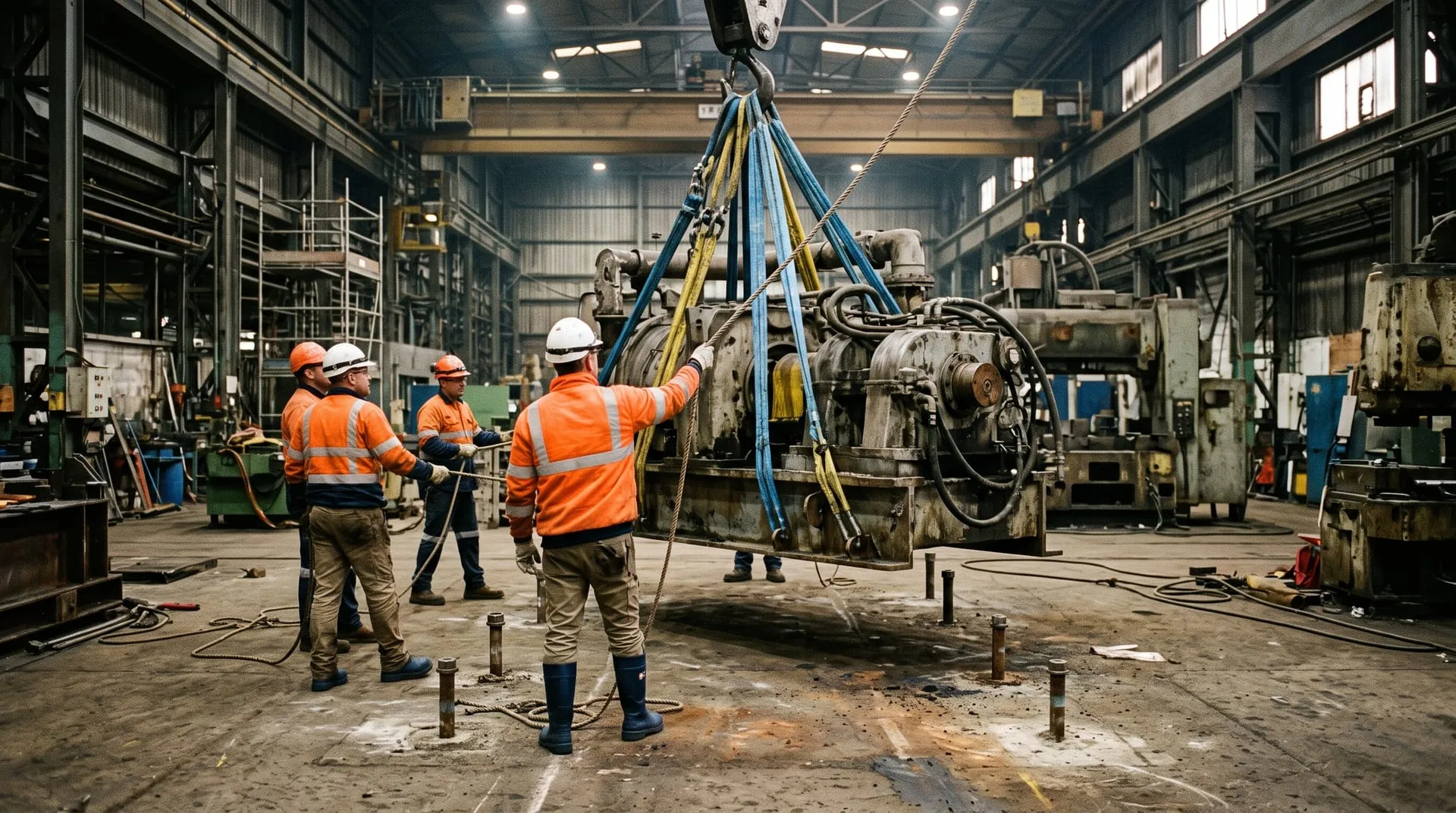
Plant relocation is moving production equipment from one location to another and getting it running again. SSI plans the move, decommissions and rigs the equipment, coordinates transport, then reinstalls, levels, laser-aligns and recommissions it, sequenced to keep your production downtime as short as possible.
What does a plant relocation include?
| Stage | What we do | What you get |
|---|---|---|
| Planning | Survey, sequence, lift plans and a schedule | A move plan built around production |
| Documentation | Match-mark, photograph and record settings before teardown | Equipment goes back together right |
| Decommissioning | Lock out, drain, disconnect and disassemble | Equipment safe to move |
| Rigging & moving | Rig, skid, load and coordinate transport | Equipment moved without damage |
| Reinstallation | Set, level, grout and reconnect | A solid base at the new site |
| Alignment & restart | Laser-align drives and recommission with your team | Production back up |
- Sequenced movesPlanned to cut downtime.
- Rigging in-houseOur crew handles the lifts.
- Aligned at the new siteDrives laser-aligned before restart.

How does a plant relocation work?
Step 1: Plan
Survey both sites, set the sequence and build lift plans.
Step 2: Document
Match-mark, photograph and record settings before anything comes apart.
Step 3: Decommission
Lock out, drain, disconnect and prepare for transport.
Step 4: Rig & move
Rig and load the equipment and coordinate the move.
Step 5: Reinstall
Set, level, grout and reconnect at the new location.
Step 6: Recommission
Laser-align, run in and hand over with readings.
Common reasons to move
When do plants relocate equipment?
We handle single machines, full lines and plant consolidations.
- Consolidating two plants into one
- Moving a line to a new building
- Re-laying out a production floor
- Moving equipment in or out of storage
- Bringing in used equipment from another site
- Moving equipment between states
What makes a plant relocation go well?
A plant relocation goes well when the planning is done before anything comes apart. Every hour spent documenting, sequencing and preparing the new site saves time when the equipment is down. The goal is simple: get the equipment from A to B and running again, with as little lost production as possible.
SSI handles both ends of the job. The crew that takes a machine apart is the crew that sets it back up, which removes the guesswork at the new site.
How do we plan a relocation?
We plan a relocation by surveying both sites, then building the sequence backward from the day production needs to run. The plan covers:
- What moves, and in what order. Critical equipment and long lead items come first.
- Downtime windows. What can be down, when, and for how long.
- The new site. Foundations, anchor bolts, utilities and access, ready before the move.
- Lift plans. Weights, pick points, rigging and the path out of one building and into the next.
- Transport. Coordinated with the carrier, including loading and blocking.
How do we take equipment apart for a move?
We take equipment apart so it can go back together right. Before anything is disconnected, our crew match-marks parts, takes photos, and records settings, shim packs and alignment readings. Then we lock out, drain fluids, disconnect utilities and process connections, and disassemble only as far as the move requires.
What happens at the new site?
At the new site, the equipment gets a full installation, not just a set-down:
| Step | What we do | Why it matters |
|---|---|---|
| Set | Rig the equipment onto its anchor bolts | Puts it where the layout says |
| Level and grout | Shim, level and grout the base | A stable base holds alignment |
| Reconnect | Piping, chutes, guards and supports | Ties it back into the process |
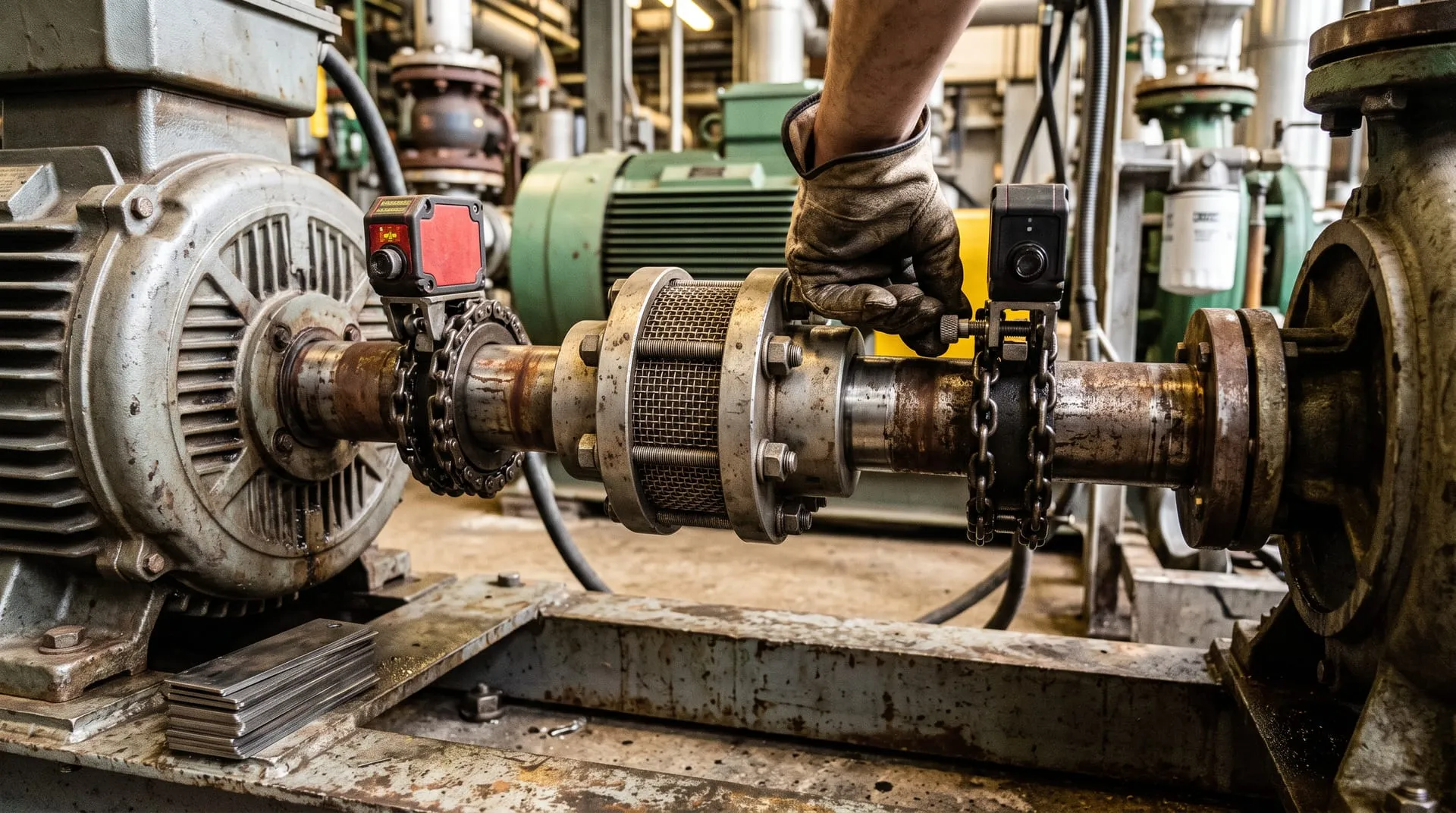
| Align | Laser alignment of every coupled drive | Moves always disturb alignment |
| Recommission | Run in with your team and record readings | Proves it before production |
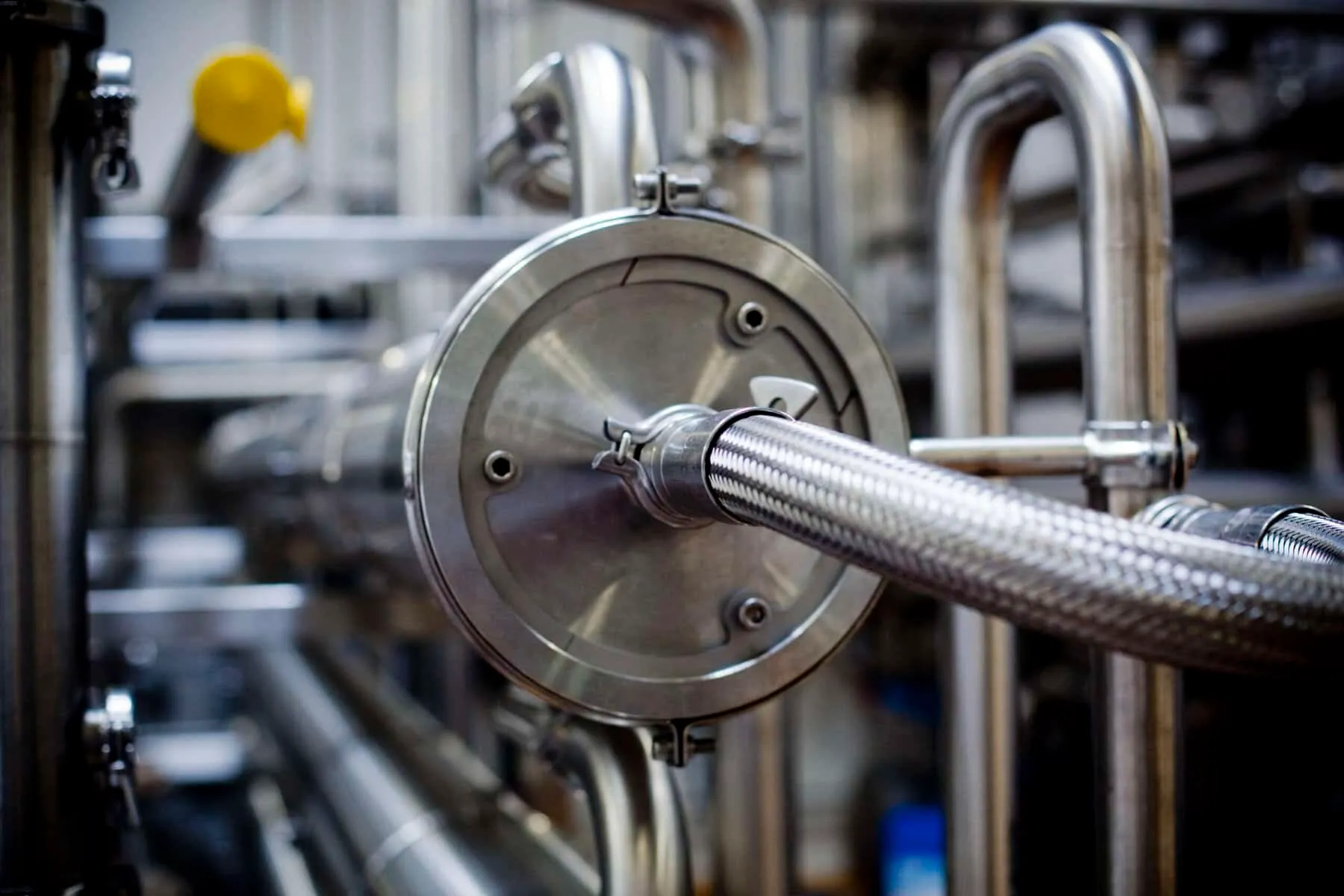
When reconnection needs new pieces, our shop builds them. See fabrication and pipe fabrication.
How do we keep downtime short?
We keep downtime short by preparing the new site before the old one shuts down, and by moving in phases when the plant allows. When a full line has to move at once, we stage crews at both ends. Documentation done up front cuts days of trial and error during reinstallation.
What about the equipment left behind?
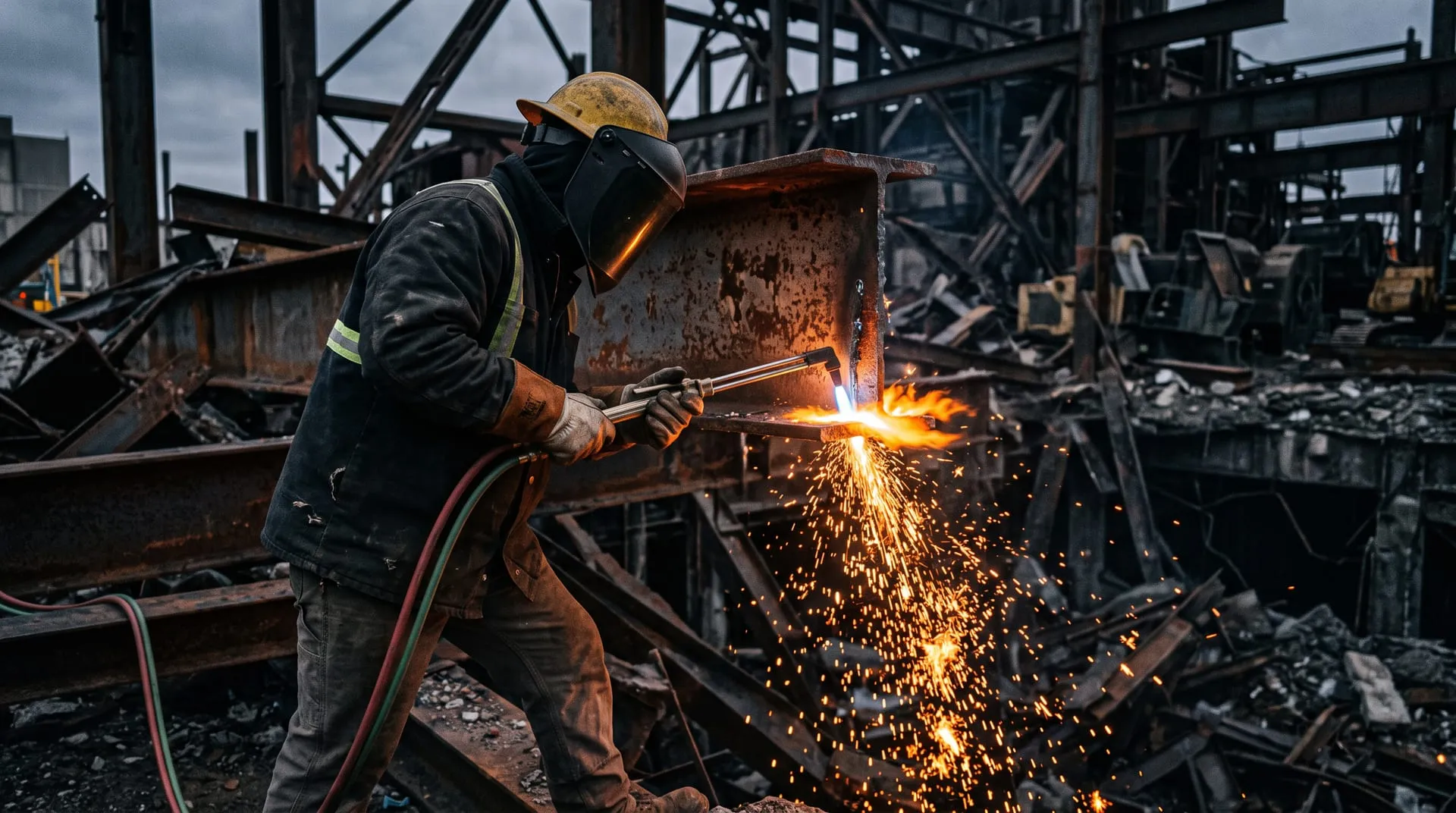
Most relocations leave something behind: old equipment, foundations, platforms or piping that has to come out. Our industrial demolition crews remove it safely, inside running plants when needed, under hot work permits and lockout/tagout.
Who does the work?
Our millwrights and riggers do the work, from our Portage shop. Every job starts with a job hazard analysis (JHA). SSI is an ISNetworld member contractor and Avetta prequalified. We serve Northwest Indiana, Chicagoland and customers in Arkansas. See our millwright services for the rest of what our crews do. No shortcuts, no excuses.
Plant Relocation across the Region
Tell us about the equipment
Send the make, model and what you're seeing. A crew lead will call you back with next steps.
Start a requestCertified & prequalified
 ISNetworld
member contractor Avetta
prequalified AWS certified
welders
Plant Relocation FAQs
What is included in a plant relocation?
A plant relocation includes planning the move, documenting the equipment, decommissioning and disconnecting it, rigging and loading it, coordinating transport, and reinstalling it at the new site. Reinstallation covers setting, leveling, grouting, reconnecting, laser alignment and recommissioning, so the equipment runs as well or better than before.
How long does a plant relocation take?
It depends on how much is moving, the distance, and the work needed at the new site. One machine can move in days. A full line or a plant consolidation takes longer and is usually done in phases. We build a schedule after surveying both sites and work it around your production.
How do you minimize downtime during a relocation?
We sequence the move so equipment is down for as short a time as possible. Foundations and utilities at the new site are prepared before anything moves. Lines are often moved in phases so part of the plant keeps running. Documentation before teardown speeds reinstallation.
Why does equipment need realignment after a move?
Moving equipment disturbs everything that held it in alignment: the base, the shims, the anchor bolts and the piping. A machine set on a new foundation is never in alignment by accident. We level and grout the base, check for soft foot and pipe strain, then laser-align every coupled drive before restart.
Do you handle plant consolidations?
Yes. Plant relocation and consolidation are part of our specialized services. Consolidation means moving equipment from one or more sites into one, often while both plants keep running. It takes careful sequencing, and we plan it with your production and engineering teams.
Can you remove equipment that isn't being moved?
Yes. Relocations often leave equipment behind that has to come out. Our industrial demolition crews remove old equipment, foundations and structure, torch-cut what can't be unbolted, and clear the space, all under your plant's hot work and lockout/tagout rules.
Do you move equipment outside Indiana?
Our crews work from Portage across Northwest Indiana and Chicagoland, including Joliet and Kankakee in Illinois, and we also serve customers in Arkansas. Tell us where the equipment is and where it is going, and we'll talk through what the job needs.
Related services
All services

Request a plant relocation quote
Tell us what's running rough. We'll tell you how fast we can be there.