
Industrial Preventive Maintenancein Northwest Indiana
Quick overview
Preventive maintenance (PM) is scheduled inspection and service that catches wear before it stops your line. SSI builds PM programs for plants across Northwest Indiana and Chicagoland, covering inspections, laser alignment and fan balancing checks, lubrication, high-wear part replacement and outage planning, with a written report after every visit.
What does a preventive maintenance program include?
| Task | What we do | What you get |
|---|---|---|
| Routine inspections | Check bearings, couplings, belts, guards and bases | Wear found before it fails |
| Alignment checks | Laser alignment of motors and coupled drives | Longer bearing and seal life |
| Balancing checks | Vibration readings and fan balancing | Smoother running and less vibration |
| Lubrication | Grease and oil routes, levels and condition | Less friction and heat |
| High-wear parts | Scheduled replacement of belts, liners, seals and bearings | Parts changed on your schedule |
| Outage planning | Scope, parts and crew lined up ahead of the shutdown | A shorter and more predictable outage |
- Built for your plantYour equipment and your schedule.
- Written reportsFindings and readings every visit.
- Same crew fixes itRepairs and rebuilds in-house.

How do we set up a PM program?
Step 1: Walk down
List your critical equipment, its history and what keeps failing.
Step 2: Schedule
Set inspection, alignment and lubrication intervals that fit production.
Step 3: Inspect & service
Our crew runs the route, takes readings and handles small fixes.
Step 4: Report
You get findings, readings and a list of what to fix and when.
Step 5: Plan the outage
Bigger repairs get scoped and staged for your next shutdown.
Signs you need a PM program
When does a plant need preventive maintenance?
If any of these sound familiar, your maintenance is running on breakdowns instead of a plan.
- The same machine keeps failing
- Vibration creeping up on fans or drives
- Bearings and seals failing early
- Outages run longer than planned
- Parts ordered only after something breaks
- Maintenance staff stretched thin
Why does preventive maintenance pay off?
Preventive maintenance pays off because a planned repair costs less than a breakdown. A bearing changed on a scheduled stop is a few hours of work. The same bearing failing at full load can take out a shaft, a coupling and a gearbox, and stop the line with it.
Most plants already know this. The trouble is time, and the fact that PM work is easy to put off until next week. Maintenance departments are stretched, and PM is the first thing that slips when the shift is short. That is where an outside crew helps. We run the routes, take the readings and write it up, so your people can focus on running the plant.
What do we check on a PM visit?
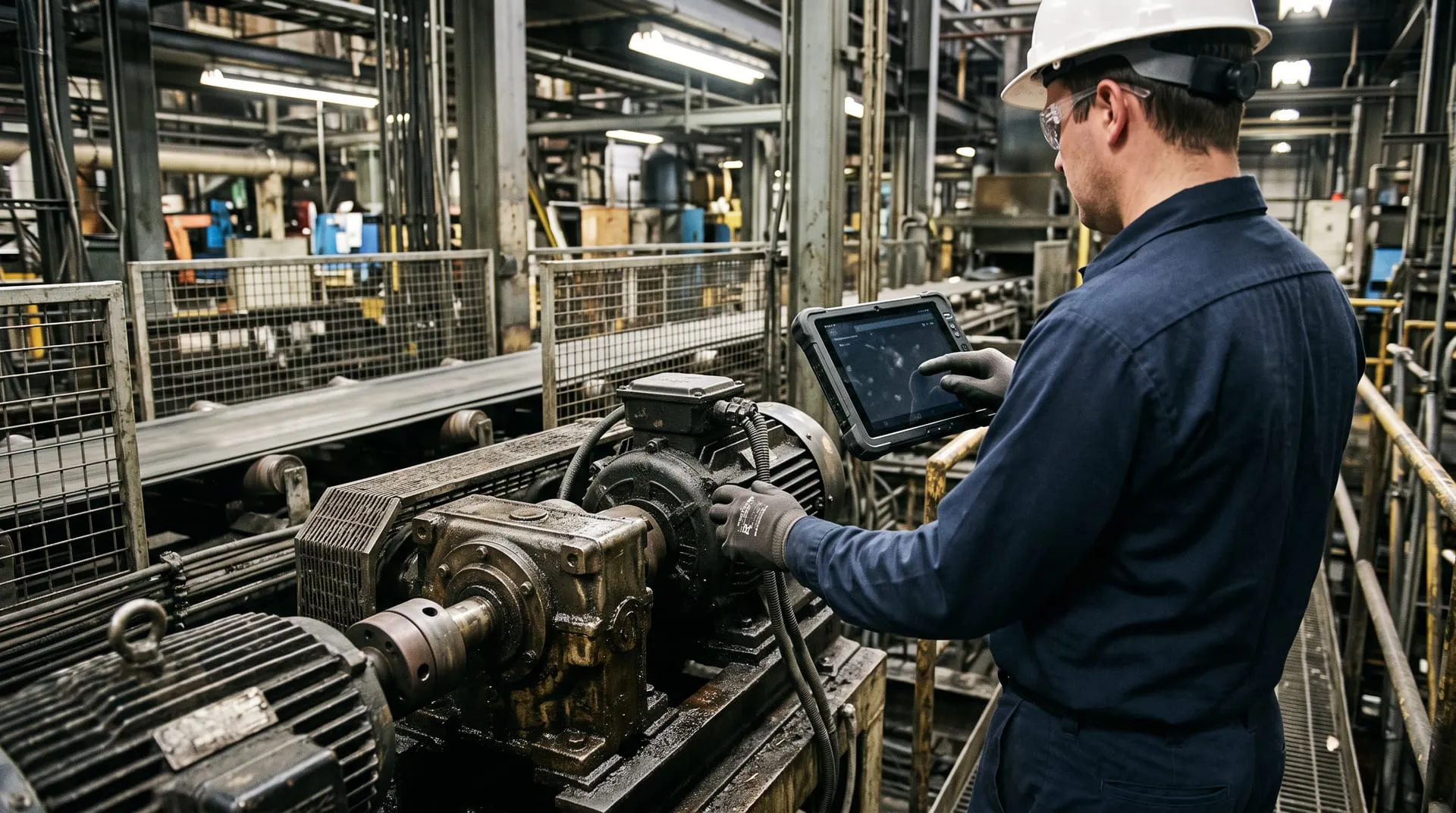
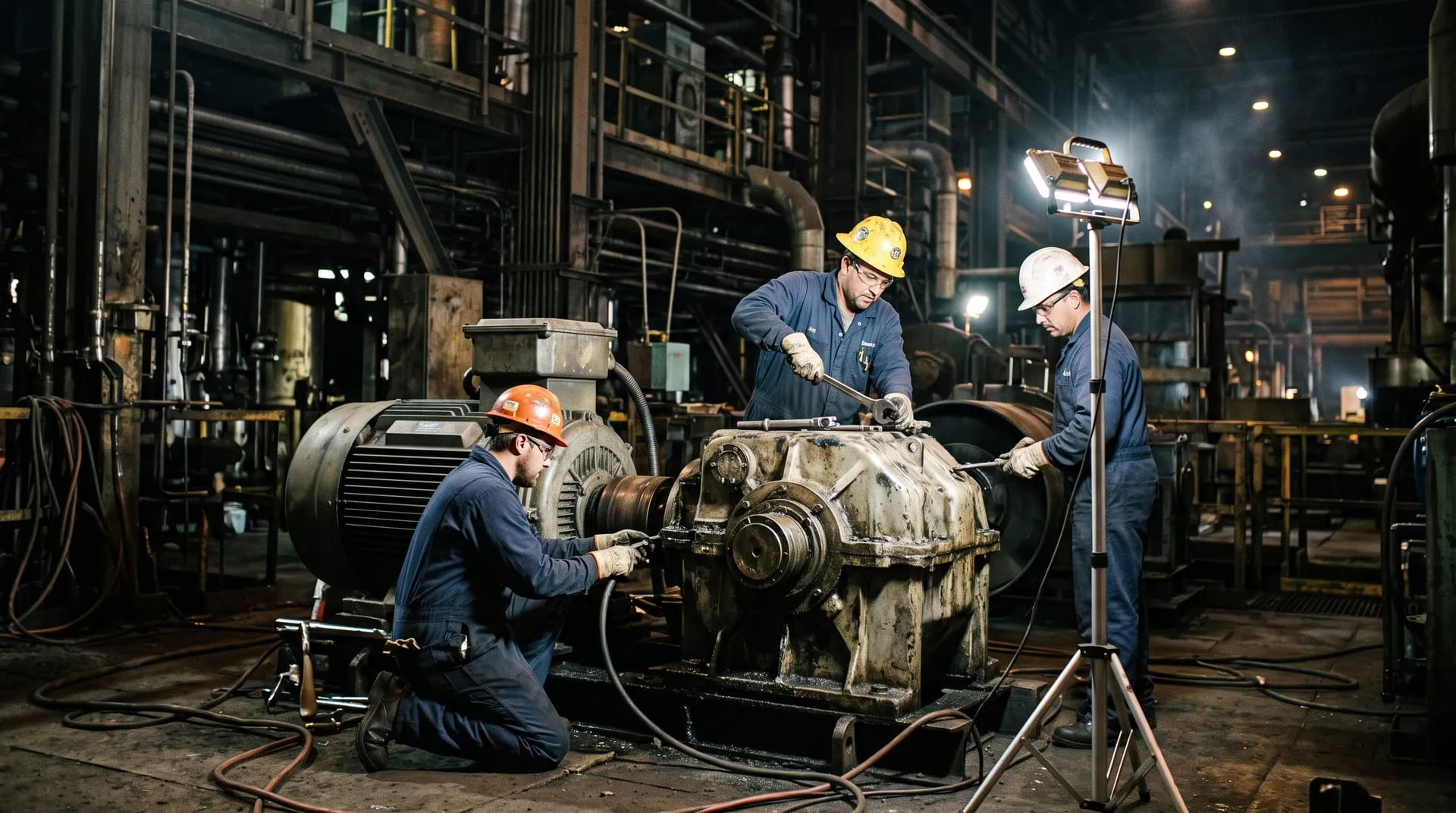
A PM visit covers the checks that catch the most common failures on rotating and material-handling equipment. The exact route depends on your plant, but a typical visit includes:
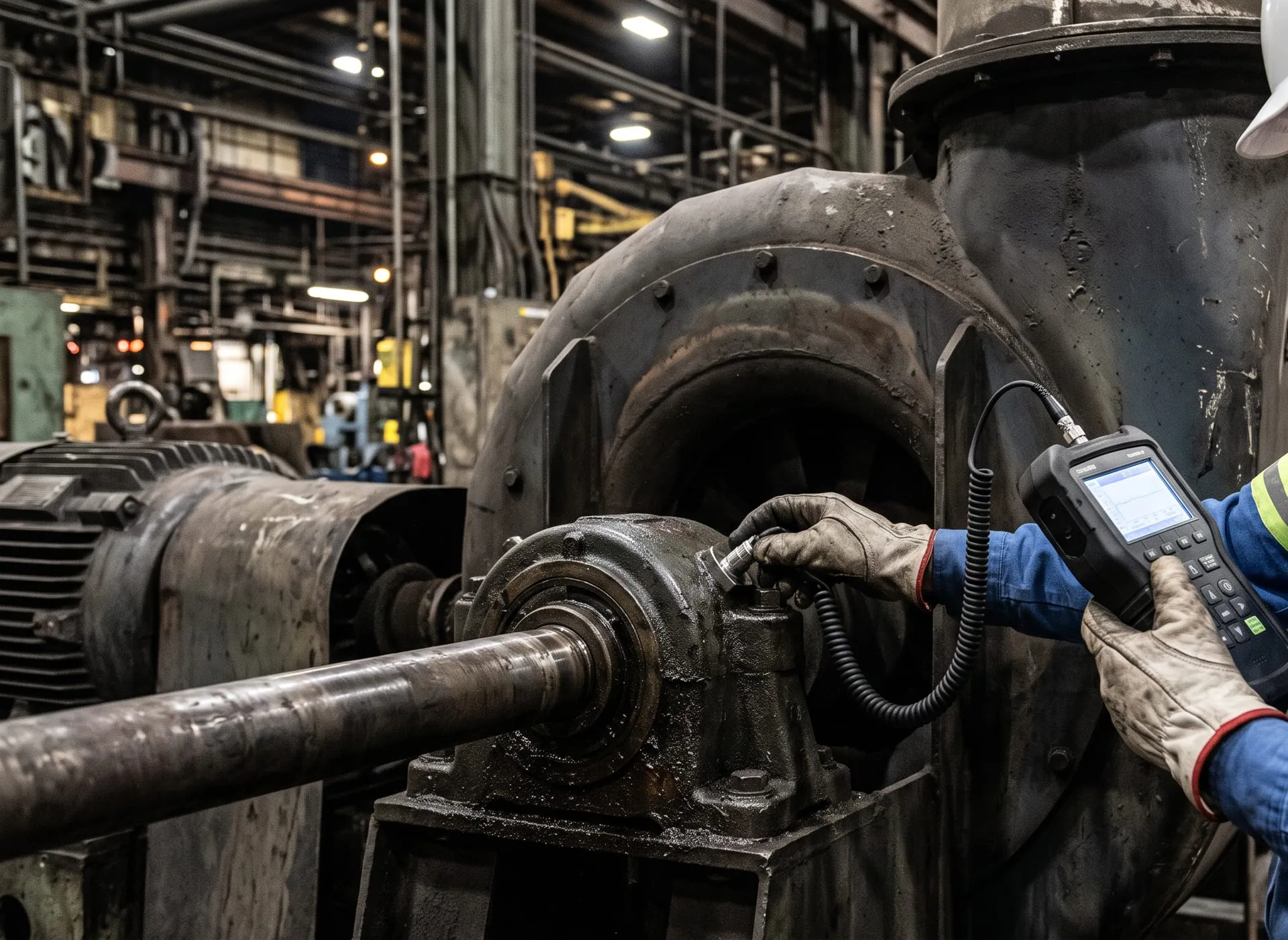
- Bearings and couplings: temperature, noise, vibration and visible wear.
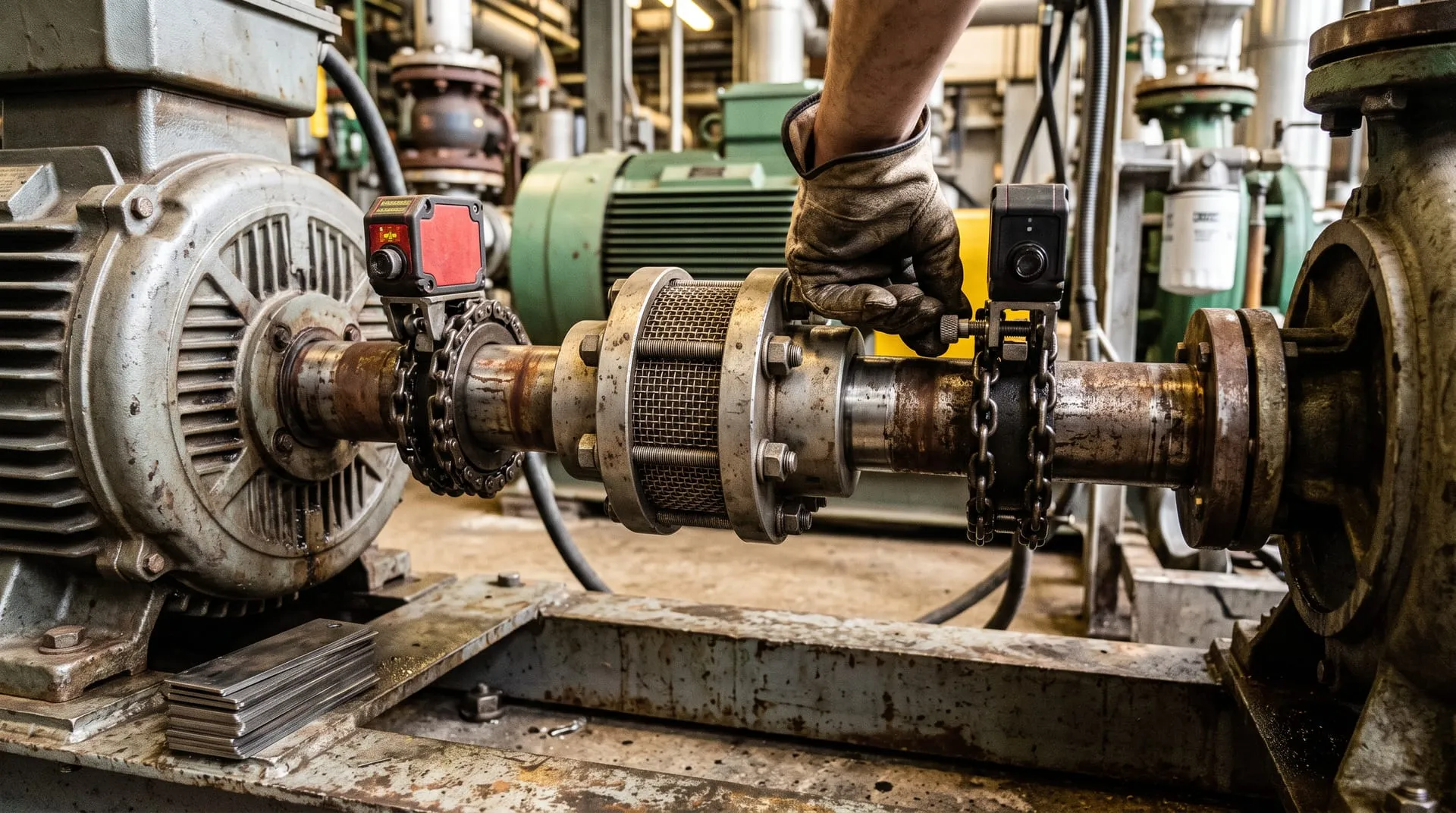
- Alignment: laser alignment checks on motor-to-gearbox and motor-to-pump drives.
- Balance: vibration readings and fan balancing when a fan is running rough.
- Lubrication: grease and oil routes, levels, condition and leaks.
- Belts, chains and conveyors: tension, tracking, wear and guarding.
- Bases and structure: soft foot, cracked welds, loose anchor bolts.
- Hydraulics: leaks, hose condition and pressure.
How often should each task happen?
How often depends on the equipment and the duty. The table below is general guidance only. We adjust it once we see your equipment history and operating conditions.
| Task | Typical interval (general guidance) | Also do it |
|---|---|---|
| Visual and vibration rounds | Monthly to quarterly | After any abnormal noise or heat |
| Laser alignment check | About every 12 months | After a motor, coupling or bearing change |
| Fan balance check | When vibration rises | After cleaning or blade repair |
| Lubrication | Per OEM schedule | Shorter in hot or dusty service |
| High-wear parts | Based on wear history | During planned outages |
How does PM tie into outage planning?
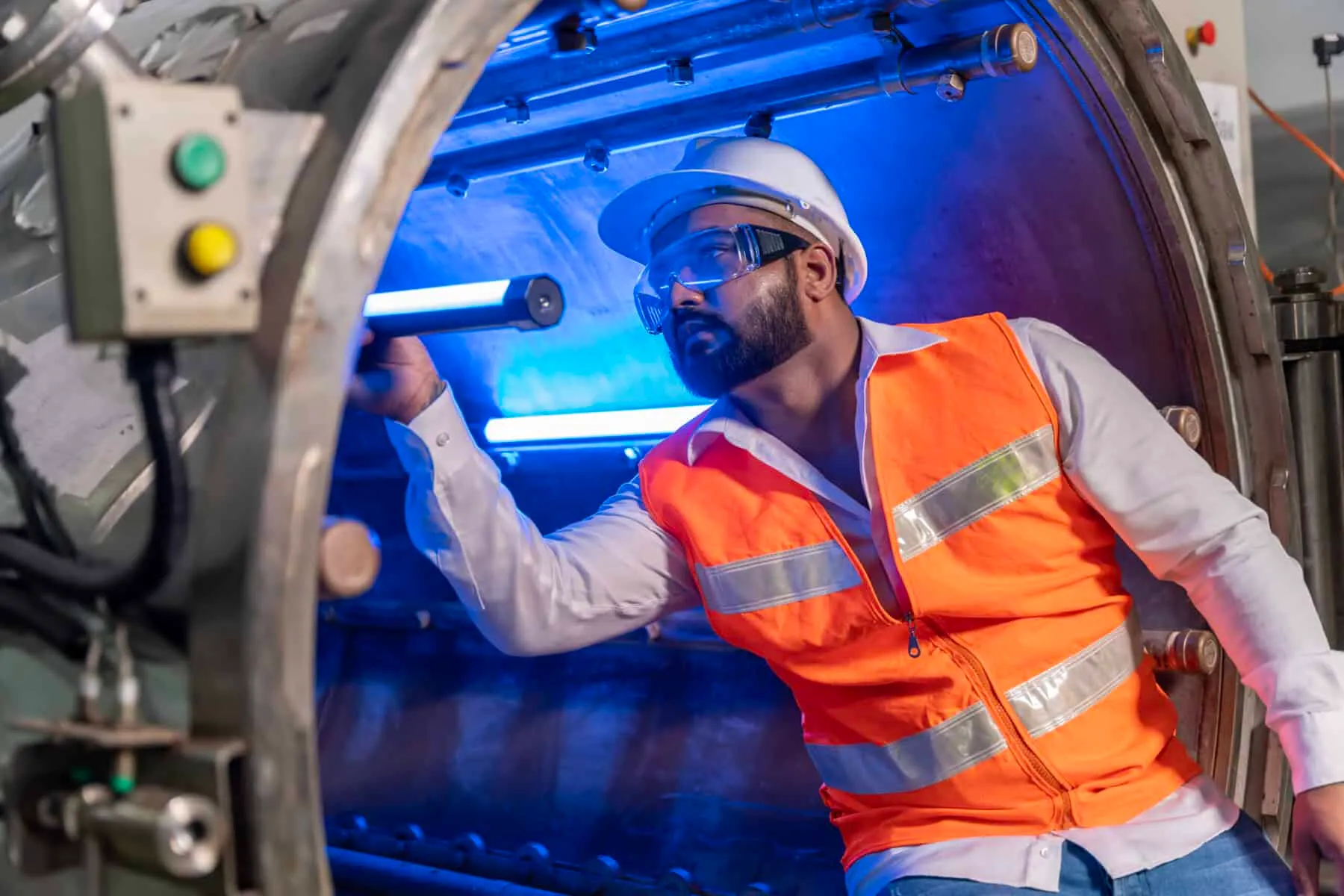
PM tells you what to fix at the next outage. Every report adds to a list of repairs that can wait for a shutdown but shouldn’t wait longer. We help you scope that list, line up parts and fabricated pieces ahead of time, and staff the crew. Outage work often includes roll changes, equipment rebuilds and structural repairs.
Staging work this way keeps the outage on schedule. Parts are on site. Lifts are planned. The crew knows the job before the plant goes down.
Who does the work?
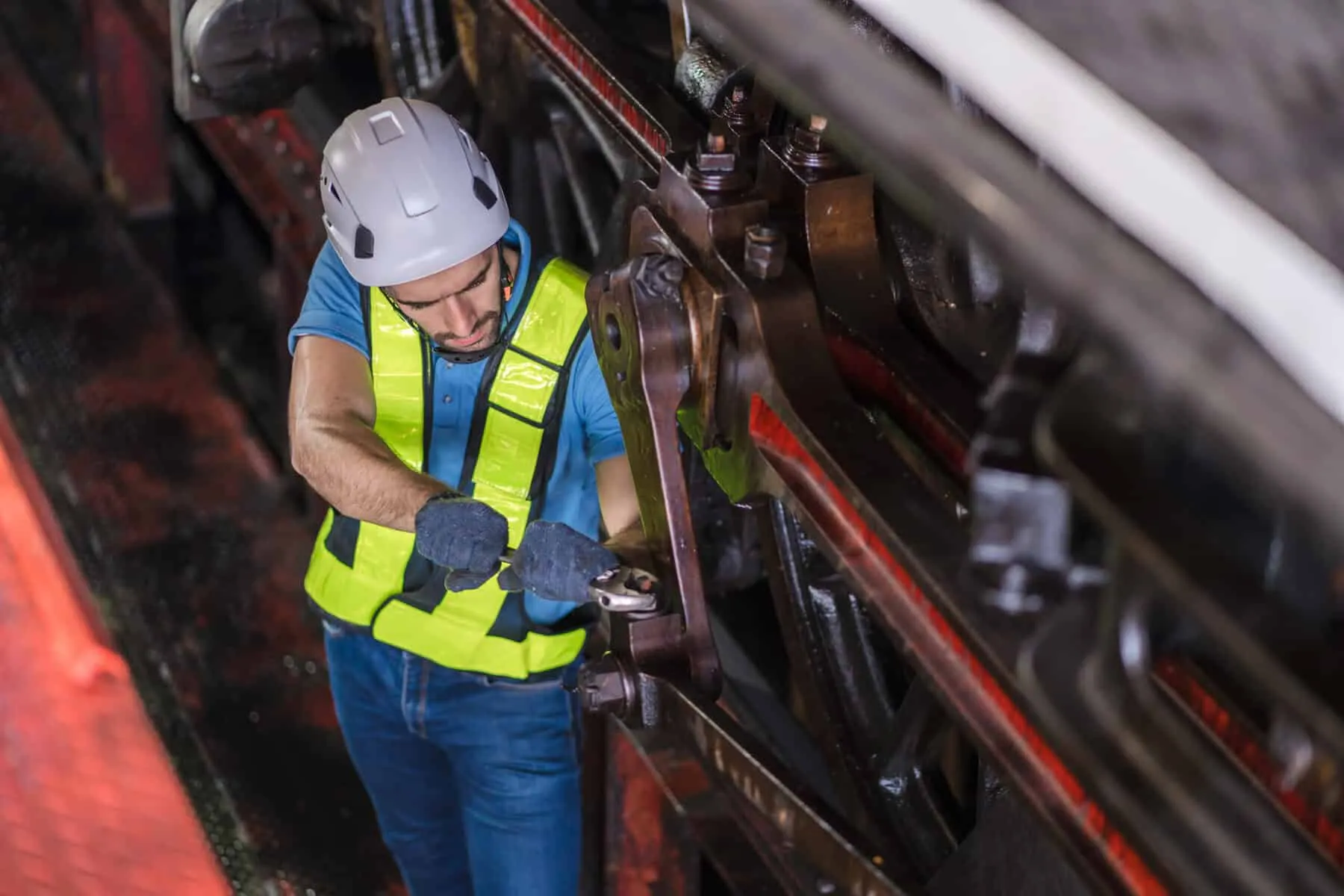
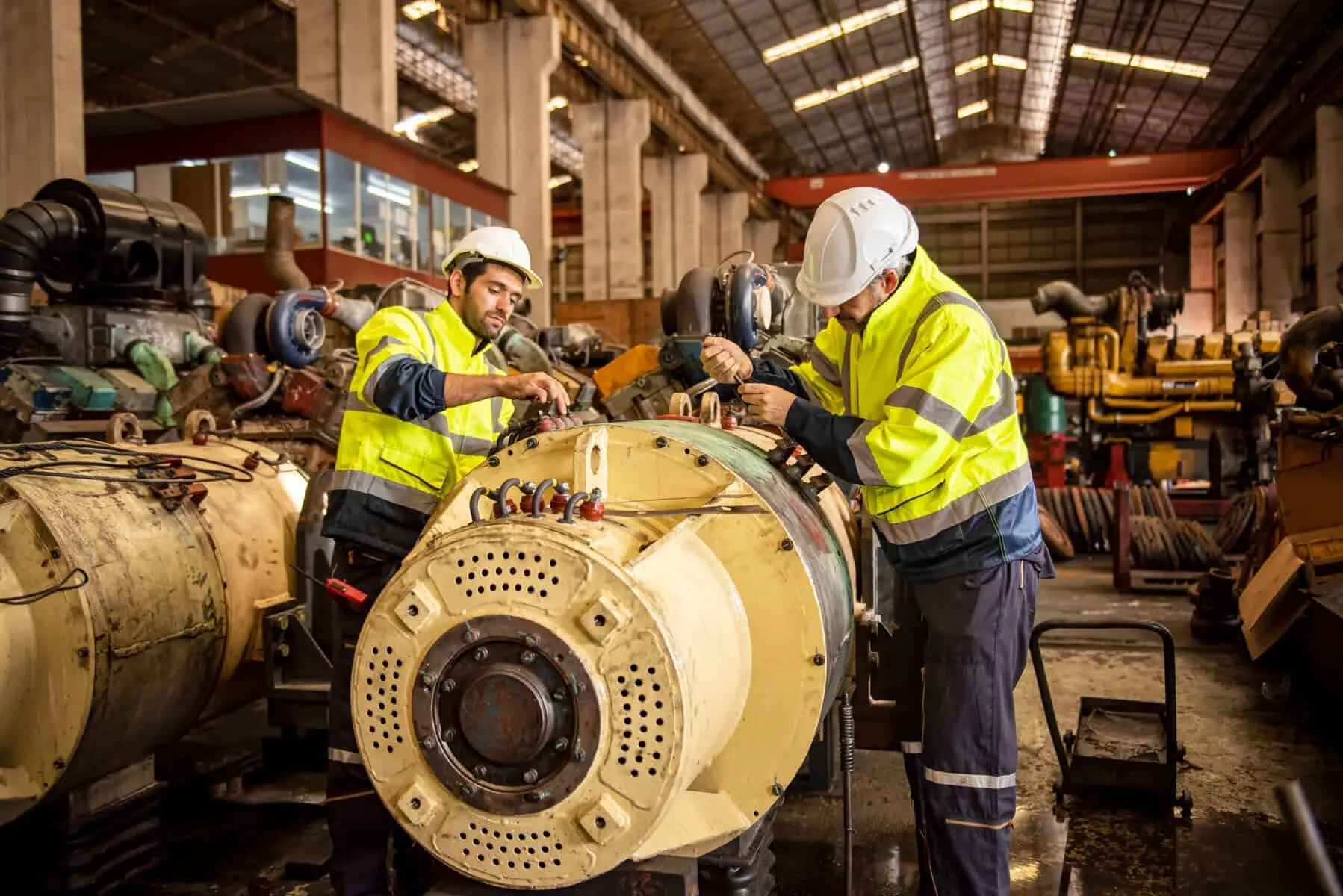
Our millwrights do the work, from our Portage shop. They know the equipment, because the same crews do our millwright services, rebuilds and emergency repair. Every visit starts with a job hazard analysis (JHA) and follows lockout/tagout. SSI is an ISNetworld member contractor and Avetta prequalified.
We serve steel, refractory, pulp and paper, food and beverage, chemical and power plants across Northwest Indiana and Chicagoland. Tell us which equipment keeps failing, and we’ll build the program around it. Done right the first time.
Preventive Maintenance across the Region
Tell us about the equipment
Send the make, model and what you're seeing. A crew lead will call you back with next steps.
Start a requestCertified & prequalified
 ISNetworld
member contractor Avetta
prequalified AWS certified
welders
Preventive Maintenance FAQs
What is industrial preventive maintenance?
Preventive maintenance is scheduled inspection and service done before equipment fails. It includes inspections, lubrication, alignment and balancing checks, and planned replacement of high-wear parts. The goal is to find wear while it is still cheap to fix and to make repairs on your schedule instead of the machine's.
How often should equipment be inspected?
It depends on the equipment, duty and environment. As general guidance, most plants check critical rotating equipment monthly or quarterly, align coupled drives about once a year and after any repair, and follow OEM lubrication intervals. Hot, dusty or high-load service usually needs shorter intervals. We set the schedule around your equipment history.
What is the difference between preventive and predictive maintenance?
Preventive maintenance is done on a schedule, whether or not a problem shows. Predictive maintenance uses readings like vibration and temperature to decide when to act. Most good programs blend both. We take readings during PM visits, so trends start showing up and you can act on them before a failure.
Can you build a PM program around our production schedule?
Yes. We plan inspection routes and service around your production, and we stage larger repairs for planned outages and turnarounds. Many tasks can be done with equipment running. Work that needs lockout is grouped so you take as few short stops as possible.
Do you provide reports after each visit?
Yes. After each visit you get a written report with what we inspected, the readings we took, what we fixed on the spot and what needs attention. Alignment and balancing work includes before and after readings. Reports give your maintenance and reliability teams a record for planning.
Can you help plan a shutdown or outage?
Yes. We help scope outage work, line up parts and fabricated components ahead of time, and staff the crew. Outage work often includes roll changes, rebuilds, alignment and structural repairs. Planning ahead is what keeps a shutdown from running long.
What happens when an inspection finds a problem?
Small fixes are often handled during the visit. Bigger problems get written up with a recommendation and a timeline. Because we rebuild gearboxes and pumps, machine parts and fabricate in-house, the same contractor that found the problem can fix it.
Related services
All services

Request a preventive maintenance quote
Tell us what's running rough. We'll tell you how fast we can be there.