
Laser Shaft Alignment Servicesin Northwest Indiana
Quick overview
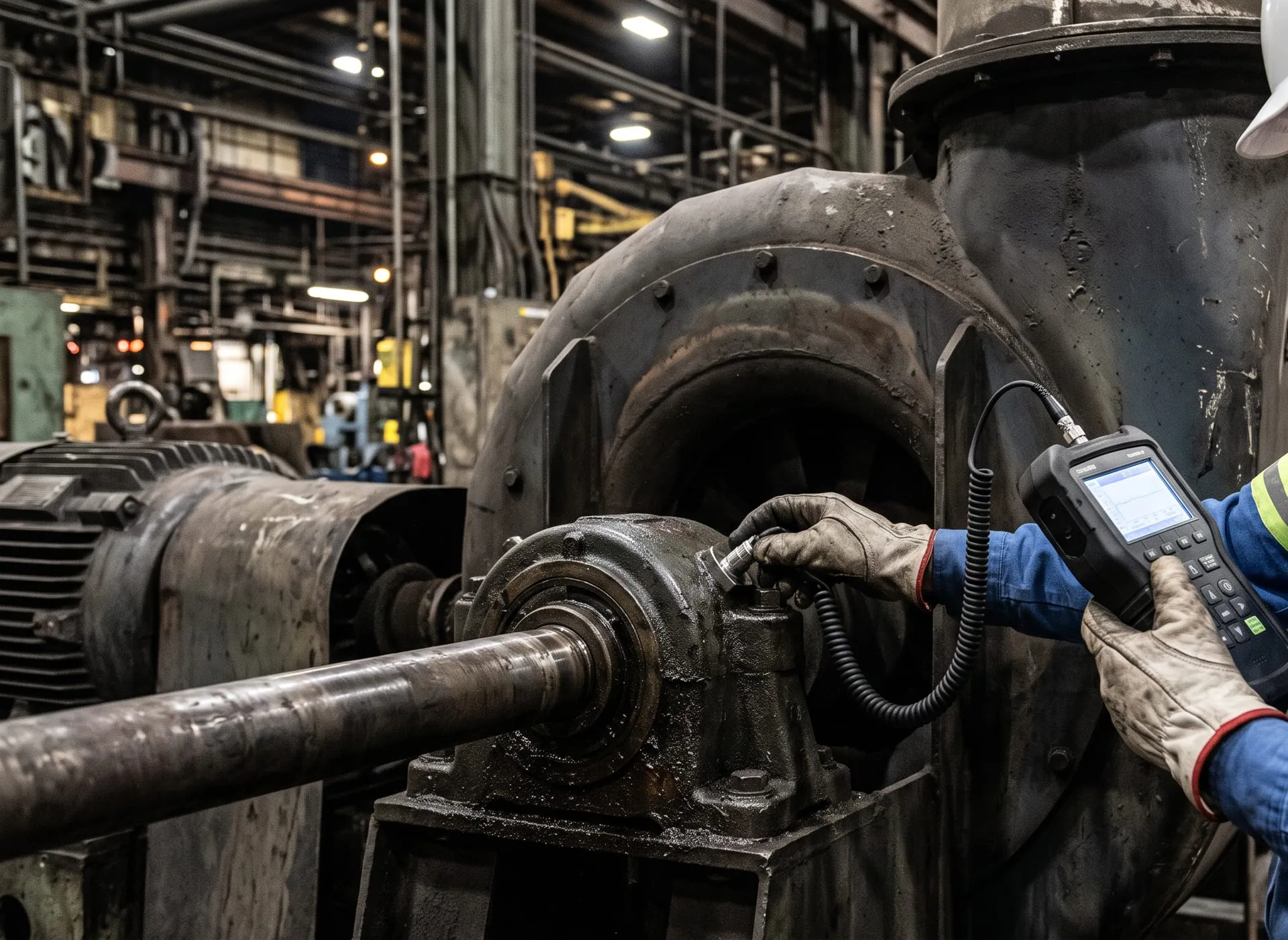
Laser shaft alignment lines up coupled shafts, like a motor and gearbox or a motor and pump, using a laser measuring system. SSI crews align motors, pumps, fans, gearboxes and belt drives on site across Northwest Indiana and leave you a written before-and-after report.
What does laser shaft alignment include?
| Equipment | What we align | What you get |
|---|---|---|
| Motors & gearboxes | Motor-to-reducer couplings and drive shafts | Less wear on bearings and seals, lower energy loss |
| Pumps | Motor-to-pump shafts | Longer seal and bearing life, better efficiency |
| Fans | Fan shafts, with balancing when needed | Smoother running and less vibration |
| Belt & pulley drives | Sheave and belt alignment | Less belt and sheave wear |
| Conveyor drives | Drive motor, reducer and head shaft | Fewer unplanned stops on the line |
- ToleranceOEM spec or your plant standard.
- On siteOur crew, our laser system.
- Written reportBefore and after readings.

How does a laser alignment work?
Step 1: Inspect
Check the machine, base and coupling. Record vibration and visible wear.
Step 2: Pre-alignment checks
Correct soft foot, pipe strain and runout before measuring.
Step 3: Laser measurement
Mount the laser system and measure offset and angularity.
Step 4: Correct
Shim and move the machine until it is inside spec.
Step 5: Verify & report
Take final readings and hand you a written report.
Signs of misalignment
When do you need a shaft alignment?
Check critical equipment once a year, and any time you see one of these.
- Excessive vibration
- Bearings failing early
- Seal leaks
- Hot couplings or bearings
- Rising energy use
- After a motor, coupling or rebuild
Why does shaft alignment matter?
Misalignment is one of the most common causes of early bearing, seal and coupling failure on rotating equipment. When two shafts run off-center or at an angle, the coupling forces them back into line on every revolution. That load goes straight into the bearings and seals, and it shows up as vibration, heat and wasted power.
A laser alignment corrects that at the source. On a typical motor-to-gearbox or motor-to-pump drive, our crew:
- checks for soft foot, pipe strain and shaft runout first, because aligning a machine that rocks on its base doesn’t hold;
- measures offset and angularity in both the vertical and horizontal planes;
- shims and moves the machine to bring it inside OEM tolerance or your plant standard;
- records final readings in a written report for your maintenance files.
Laser alignment vs. dial indicators
| Laser alignment | Dial indicators | |
|---|---|---|
| Setup time | Fast | Slower, brackets and sag checks |
| Long spans | Handles well | Bracket sag adds error |
| Corrections | Calculated by the system | Calculated by hand |
| When we use it | Most coupled drives | Verification, special cases |
Alignment as part of a bigger job
Alignment is rarely a one-off. We pair it with equipment rebuilds, fan balancing and preventive maintenance so the machine that leaves our hands runs smoothly and stays that way. Done right the first time.
Laser Shaft Alignment across the Region
Certified & prequalified
 ISNetworld
member contractor Avetta
prequalified AWS certified
welders
Laser Shaft Alignment FAQs
What is laser shaft alignment?
Laser shaft alignment is a method of lining up the centerlines of two coupled rotating shafts, such as a motor and a gearbox, using laser emitters and detectors mounted on each shaft. It measures offset and angularity far more precisely than a straightedge and is faster to set up than dial indicators.
How often should industrial equipment be laser aligned?
Most critical equipment should have an alignment check every 12 months, and after any motor, coupling or bearing replacement. Machines on soft or shifting foundations, or that run hot, often need checks more often. We can build alignment checks into a preventive maintenance schedule.
How do I know if my equipment is misaligned?
Common signs are high vibration, bearings or seals that fail early, couplings that wear or run hot, oil leaks at seals, and rising energy use. If you see any of these on a coupled drive, an alignment check is one of the cheapest ways to rule out the cause.
What equipment do you align?
We align motors and gearboxes, motor-to-pump drives, fans, belt and pulley drives, conveyor drives and other coupled rotating equipment. We work on all makes and models, in the field or in our Portage shop.
Do you provide an alignment report?
Yes. You get a written report with the before and after readings for each machine we align, so maintenance and reliability teams have a record for their files and the next PM cycle.
Can you align equipment during a planned outage or shutdown?
Yes. Most alignment work is scheduled into outages and turnarounds so it fits your production plan. If a machine is running rough now, call (219) 386-1506 and we will tell you how fast a crew can get there.
What is the difference between laser and dial indicator alignment?
Both measure shaft offset and angularity. Laser systems take readings faster, handle longer spans without bracket sag, and calculate the shim and move corrections for you. Dial indicators still work well, and we use them to verify readings when the job calls for it.
Can you also rebuild the equipment if alignment is not the problem?
Yes. If an alignment check points to worn bearings, a damaged gearbox or a failing pump, our crews rebuild it in-house and machine any parts that are no longer available, so one contractor carries the job to restart.
Related services
All servicesEquipment Rebuilds
Gearboxes, pumps, fans and presses rebuilt to spec.
Fan Rebuilds & Balancing
Fans balanced in place or in the shop, rebuilt and aligned.

Preventive Maintenance
Inspections, alignment and outage plans that cut breakdowns.
Millwright Services
Rigging, setting, alignment, installs and outage work.

Request a laser shaft alignment quote
Tell us what's running rough. We'll tell you how fast we can be there.