
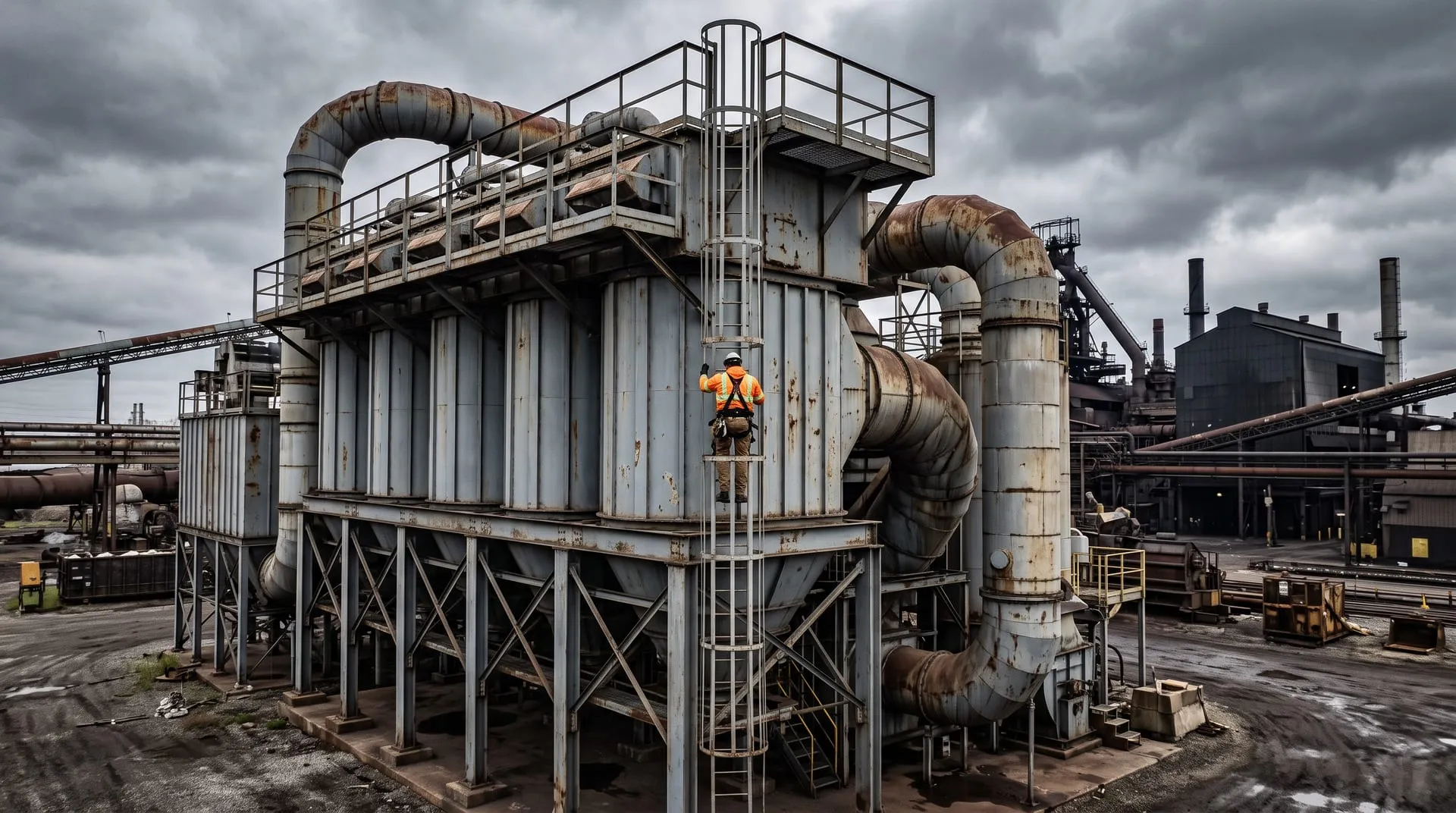
Baghouse & Dust Collection Maintenance and Repairin Northwest Indiana
Quick overview
SSI maintains and repairs baghouses and dust collectors for plants across Northwest Indiana and Chicagoland. Our crews change filter bags and cages, repair pulse-jet and reverse-air cleaning systems, find leaks, fix hoppers, airlocks, fans and ductwork, and document the work so your environmental team has a record. The goal is a collector that performs the way your air permit assumes it does.
What does baghouse maintenance and repair include?
| Component | What we do | What you get |
|---|---|---|
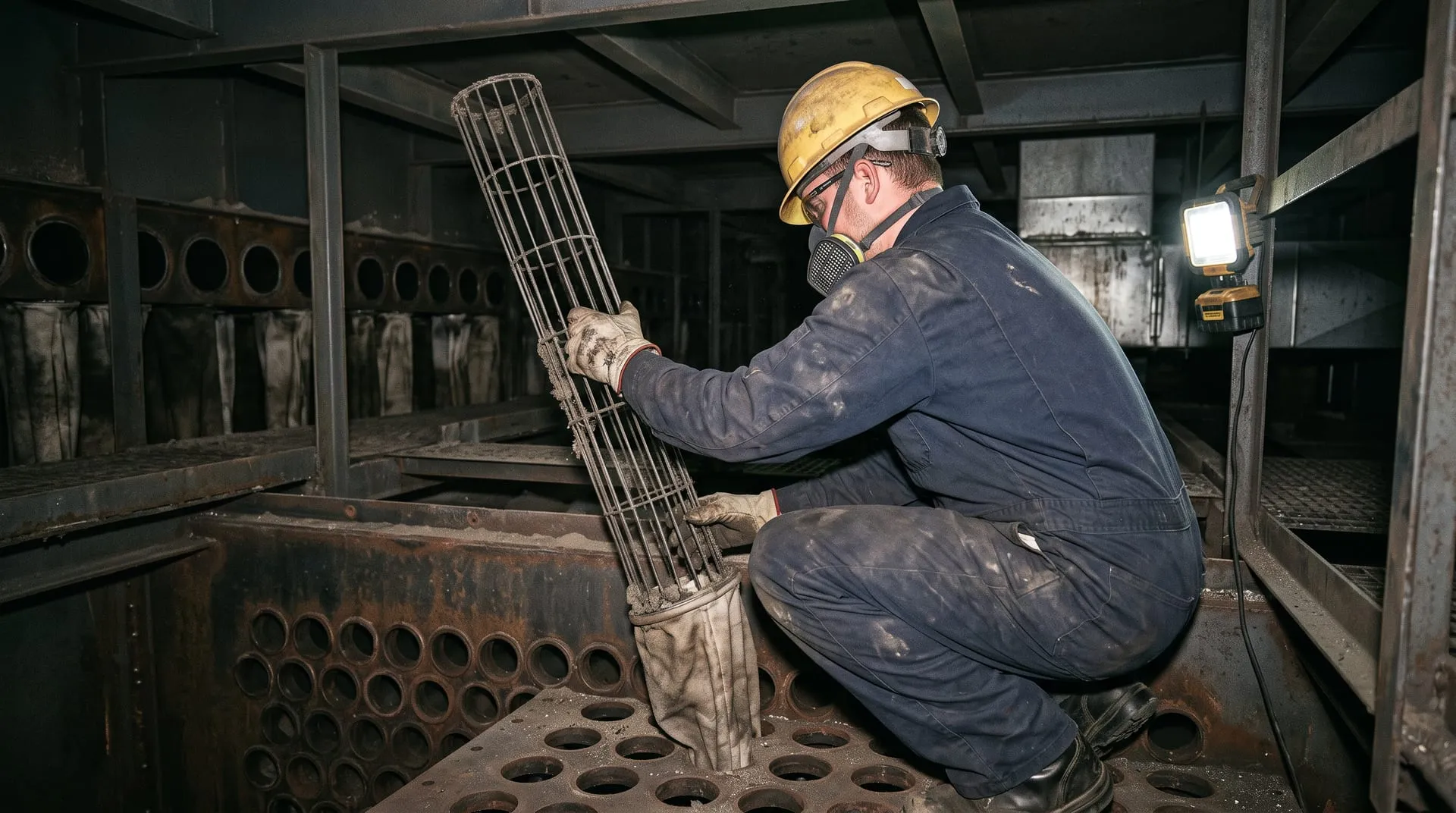
| Filter bags & cages | Full or partial changeouts, cage inspection and replacement, proper seating at the tubesheet | Restored airflow and filtration, fewer bypass leaks |
| Pulse-jet & reverse-air cleaning | Solenoids, diaphragm valves, headers, blowpipes, timers and reverse-air dampers | Bags that clean on cycle and a stable pressure drop |
| Hoppers & airlocks | Rotary valve rebuilds, hopper wall repair, screw conveyors and level devices | Dust leaves the hopper instead of building up |
| Leak detection | Fluorescent powder testing and visual inspection of bags, tubesheets and door seals | Leaks found and fixed at the source |
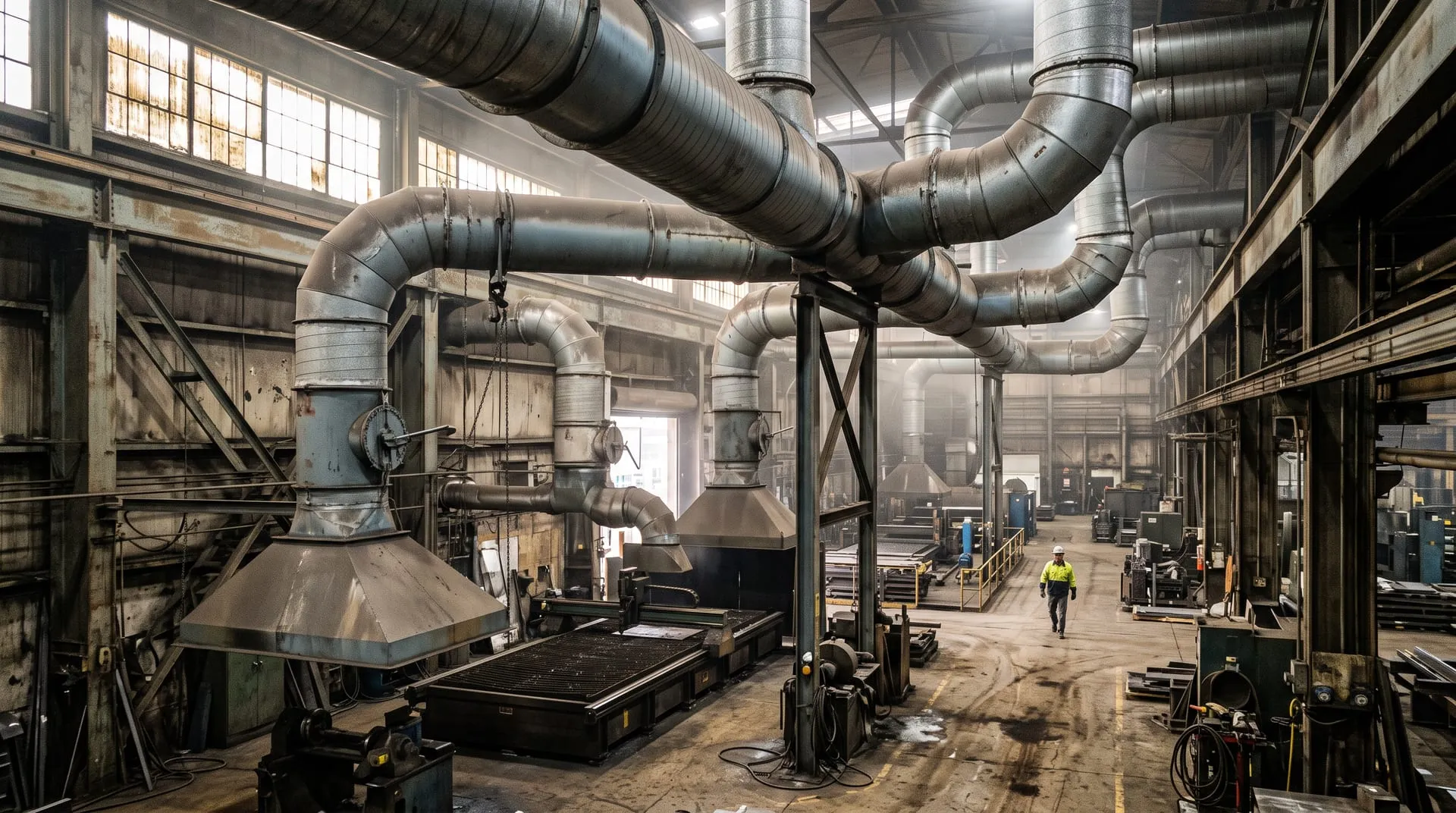
| Ductwork & hoods | Patching, replacing worn elbows, new runs fabricated in our shop | Capture at the hood and no holes leaking air |
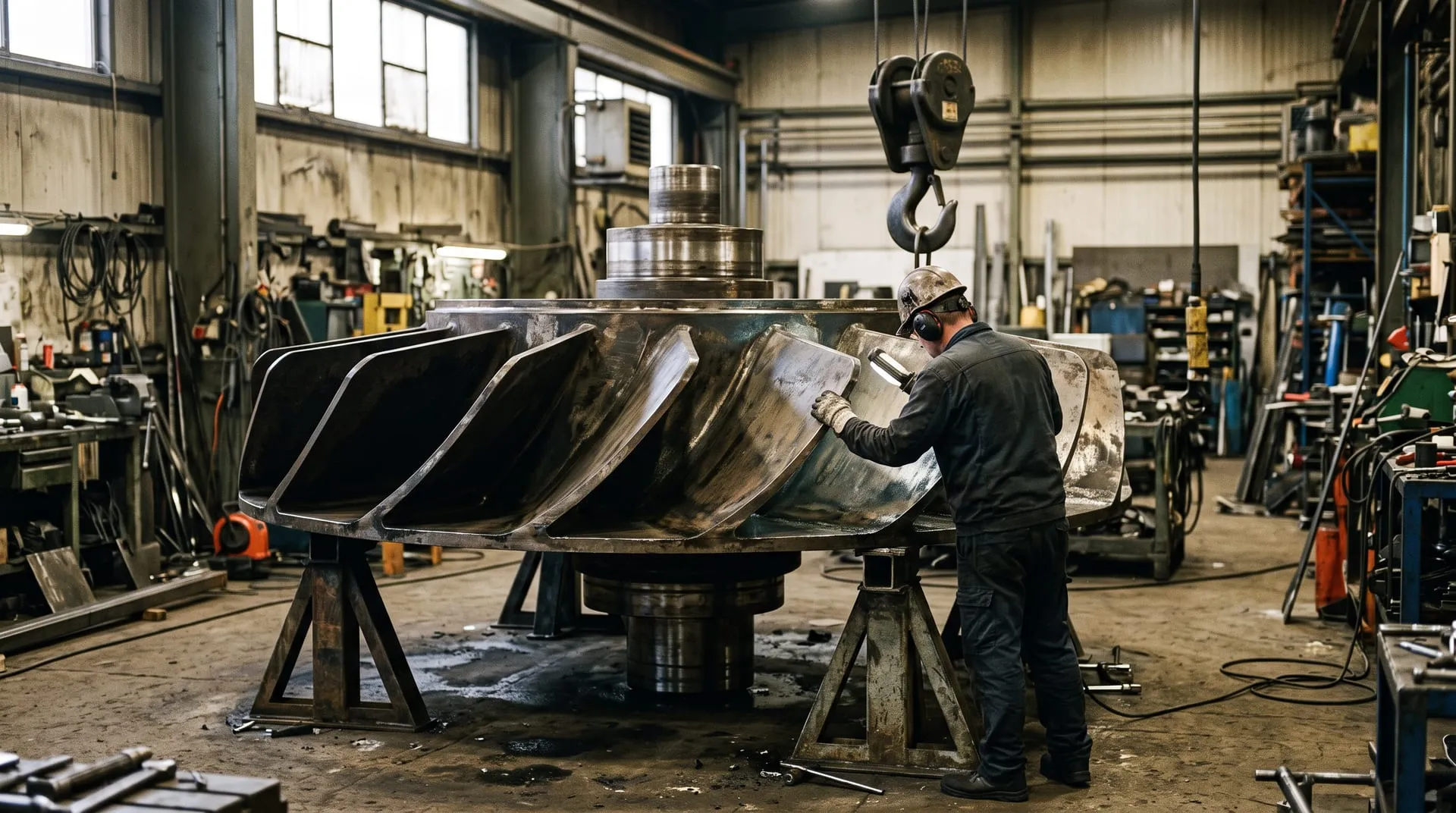
| Fans & dampers | Fan rebuilds, balancing, alignment and damper repair | Design airflow with less vibration |
- Pressure dropWe read the gauges before and after.
- DocumentationWritten records for your environmental team.
- Confined spacePermit-required entry done by the book.

How does a baghouse service job work?
Step 1: Assess
Review differential pressure trends, cleaning cycle, hopper discharge and visible emissions with your team.
Step 2: Isolate & enter
Lockout/tagout, isolate airflow and material, then confined-space entry under permit.
Step 3: Inspect & find leaks
Inspect bags, cages, tubesheets, valves and doors. Run a leak test when it's called for.
Step 4: Repair & replace
Change bags and cages, rebuild valves and airlocks, patch or fabricate ductwork.
Step 5: Restart & document
Bring the system up, confirm cleaning and pressure drop, and hand over written records.
Signs your collector needs work
When does a baghouse need service?
Most plants track differential pressure daily. Call us when you see any of these.
- Differential pressure climbing or swinging
- Visible dust at the stack or fan discharge
- Pulse valves not firing or air leaking
- Hoppers bridging or plugging
- Fan vibration or rising amps
- Holes or wear in ductwork elbows
- Poor capture at hoods and pickup points
What does SSI do for baghouses and dust collectors?
We keep your collector working mechanically. That means filter bags and cages, the cleaning system, hoppers and airlocks, fans, dampers and ductwork. Our crews inspect, repair and replace those parts in the field, fabricate what’s needed in our Portage shop, and leave written records your environmental team can file.
A baghouse is a mechanical system with an environmental job. When a valve sticks or a bag tears, the problem shows up first on a pressure gauge. Then it shows up at the stack. We work on the mechanical side so it doesn’t get that far.
How do you keep a collector working the way your permit assumes?
An air permit is written around a collector that cleans on cycle, holds a steady pressure drop and doesn’t leak. We keep the equipment in that condition. We don’t hold permits, run stack tests or certify compliance. Your environmental team owns that. We give them a system that performs and the paperwork to show what was done.
In practice, that support looks like this:
- Before and after readings. We record differential pressure and cleaning-cycle behavior before we start and after restart.
- Parts and repair records. Bags, cages, valves and seals replaced, by compartment, with dates.
- Leak findings. Where a leak was found, what caused it and how it was fixed.
- Recommendations. Wear we saw that should be planned into the next outage.
Which parts of a baghouse fail most often?
The cleaning system and the bags fail most often. They work hardest, and one depends on the other. A failed diaphragm valve leaves a row of bags uncleaned. Those bags blind, pressure drop climbs and airflow at the hoods falls off. Fix the valve and the bags often recover. Ignore it and you’re buying bags.
| Problem | What you notice | Usual cause |
|---|---|---|
| High pressure drop | Gauge climbing, weak capture at hoods | Bags blinded, valves failed, low header pressure, moisture |
| Low pressure drop | Dust at the stack | Torn or unseated bags, tubesheet leaks |
| Hopper buildup | Plugging, overloaded bags | Failed airlock, bridging, heater or vibrator out |
| Fan trouble | Vibration, high amps, noise | Dust buildup on the wheel, wear, imbalance |
| Duct leaks | Poor suction at pickup points | Worn elbows, rusted seams, loose access doors |
Pulse-jet and reverse-air cleaning
On pulse-jet units we test solenoids, rebuild or replace diaphragm valves, check header pressure and blowpipe alignment, and verify the timer or controller is firing in sequence. On reverse-air units we work on the dampers, actuators and reverse-air fan that drive each compartment’s cleaning cycle.
Hoppers, airlocks and rotary valves
A hopper that doesn’t empty will load the bags from below. We rebuild rotary airlocks, replace rotors and seals, repair hopper walls and service the screw conveyors that carry dust away.
Fans, dampers and ductwork
The collector is only as good as the air moving through it. A collector fan with dust built up on the wheel loses airflow and starts to shake. We clean, rebuild and balance industrial fans, and laser-align the drive when the coupling needs it. We repair dampers and fabricate new duct, elbows and hoods through our fabrication shop.
Explosion venting and isolation
Many dusts are combustible, so plenty of collectors carry explosion vents or isolation valves. We install and replace that hardware to the manufacturer’s instructions and your engineering team’s specification. The hazard analysis and protection design stay with your team.
Where does this work fit in a maintenance plan?
Collector work belongs on the outage schedule, not in an emergency. We build bag changeouts, valve checks and fan inspections into preventive maintenance programs. For the wider picture, scrubbers, cyclones and fume extraction included, see environmental systems troubleshooting. Our baghouse maintenance checklist covers what to check between visits.
We work on collectors at steel mills, refractory plants, food and beverage plants, chemical plants and power plants across Northwest Indiana and Chicagoland. Every entry follows lockout/tagout, confined-space permits and a JHA. No shortcuts, no excuses.
Baghouse & Dust Collection across the Region
Tell us about the equipment
Send the make, model and what you're seeing. A crew lead will call you back with next steps.
Start a requestCertified & prequalified
 ISNetworld
member contractor Avetta
prequalified AWS certified
welders
Baghouse & Dust Collection FAQs
What does baghouse maintenance include?
Baghouse maintenance covers inspecting and replacing filter bags and cages, keeping the pulse-jet or reverse-air cleaning system working, clearing hoppers and servicing airlocks, checking for leaks, and keeping fans, dampers and ductwork in good shape. Most plants pair daily pressure readings with scheduled outage work.
How often should baghouse filter bags be replaced?
There is no single interval. Bag life depends on the dust, temperature, moisture, air-to-cloth ratio and how well the cleaning system works. Many plants replace bags on a planned schedule and between changeouts watch differential pressure and emissions readings. Rising pressure drop or visible dust usually means it's time to look.
What causes high differential pressure in a baghouse?
High differential pressure usually means bags are blinded or not cleaning. Common causes are failed solenoids or diaphragm valves, low compressed air pressure, moisture in the dust cake, wrong timer settings or a hopper that has filled up. We check the cleaning system first, because it's often cheaper to fix than a full bag change.
How do you find leaks in a baghouse?
We start with a visual inspection of bags, tubesheets, cage seating and door seals. When a leak is hard to find, we run a fluorescent powder test. The powder is fed into the dirty side, then a blacklight on the clean side shows exactly where it got through. That points us to the bag or seal to fix.
Does SSI handle environmental compliance or stack testing?
No. We are a mechanical contractor. We don't perform stack testing, hold permits or certify compliance. What we do is keep your collection system working the way your permit assumes it does, and give your environmental team written records of the inspections, repairs and parts we replaced.
Can you fabricate new ductwork and hoods?
Yes. We fabricate replacement elbows, duct runs, transitions, hoods and access doors in our Portage shop, then install them in the field. Worn elbows in abrasive service are one of the most common repairs. We can add wear liners or heavier plate where your dust eats through standard duct.
Do you work on explosion vents and isolation devices?
We handle the mechanical side: installing, replacing and inspecting the mounting of vent panels, isolation valves and related hardware to the manufacturer's instructions. The hazard analysis and the choice of protection belong to your engineering and safety team, and we work from their specification.
Can you service a baghouse during a planned outage?
Yes. Most bag changeouts and internal repairs are scheduled into outages so the collector is down while production is down. If a collector is failing now and holding up the line, call (219) 386-1506 any time and we will tell you how fast a crew can get there.
Related services
All services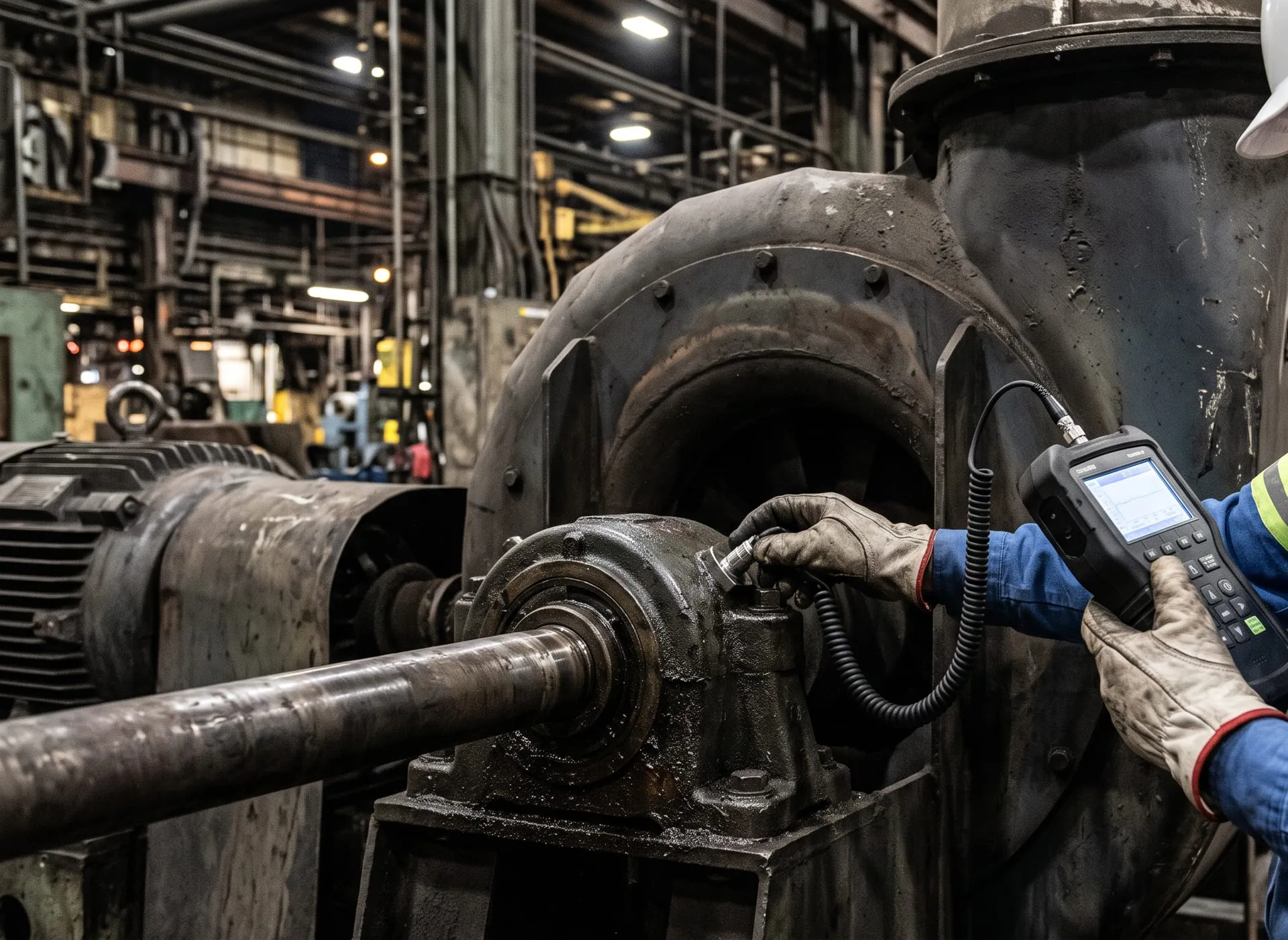
Fan Rebuilds & Balancing
Fans balanced in place or in the shop, rebuilt and aligned.
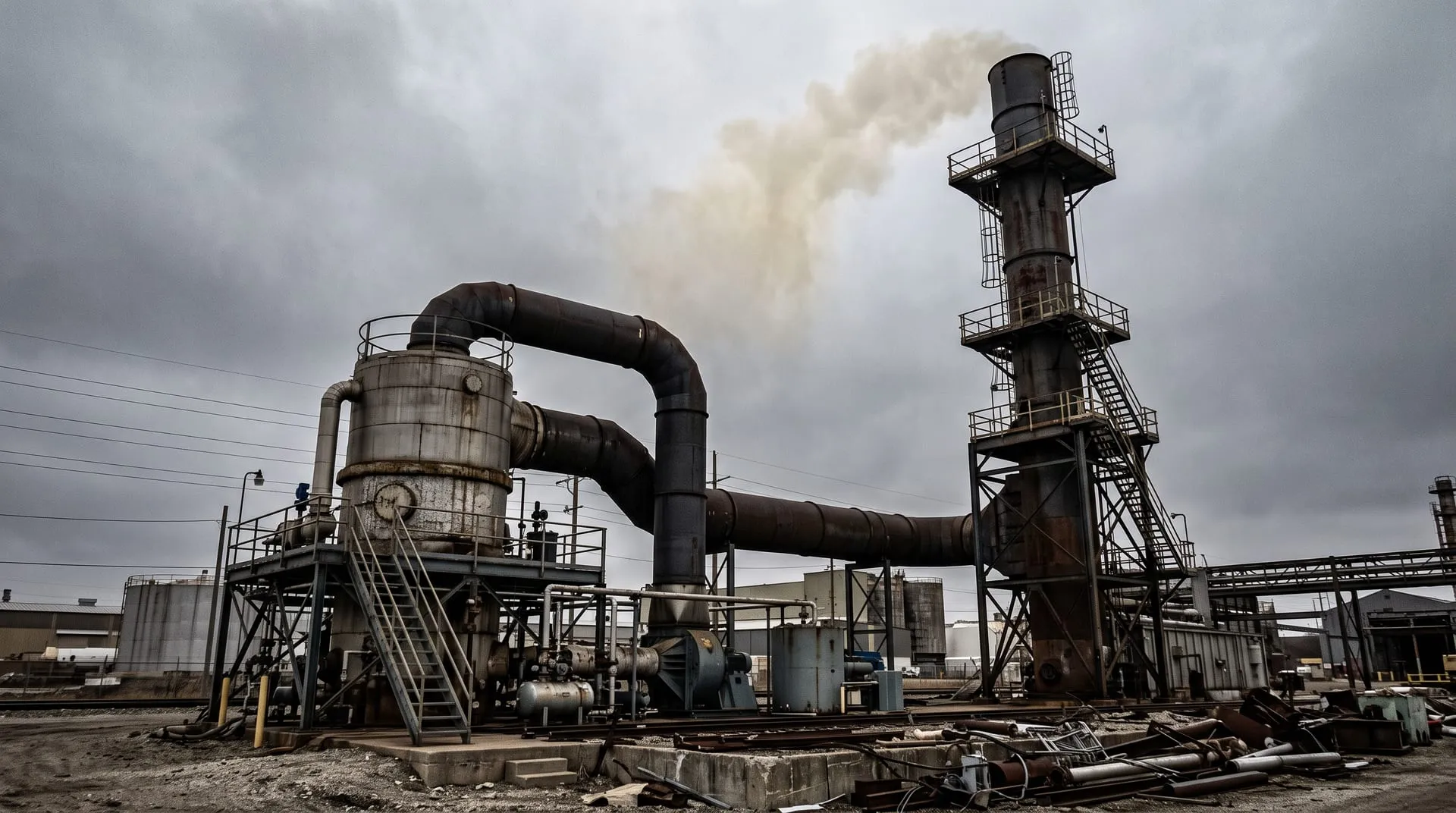
Environmental Systems Compliance & Troubleshooting
Scrubbers, cyclones, fume extraction and ventilation repair.
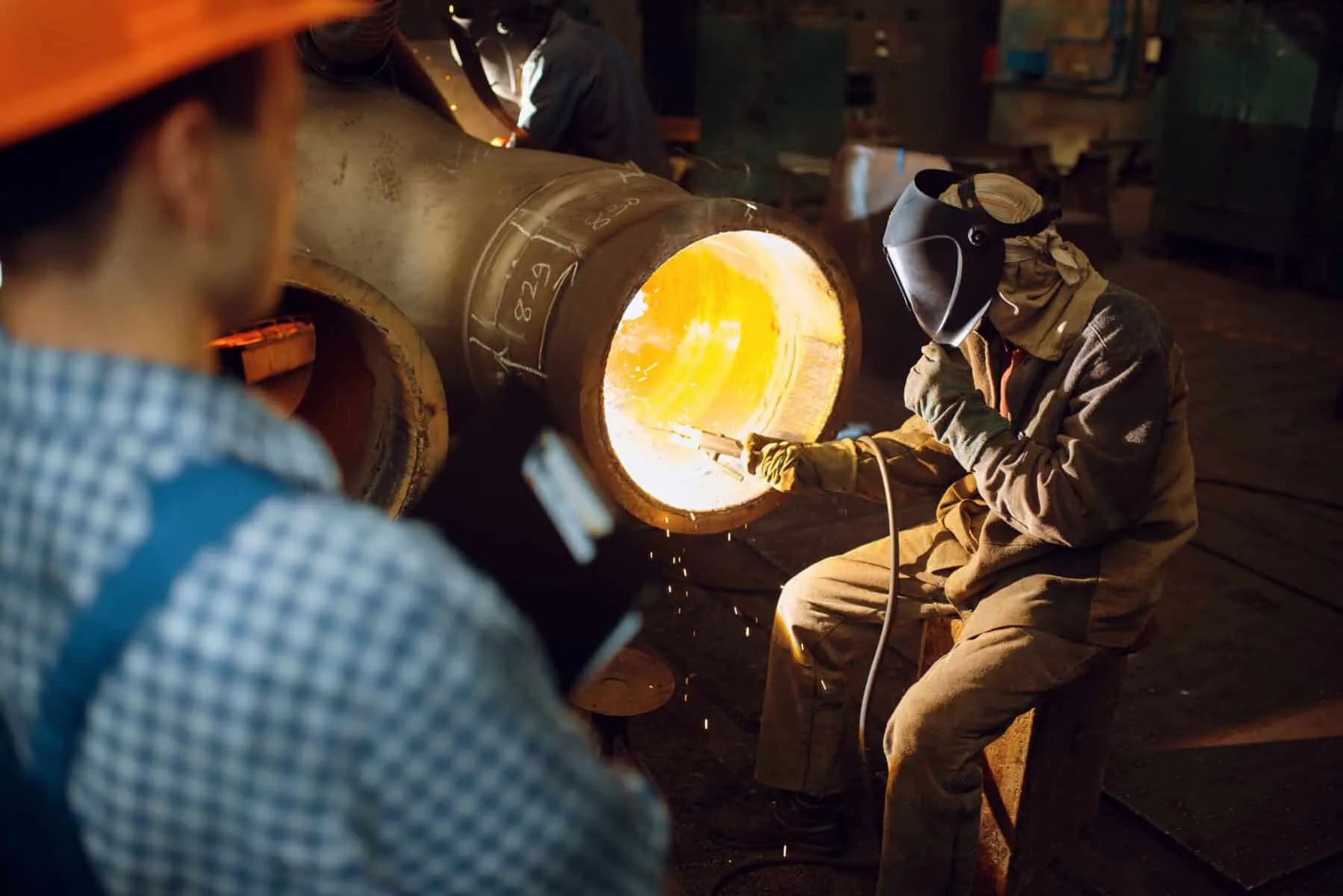
Custom Metal Fabrication
Structural, pipe and replacement parts. Shop and field.
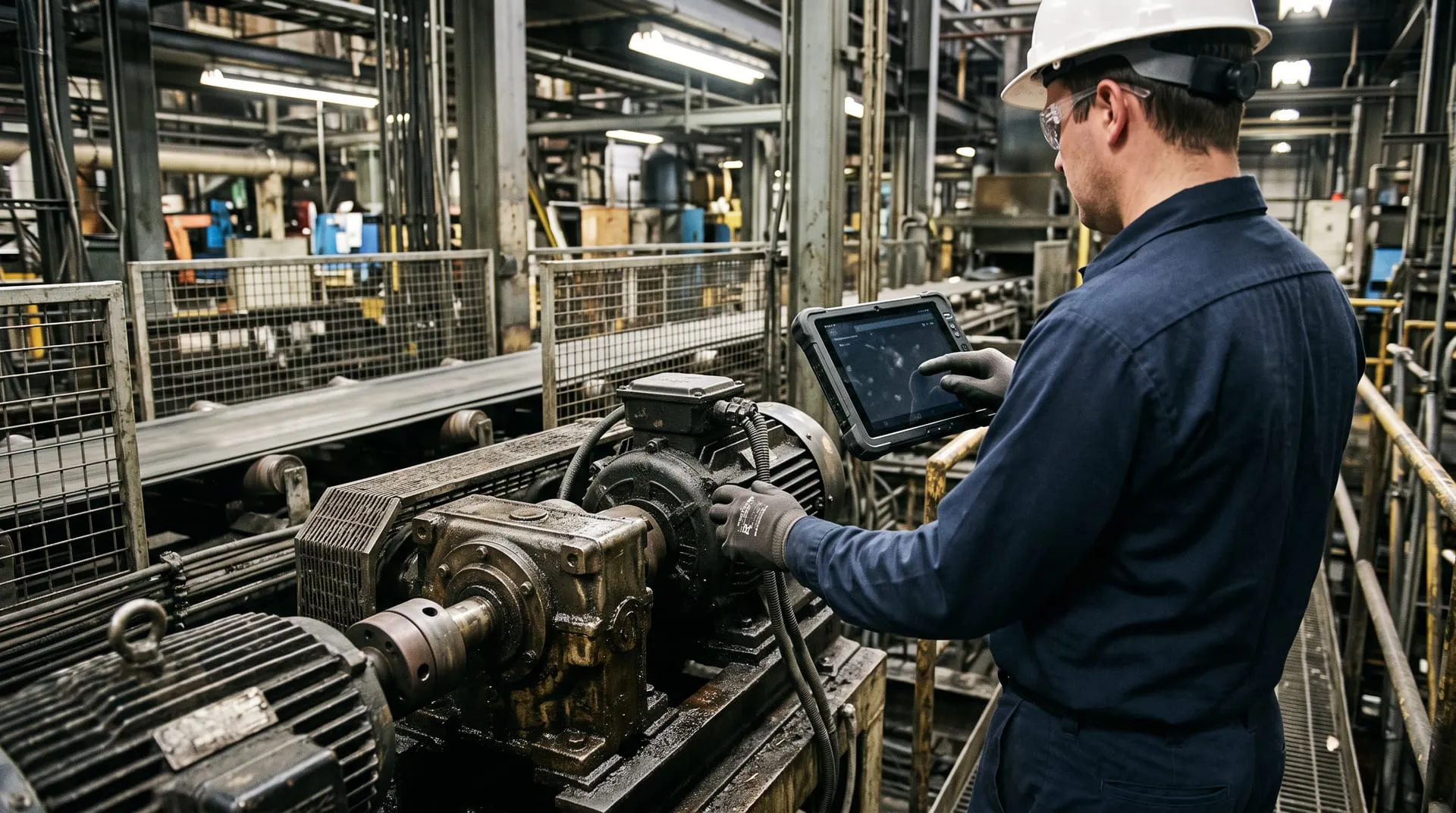
Preventive Maintenance
Inspections, alignment and outage plans that cut breakdowns.

Request a baghouse & dust collection quote
Tell us what's running rough. We'll tell you how fast we can be there.