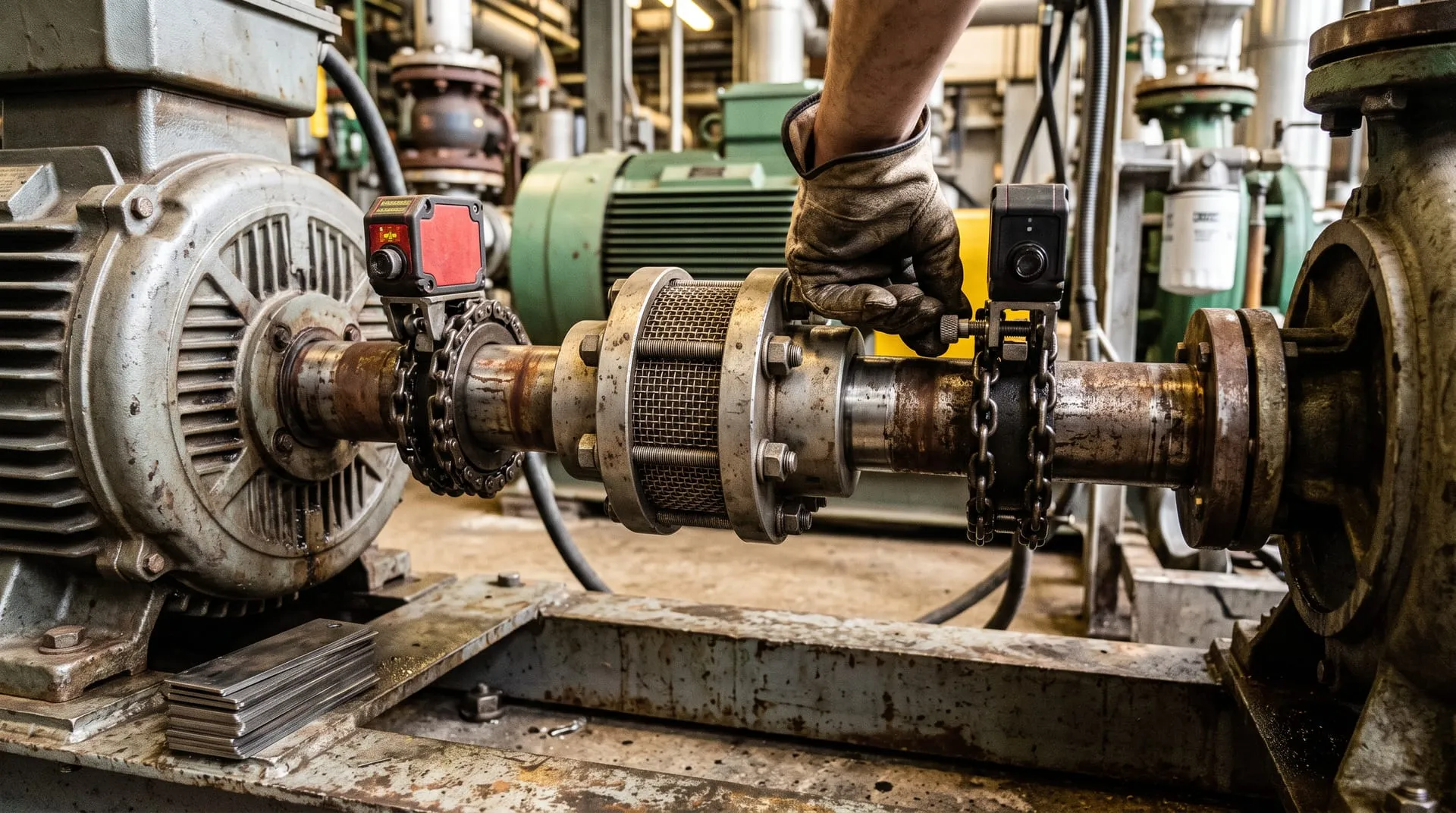
Most plants laser align critical coupled equipment once a year, and again after any work that disturbs the drive. That includes a motor swap, a coupling change, a bearing replacement, foundation repair or piping changes. Machines that run hot, sit on soft bases or show rising vibration need checks more often. The right interval depends on how critical the machine is and how it behaves.
Key takeaways
- Annual checks on critical coupled drives are a common starting point.
- Realign after any event that disturbs the drive. That rule beats the calendar.
- Fix soft foot and pipe strain first, or the alignment will not hold.
- Let condition data move the interval up or back for each machine.
What is a typical laser alignment interval?
A common rule of thumb is an annual alignment check on critical rotating equipment, with less critical machines checked every 2 to 3 years or when condition data calls for it. Event-based checks, after anything that touches the drive, matter more than the calendar. Many plants schedule alignment into every planned outage.
The table below is general guidance, not a fixed standard. Your OEM manuals and your own failure history should adjust it.
| Equipment | Typical check interval | Check sooner if… |
|---|---|---|
| Critical motor-to-gearbox drives | Every 12 months | Vibration rises, gearbox runs hot, bearings fail early |
| Process pumps | Every 12 months or each outage | Seal leaks, piping was modified, hot service |
| Induced and forced draft fans | Every 12 months | Vibration trends up, after a balance job or bearing change |
| Conveyor drives | Every 12 to 24 months | Belt tracking issues, reducer noise, frame damage |
| Belt and sheave drives | Each PM cycle | Belt wear on one side, squeal, sheave wear |
| Spare or standby units | Before they go into service | Any time they are moved or reinstalled |
| New installations | Within the first weeks of running | Grout or anchor work, pipe strain |
What events should trigger an alignment check?
Any time a coupled drive is disturbed, it should be realigned before it goes back into service. That is the single most useful rule. A machine that was aligned last year is not aligned anymore if someone pulled the motor last week.
Realign before restart after
- Motor, pump or gearbox replacement, including a rebuilt unit
- Coupling replacement or a new coupling insert
- Bearing or seal replacement on either shaft
- Foundation, baseplate or grout repair
- Piping changes on a pump, which can add pipe strain
- A crash, jam or overload that may have shifted the machine
- Thermal changes, such as a new process temperature
Why do aligned machines drift out of tolerance?
Machines drift because the things holding them in place change over time. Anchor bolts loosen, grout cracks, baseplates corrode and pipe loads shift as systems heat and cool. Thermal growth also moves shafts between cold and running conditions. Each change pushes the shafts off their shared centerline a little at a time.
Drift shows up as two kinds of error, and most drives have some of both. An alignment corrects each one in the vertical and horizontal planes.
Fig. 1
In mills and heavy process plants, the big drivers are:
- Soft foot. One foot is not sitting flat, so the machine moves when bolts are torqued.
- Pipe strain. Piping pulls on a pump casing and drags the shaft out of line.
- Foundation settling. Concrete and grout degrade under heat, vibration and spills.
- Thermal growth. A hot pump or gearbox grows at a different rate than its motor.
- Vibration and impact. Rolling mill drives and crushers take shock loads that walk machines off their marks.
Fig. 2
How do you know a machine needs alignment between checks?
The machine will usually tell you. The most common signs are rising vibration, bearings or seals that fail early, couplings that run hot or wear quickly, oil leaks at seals and increased motor current. If you see any of these on a coupled drive, an alignment check is one of the cheapest ways to rule out the cause.
Signs a drive is out of line
- Vibration trending upward, especially at 1x and 2x running speed
- Coupling inserts that crack, dust or wear out early
- Bearing housings running warmer than the other side of the drive
- Repeat seal failures on the same pump
- Loose or broken anchor bolts
- Shims that are rusted, stacked high or missing
Should the interval be based on time or condition?
The best programs use both. A fixed interval makes sure nothing gets forgotten, and condition data tells you when to move a machine up or back on the list. Many reliability teams start with an annual check, then adjust it based on vibration trends, failure history and how critical the machine is to production.
A simple way to set priorities:
| Criticality | Example | Approach |
|---|---|---|
| High | Single drive with no spare that stops a line | Annual check, event-based checks, vibration trending |
| Medium | Process pump with an installed spare | Every 1 to 2 years plus event-based checks |
| Low | Utility fan or small transfer pump | Event-based checks and PM observations |
What should you get after a laser alignment?
You should get a written record of the before and after readings for each machine. That record should show offset and angularity in both planes, the tolerance used, soft foot findings and the shim or move corrections made. The report becomes your baseline for the next check and helps spot machines that keep drifting.
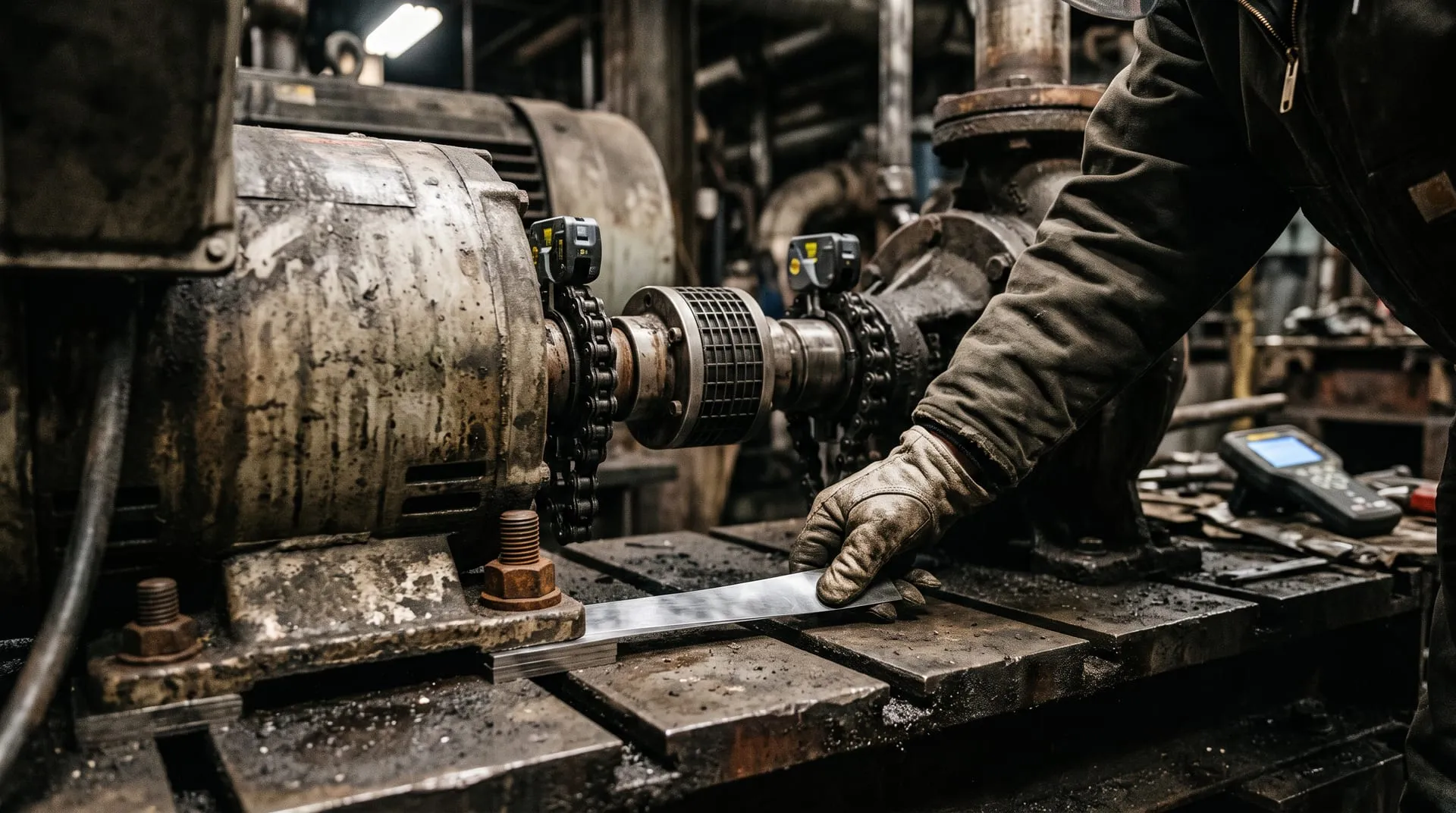
Keep those reports with your PM records. If the same machine needs large corrections every year, the cause is usually something else: a failing base, pipe strain or a worn component that needs an equipment rebuild.
How does alignment fit a preventive maintenance plan?
Alignment works best as part of a scheduled preventive maintenance program rather than a reaction to failures. Pair it with vibration checks, lubrication and visual inspections, and plan the work into outages so production is not interrupted. For fans, combine alignment with fan balancing, since imbalance and misalignment often show up together.
Plants across the steel, refractory and power generation industries lean on this approach because a single drive failure can stop a whole line.
Need an alignment check?
Our crews perform on-site laser shaft alignment on motors, pumps, fans, gearboxes and belt drives across Northwest Indiana and Chicagoland, and leave a written report. Planned outage or a machine running rough today, contact us or call (219) 386-1506.