A refractory brick press needs daily checks of hydraulic oil, leaks, pressures and mold condition; weekly checks of fasteners, guides, filters and safety devices; and deeper outage work on cylinders, pumps, frames, alignment and controls. Abrasive refractory dust is the main enemy. Keeping it out of the hydraulics and off wear surfaces is what extends press life and protects brick quality.
Use this checklist as a starting point. Your OEM manual and your plant’s own failure history should shape the final version.
Key takeaways
- Operators catch most problems in a few minutes each shift: oil, leaks, pressures, molds and guards.
- Weekly and monthly work tracks wear and drift: guides, fasteners, filters, oil analysis and platen parallelism.
- Outages handle the big jobs. Plan them ahead from condition data so the press is down for less time.
- Abrasive dust drives most wear. Seals, breathers, filtration and working dust collection protect the press.
Why does a refractory press need a dedicated maintenance plan?
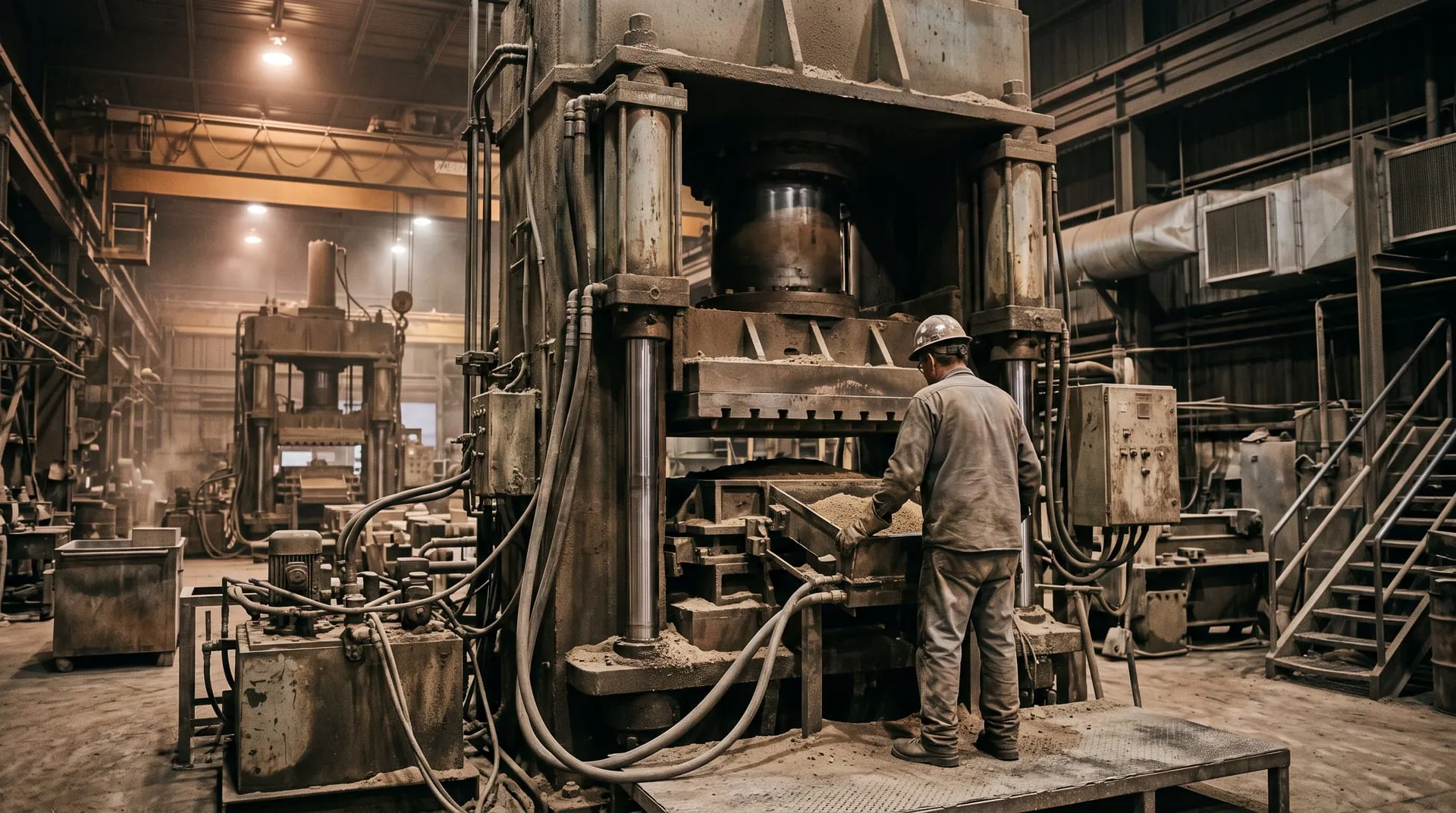
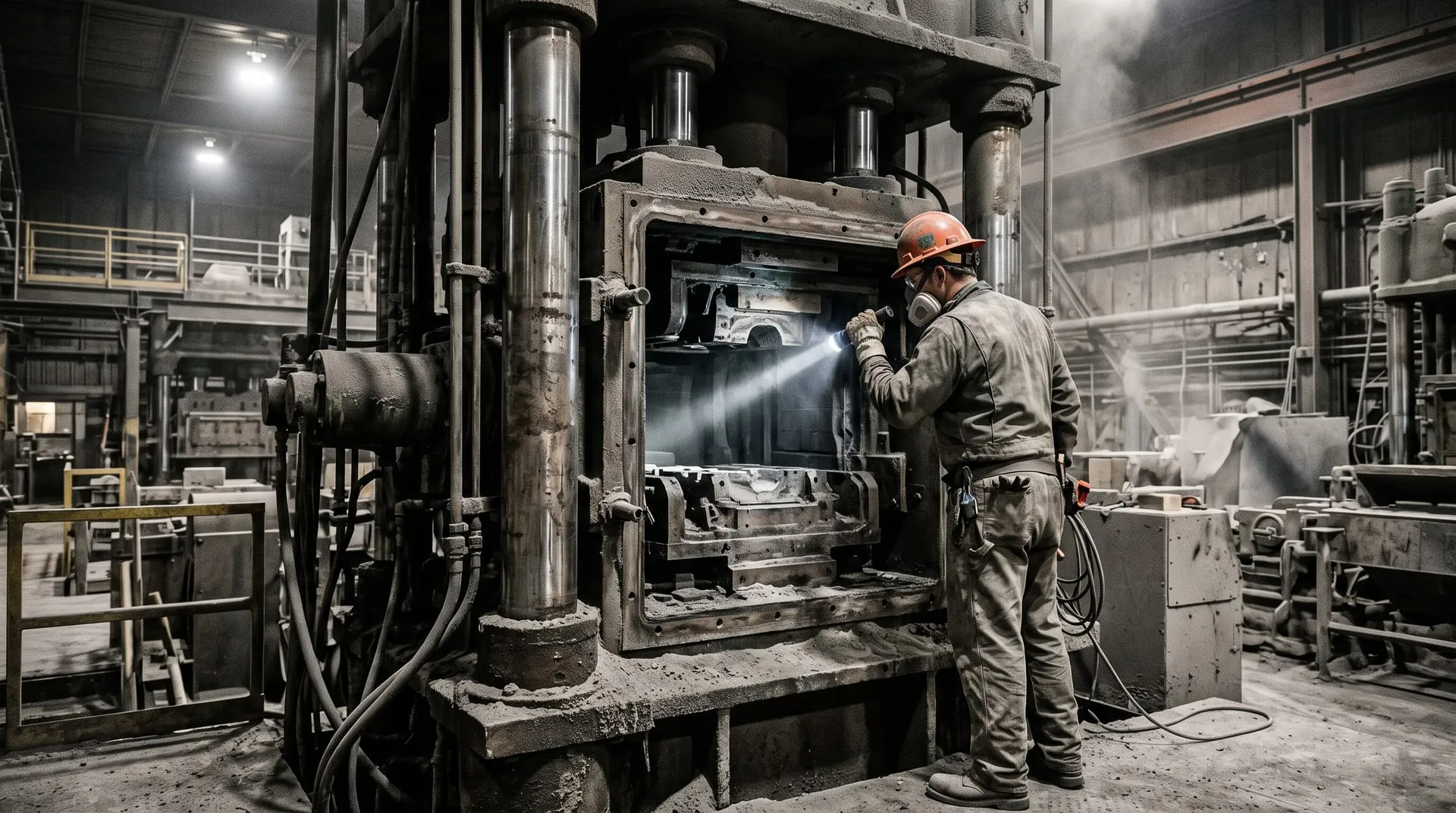
Refractory presses combine high tonnage, fast cycles and highly abrasive material. That mix wears molds, liners, guides and seals faster than most hydraulic equipment, and fine dust finds its way into oil, bearings and sensors. A plan built for the press keeps it running and keeps brick inside spec.
Fig. 1
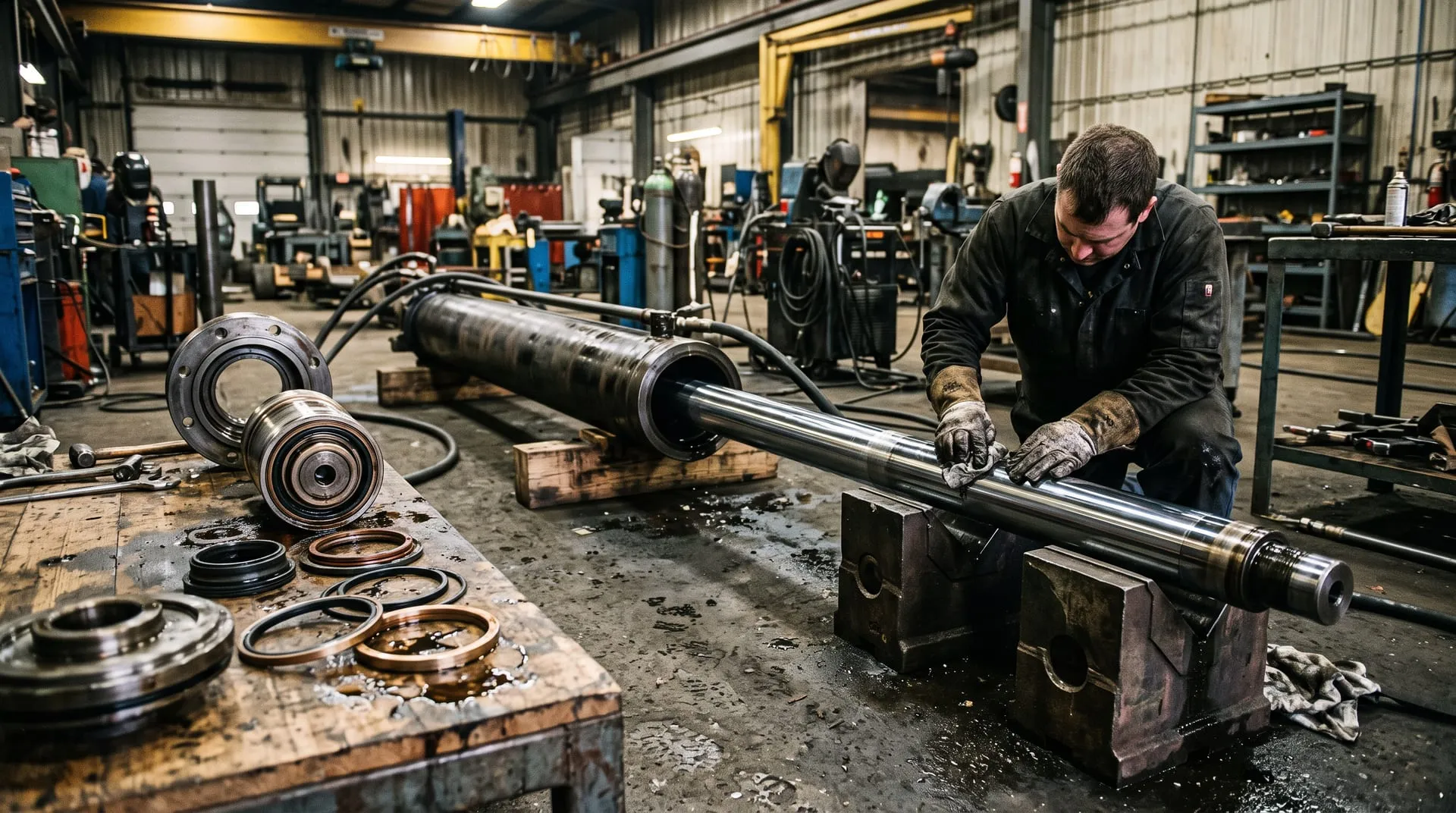
When a press drifts, brick quality usually shows it first. Density variation, dimensional problems, laminations and cracks often trace back to worn guides, misaligned platens or unstable hydraulic pressure.
Fig. 2
What should operators check every shift?
Operators should check oil level and temperature, look for leaks, confirm system pressures, inspect the mold and liners for damage, and make sure guards and safety devices work. These checks take minutes and catch most problems before they stop the press.
Every shift
- Hydraulic oil level and temperature within normal range
- No visible leaks at cylinders, hoses, fittings or manifolds
- System and accumulator pressures normal on the gauges or HMI
- Mold box, liners and punches free of cracks, chips and buildup
- Lubrication points greased or auto-lube reservoir full
- Guards, light curtains and interlocks working
- Emergency stops testedPer plant procedure
- No unusual noise, vibration or slow cycles
- Dust cleaned from wear surfaces and sensors
- Brick weight and dimensions checked against spec
What should be checked every week?
Weekly checks focus on wear, fasteners and filtration. Maintenance should inspect guides and wear plates, torque critical fasteners, check filter indicators, look at hoses for abrasion and inspect the handling system. This is also when trending data, like cycle times and pressures, should be reviewed.
Every week
- Filter indicators checked; elements changed as needed
- Guide columns, bushings and wear plates inspected for scoring and play
- Critical fasteners on frame, platens and mold mounts checked
- Hoses inspected for abrasion, bulges and rubbing points
- Breathers and reservoir seals checked to keep dust out
- Mold fill and feed system inspected for wear and buildup
- Robotic or mechanical handling grippers and sensors checked
- Cycle time and pressure trends reviewed for drift
What should be done monthly or quarterly?
Monthly and quarterly work digs deeper into the hydraulic system and machine geometry. Typical tasks include oil sampling, accumulator checks, pump and valve performance checks, platen parallelism checks and an electrical inspection of the control panel. Many plants run oil analysis on a fixed schedule.
| Task | What to look for | Why it matters |
|---|---|---|
| Hydraulic oil analysis | Particle count, water, wear metals, oil condition | Early warning on pumps, valves and seals |
| Accumulator precharge check | Precharge pressure against spec | Low precharge hurts cycle speed and pressure stability |
| Pump performance | Case drain flow, noise, heat | Rising case drain flow points to pump wear |
| Valve and manifold check | Leaks, slow response, sticking | Affects pressure control and brick density |
| Platen parallelism | Measurement across the platen faces | Out-of-parallel platens cause uneven density |
| Control panel inspection | Loose terminals, dust, heat, fan operation | Dust and heat cause intermittent faults |
| Load cell or pressure transducer checks | Calibration against known values | Accurate force control means consistent brick |
What belongs on the outage list?
Outage work handles the large jobs that require the press to be down for a while. That includes cylinder rebuilds, pump replacements, mold box and liner replacement, frame and weld inspection, guide rebuilds, alignment and controls upgrades. Planning this work ahead keeps the outage short.
Each planned outage
- Main and auxiliary cylinders inspected; rebuilt when seals or rods are wornEach outage
- Hydraulic pump rebuilt or replaced based on condition dataAs needed
- Mold box, liners and punches replaced or reworkedAs needed
- Frame, tie rods and welds inspected for cracks, using NDT where neededEach outage
- Guide columns and bushings rebuilt or replacedAs needed
- Press geometry measured and correctedEach outage
- Motor-to-pump drives laser alignedEach outage
- Reservoir cleaned; oil flushed or replacedAs needed
- Electrical, PLC and safety circuits testedEach outage
- Handling system and feed equipment overhauledAs needed
How do you keep abrasive dust out of the press?
Keep dust out with good sealing, filtration and housekeeping. Use quality breathers on reservoirs, keep wiper seals and boots in good shape, and clean wear surfaces regularly. Make sure the dust collection serving the press and feed system works, since poor capture puts more dust on the machine.
| Where dust gets in | What keeps it out |
|---|---|
| Reservoir breathers | Desiccant or high-efficiency breathers |
| Cylinder rods | Wipers and boots, replaced at the first sign of wear |
| Topping off oil | Filtration sized for the duty and clean oil from a filter cart |
| Air around the press | Dust collection hoods and ducts that are maintained |
| Sensors and connectors | Covers on sensors, limit switches and connectors |
When should you call a contractor?
Call a contractor when the press needs work that is bigger than your crew’s schedule allows, or when it needs shop capability. Cylinder rebuilds, frame repairs, guide rebuilds, machined replacement parts and control troubleshooting are common reasons. So are sudden failures, when the press stops a production line.
Our refractory press repair crews service all makes and models of refractory brick presses and the robotic handling systems that support them. We also handle hydraulic troubleshooting, controls and automation and parts from our machine shop.
Keep your press running
The refractory industry runs on presses that hold tolerance shift after shift. If yours is drifting, leaking or down, contact us or call (219) 386-1506. When downtime isn’t an option.