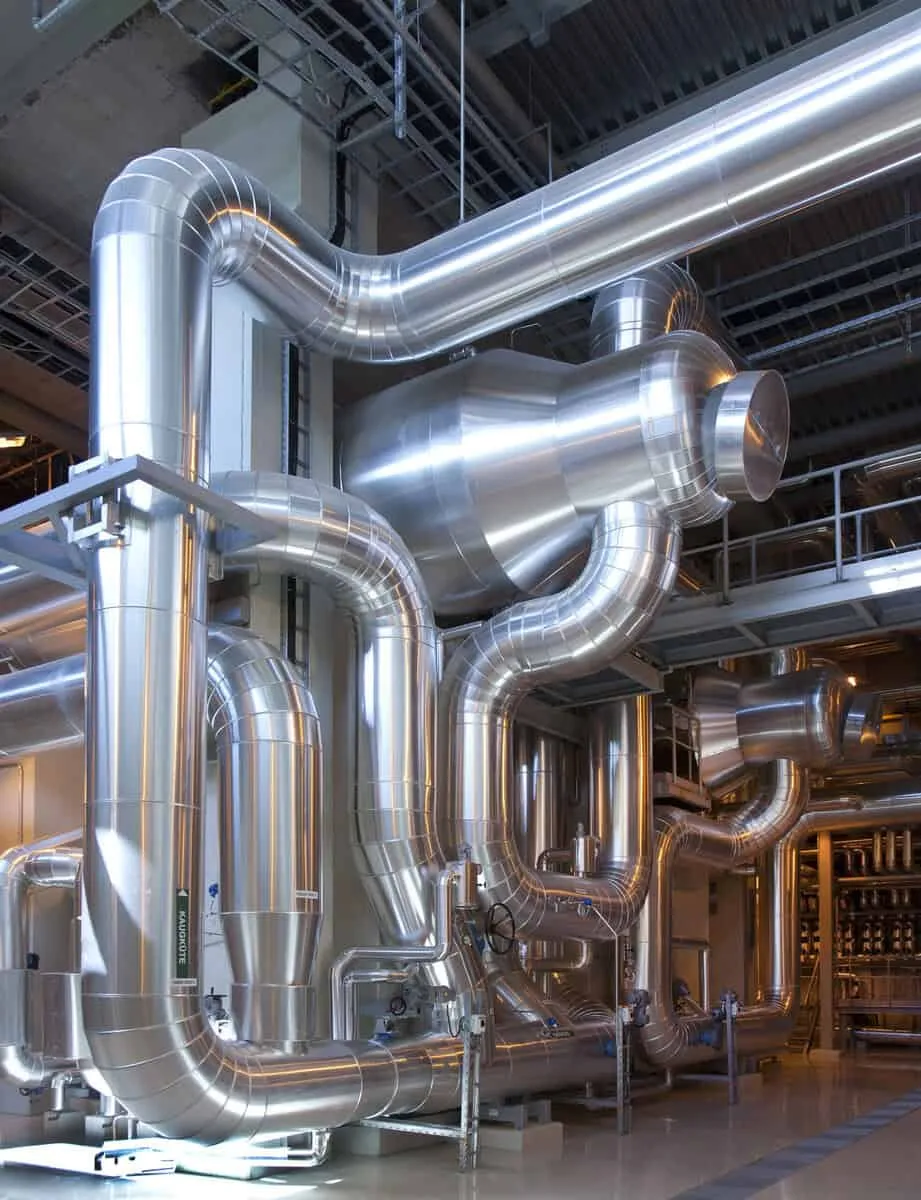
Sanitary pipe is smooth, cleanable stainless tubing used where food, beverage or pharmaceutical product touches the pipe. Process pipe is the general piping that carries water, steam, chemicals, oil, gas and air through a plant. Jacketed pipe is a pipe inside a pipe, with a heating or cooling medium in the outer jacket that keeps the product at temperature.
Key takeaways
- Sanitary is built for cleanability: thin-wall stainless, smooth bore, crevice-free welds.
- Process is built for the pressure, temperature and fluid it carries.
- Jacketed is built for temperature control along the whole run, flanges included.
- Your engineer or plant standard sets the design. A fabricator builds and installs to it.
How do the 3 piping types compare?
The 3 types differ in what they carry, how they are made and how they are welded. Sanitary systems are built for cleanability. Process systems are built for pressure, temperature and the fluid they carry. Jacketed systems are built for temperature control along the whole run.
Fig. 1
| Sanitary pipe | Process pipe | Jacketed pipe | |
|---|---|---|---|
| Main purpose | Product contact that must stay clean | Move fluids, gas and utilities | Keep product at temperature |
| Typical industries | Food, beverage, dairy, pharmaceutical | Steel, chemical, power, refinery, all plants | Chemical, asphalt, food, resin and wax handling |
| Common materials | 304 and 316L stainless tubing | Carbon steel, stainless, alloy steel | Stainless or carbon steel core and jacket |
| Interior finish | Smooth, often polished | As manufactured | Depends on the product |
| Sizing | Tube OD with thin walls | Nominal pipe size and schedule | Core and jacket sizes |
| Joints | Orbital welds, sanitary clamps | Butt welds, socket welds, flanges, threads | Welded core, jacket closures, crossovers |
| Cleaning | Clean-in-place (CIP) systems | Flushing as needed | Depends on the product |
| Main risk if done wrong | Contamination, bacteria growth | Leaks, corrosion, failure under pressure | Cold spots, product freeze-up, jacket leaks |
What is sanitary pipe?
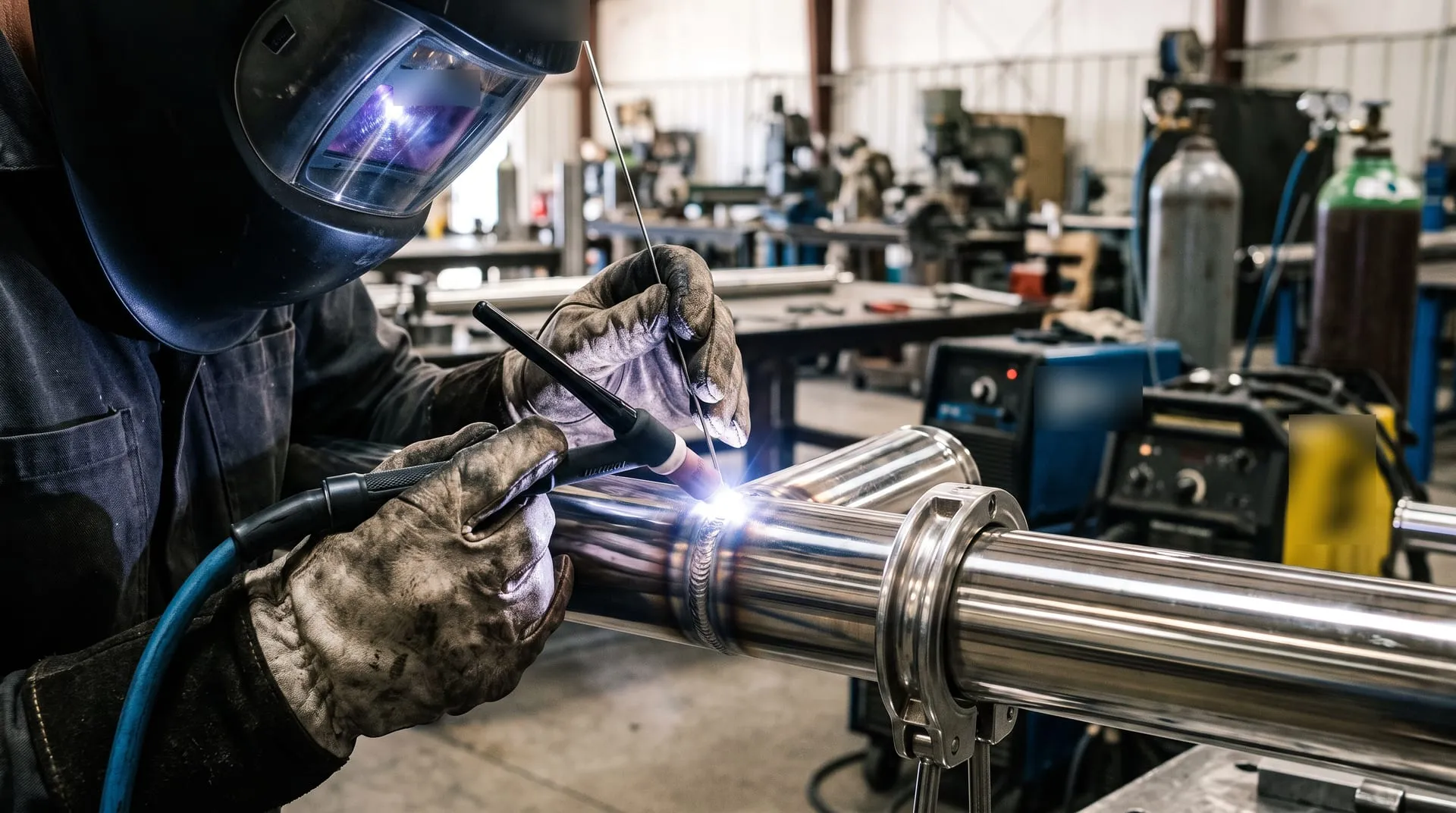
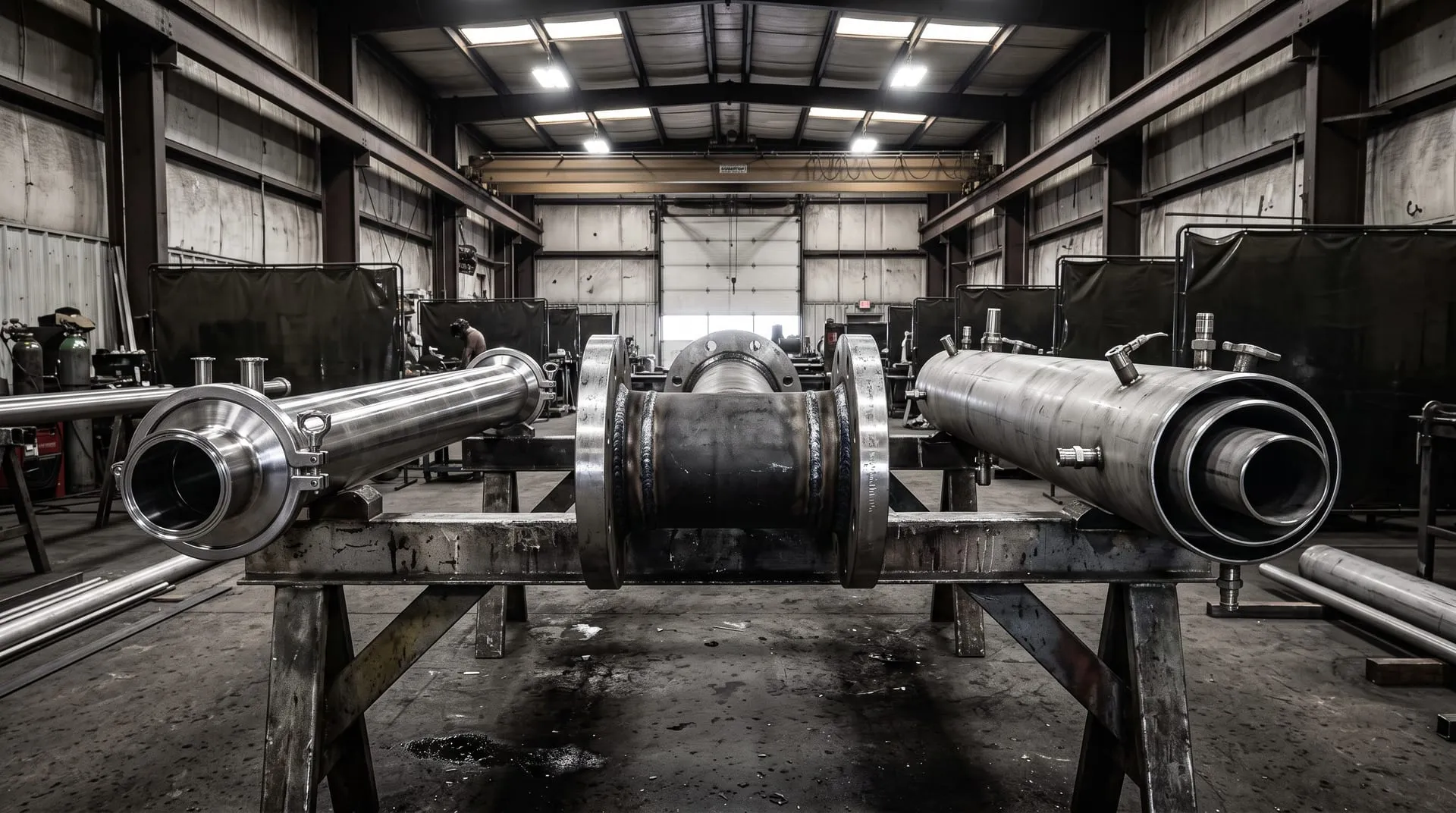
Sanitary pipe, often called sanitary tubing, is thin-wall stainless steel with a smooth interior and crevice-free joints. It is designed so product cannot hang up in the pipe and cleaning chemicals can reach every surface. It is standard in food, beverage, dairy and pharmaceutical plants wherever product touches the pipe.
Inside the tube
- Smooth, often polished finish so product and bacteria cannot cling
- Full-penetration welds flush with the tube wall
- Back purge with inert gas during welding to prevent oxidation
Across the system
- Lines sloped to drain fully
- No dead legs where product can sit
- Sanitary clamp fittings where the line must come apart for cleaning or inspection
Sanitary welding is mostly TIG work, often with orbital welders for consistent welds on thin-wall tube. After welding, many plants passivate stainless to restore its corrosion resistance. Learn more about our sanitary welding and fabrication work for food and beverage plants.
What is process pipe?
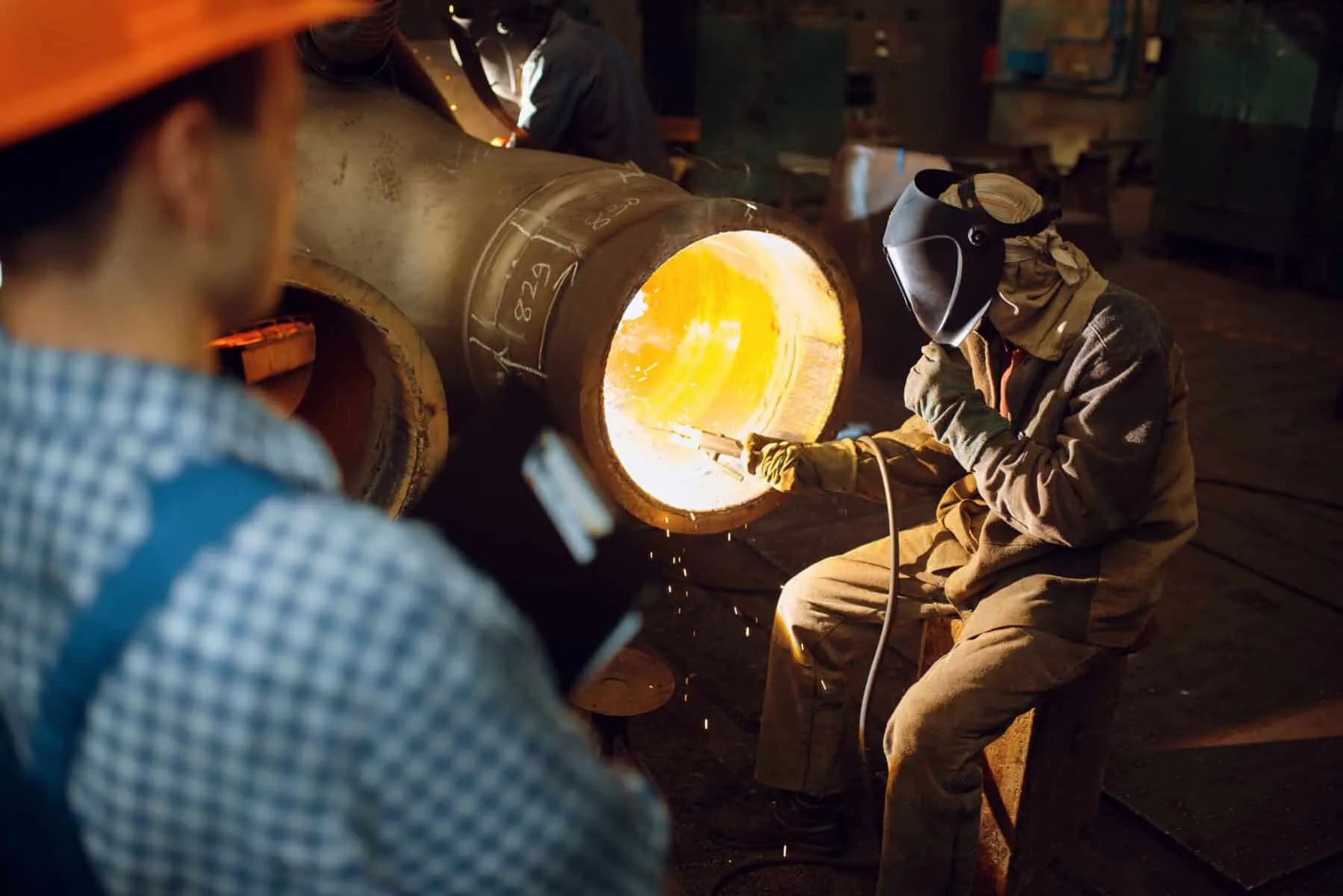
Process pipe is the piping that carries everything a plant runs on: water, steam, condensate, compressed air, fuel gas, hydraulic oil, chemicals and slurries. It is sized by nominal pipe size and wall schedule and is chosen for the pressure, temperature and corrosion it will see. Most of the pipe in a mill or chemical plant is process pipe.
| Service | Common material choice |
|---|---|
| Cooling water | Carbon steel, sometimes lined or coated |
| Steam and condensate | Carbon steel or alloy steel for high temperature |
| Compressed air | Carbon steel, stainless or aluminum systems |
| Corrosive chemicals | Stainless, alloy, lined pipe or plastic |
| Hydraulic oil | Carbon steel or stainless tube and pipe |
| Slurries and abrasives | Heavy wall, hardened or lined pipe |
Process pipe is joined by butt welds, socket welds, flanges and threads depending on size and service. See our pipe fabrication service for shop-built spools and field installation.
What is jacketed pipe?
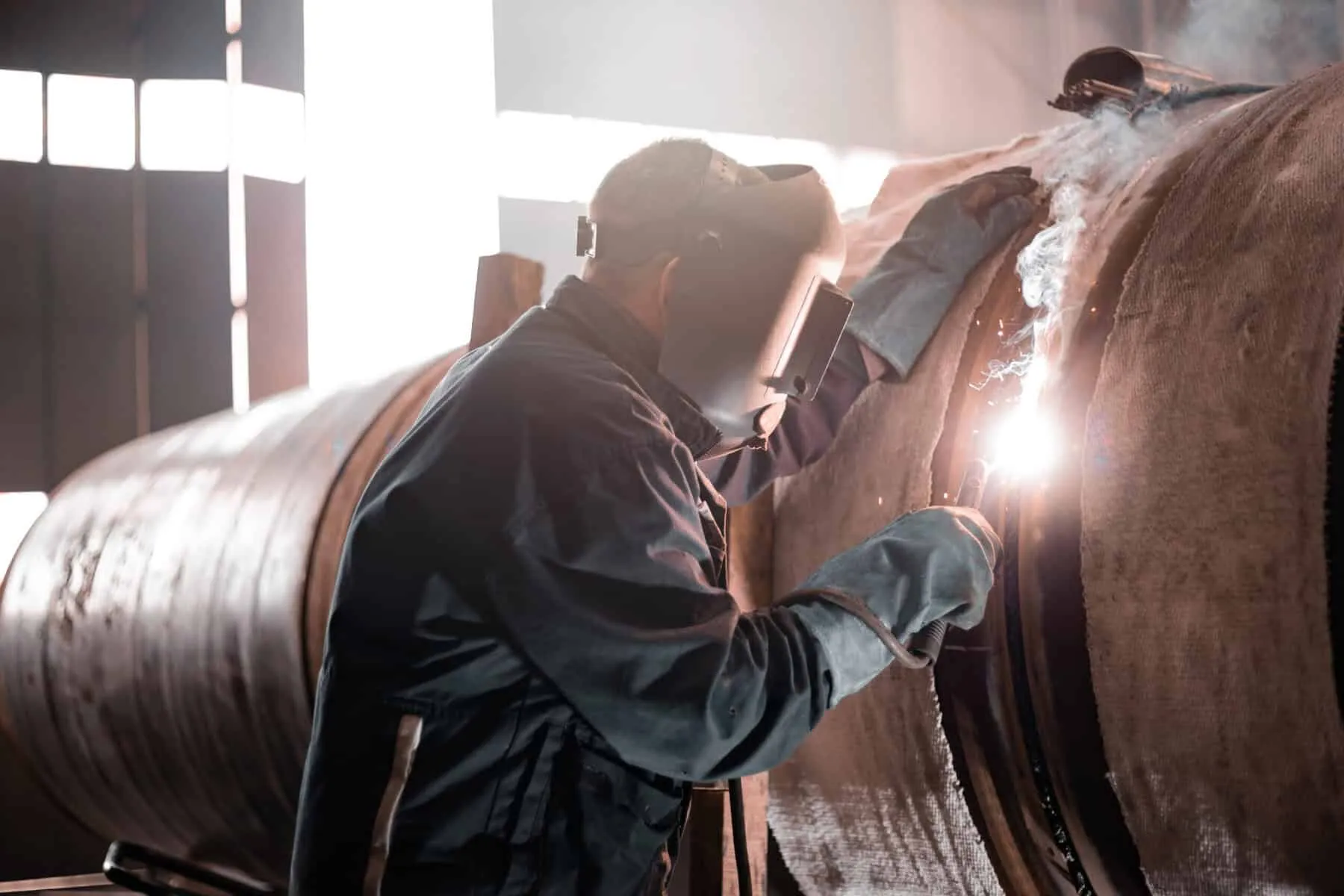
Jacketed pipe is a core pipe that carries the product, surrounded by a larger jacket pipe that carries a heating or cooling medium. Steam, hot oil, hot water or glycol flows through the space between them. The jacket keeps the product at an even temperature along the full length of the line.
Plants use jacketed pipe for products that would freeze up, thicken or degrade if they cooled, such as molten sulfur, asphalt, resins, waxes, chocolate and syrups. It is also used to cool products that are temperature sensitive.
Fig. 2
Building jacketed pipe takes careful fabrication:
Core pipe
The core is fabricated and tested first.
Jacket sections
Jackets are fitted over the core with spacers to keep it centered.
Jacket closures
Closures seal the ends of each jacketed section.
Crossovers
Crossovers connect jackets around flanges and fittings so the heating medium keeps flowing.
Testing
Both the core and the jacket are tested.
The hardest part is keeping temperature even at flanges, valves and fittings. Those are where cold spots and freeze-ups usually happen.
How do you choose the right piping for a job?
Choose the piping based on what it carries, how clean it must stay and what temperature the product needs. Product contact in a food plant points to sanitary tubing. Utilities and most industrial fluids point to process pipe. Products that must stay hot or cold along the run point to jacketed pipe or heat tracing.
Questions to answer before fabrication:
- What is the fluid, and at what pressure and temperature?
- Does it touch food, beverage or pharmaceutical product?
- What cleaning method will be used?
- Does it need to stay at a set temperature?
- What corrosion or abrasion will it see?
- What code, standard or plant specification applies?
Your engineer or plant standard sets the design requirements. A fabricator builds and installs to them.
Can one contractor handle all 3?
Yes, if the contractor has welders qualified for each type of work and shop space to build spools. Sanitary, process and jacketed piping use different procedures and different welding skills. Many plants have all 3 types in the same building, so working with one crew keeps fit-up, tie-ins and scheduling simpler.
Our welding and fabrication crews build and install pipe across Northwest Indiana and Chicagoland, with AWS certified welders and our Portage machine shop behind them.
Talk to a fabricator
Have drawings or a line that needs replacing? Send them through our request a quote page, or contact us to talk through the job.