An industrial fan usually needs balancing when vibration climbs at running speed, bearings start failing early, the fan sounds louder or rougher, or material is building up on or wearing off the blades. Fans also need balancing after blade repairs, cleaning or a wheel replacement. A vibration reading confirms imbalance before you commit to the work.
Key takeaways
- Rising vibration at running speed is the clearest sign of imbalance.
- Buildup, wear and repairs are the usual causes in heavy industry.
- Confirm with a vibration reading before you balance. Misalignment and looseness look similar.
- Clean and repair the wheel first, then balance it.
What are the most common signs a fan is out of balance?
The clearest sign is vibration that rises at the fan’s running speed. Other signs include bearings that fail sooner than they should, loose or cracked bolts and welds, rising noise, and visible buildup or erosion on the wheel. If several of these show up together, imbalance is a likely cause.
| Sign | What you notice | Why it matters |
|---|---|---|
| Rising vibration | Higher readings on bearing housings, often at 1x running speed | Load on bearings grows quickly with imbalance |
| Early bearing failures | Bearings replaced more often than the rest of the plant’s fans | Repeated failures point to a root cause |
| Noise and roughness | A rumble or beat that was not there before | Often the first sign operators report |
| Buildup on blades | Dust, scale or sticky product caked on the wheel | Uneven buildup shifts the center of mass |
| Blade wear or erosion | Thin or worn leading edges | Uneven metal loss creates imbalance |
| Cracked welds or loose hardware | Cracks at hub, blades, pedestal or base | Vibration fatigues welds and bolts |
| Dust at the housing seal | Leaks around the shaft seal | Shaft motion damages seals |
Why does imbalance damage a fan so quickly?
Imbalance creates a force that rotates with the shaft and pulls the bearings in a new direction every revolution. That force grows with the square of speed, so a small heavy spot becomes a large load on a fast fan. Over time it wears bearings, fatigues welds, loosens bolts and can crack the pedestal or base.
Fig. 1
What causes industrial fans to go out of balance?
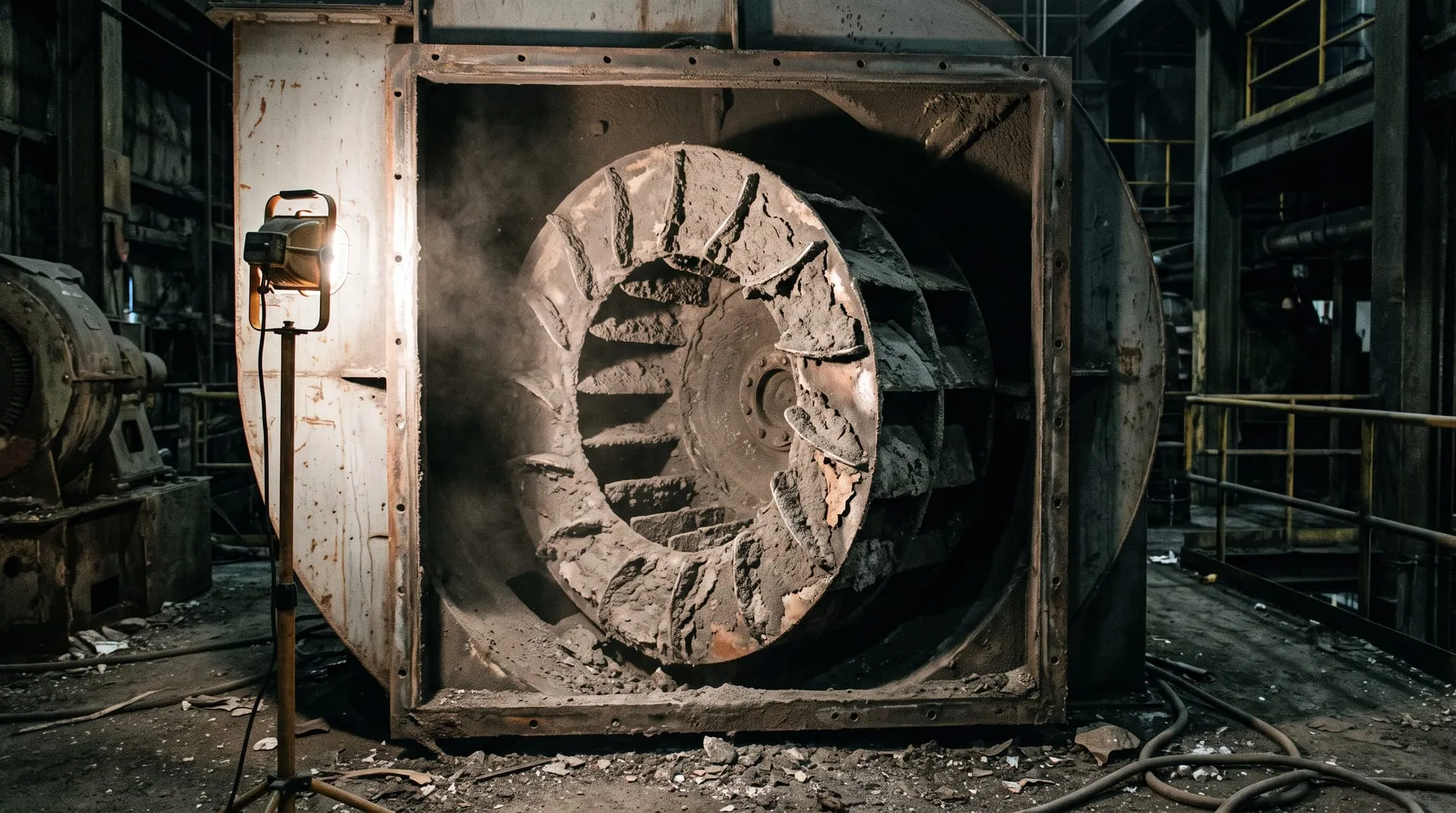
Fans go out of balance when the wheel’s mass is no longer evenly spread around its center. In heavy industry the usual causes are buildup, wear, repairs and mechanical shifts. Fans handling dirty, hot or sticky gas, like induced draft fans and dust collector exhaust fans, go out of balance more often.
Common causes:
- Material buildup. Dust, scale and product stick to blades and then break off unevenly.
- Erosion and wear. Abrasive dust wears blade edges at different rates.
- Cleaning. Washing or blasting a wheel removes buildup unevenly.
- Weld repairs. New weld metal adds mass to one area.
- Lost balance weights. Weights come loose or wear off.
- Thermal distortion. Heat bows a shaft or warps a wheel.
- Hub or wheel movement. A wheel slips on its shaft or a key wears.
How do you confirm the fan needs balancing?
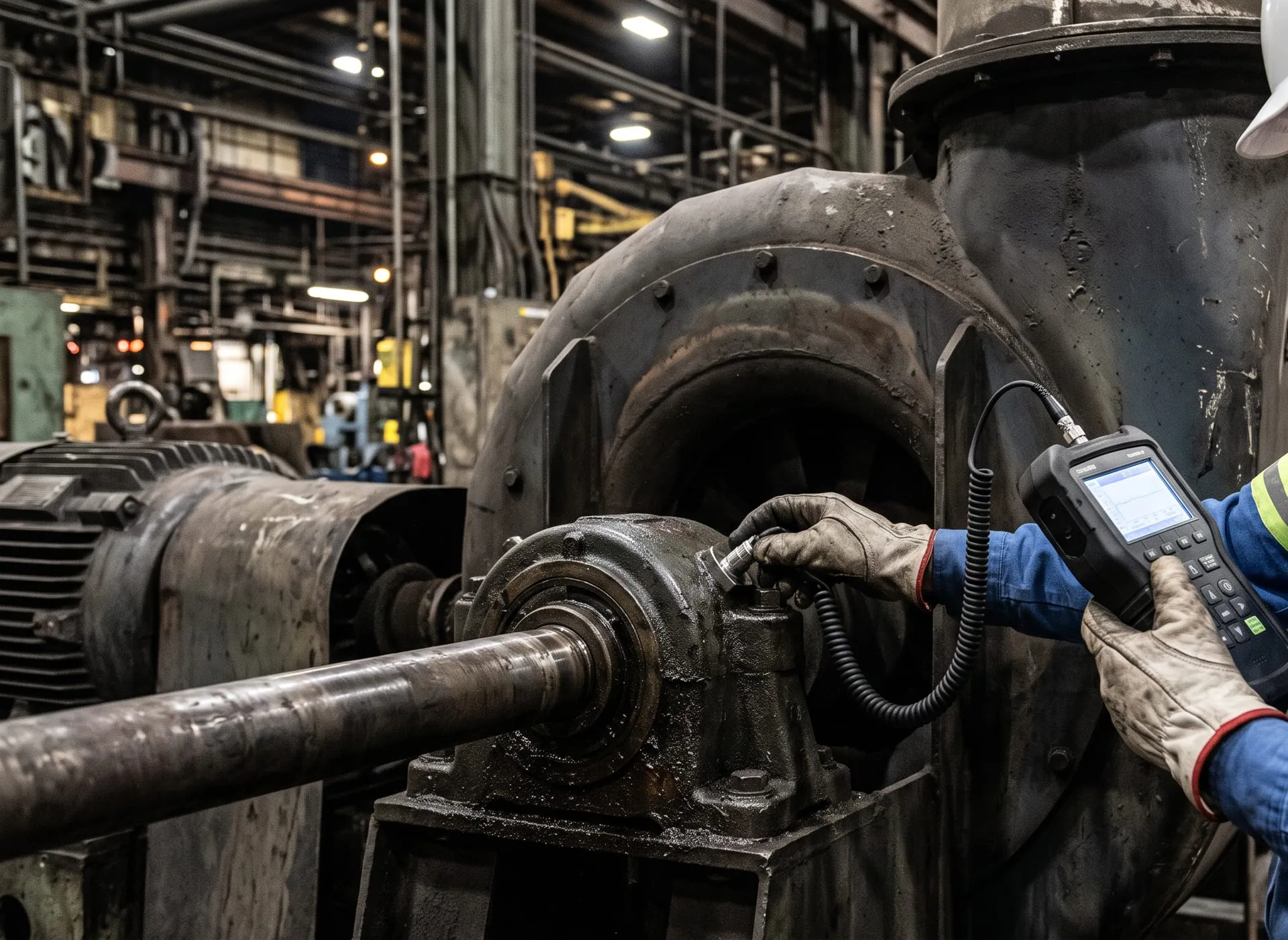
Take a vibration reading before you balance. A vibration analysis shows whether the problem is imbalance or something else that looks like it. Balancing a fan that is actually misaligned, loose or resonant will not fix the vibration, and it wastes time during a short outage window.
Here is how the common causes tend to show up:
| Problem | Typical vibration pattern |
|---|---|
| Imbalance | Strong 1x running speed, mostly radial, steady phase |
| Misalignment | High axial readings, 1x and 2x components |
| Mechanical looseness | Multiple harmonics, erratic phase |
| Bearing defects | High-frequency readings at bearing defect frequencies |
| Resonance | Vibration that peaks at a certain speed |
If the readings point to misalignment, a laser alignment is the fix. Imbalance and misalignment often show up together, so many crews check both on the same visit.
What happens during a fan balancing job?
During a field balance, the crew mounts vibration sensors and a speed reference on the fan, takes baseline readings, adds a trial weight and measures how the fan responds. From that, the instrument calculates the size and location of the correction weight. The weight is welded or bolted on, and final readings confirm the result.
Inspect
Check the wheel, hub, shaft and bearings before any balancing.
Clean and check
Clean off buildup so you balance a clean wheel. Look for looseness, cracks and soft foot.
Baseline readings
Record vibration and phase at the bearings with the fan at normal speed.
Trial weight
Add a known trial weight, rerun and let the instrument calculate the correction.
Correct and verify
Weld or bolt on the correction weight, then record before and after readings.
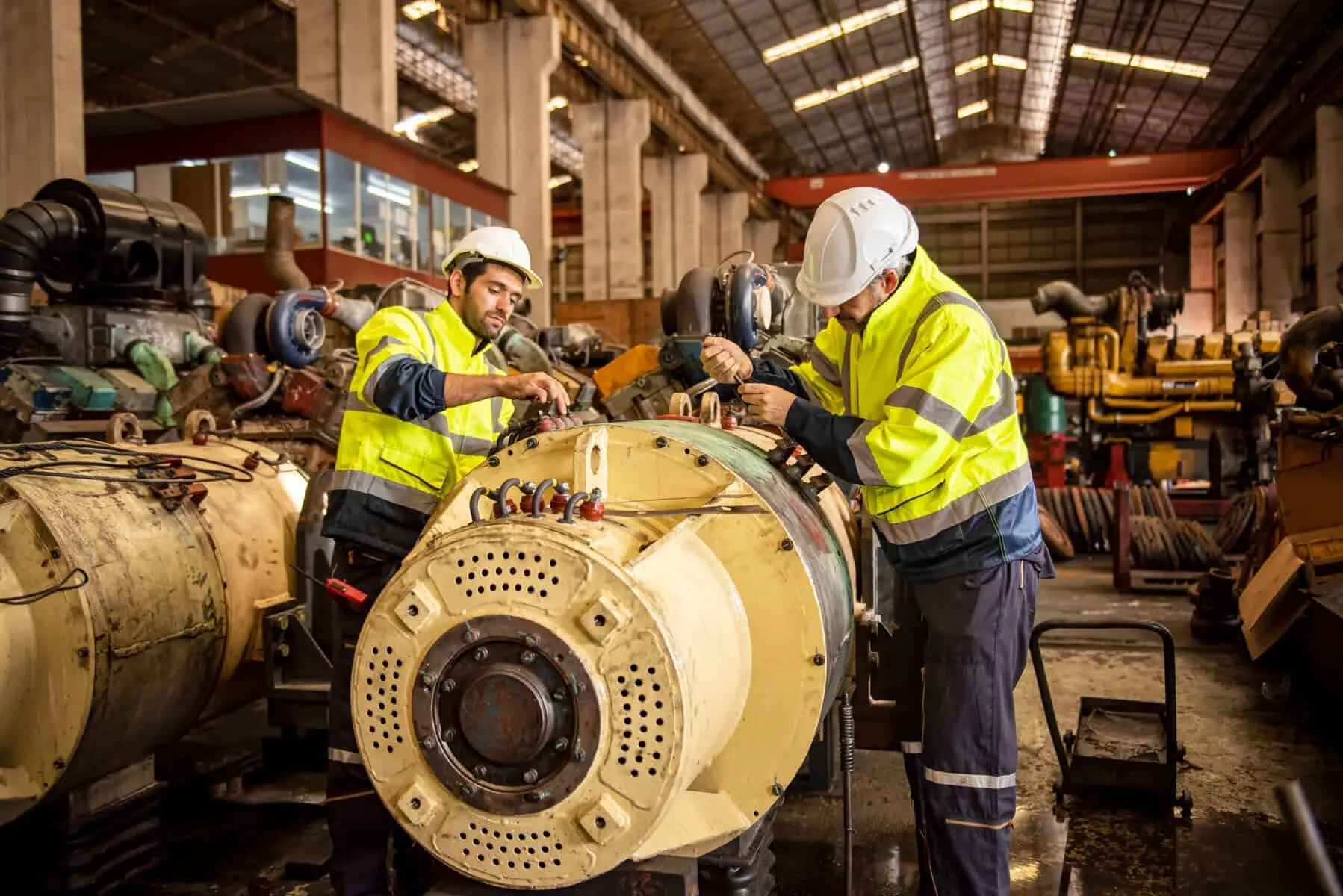
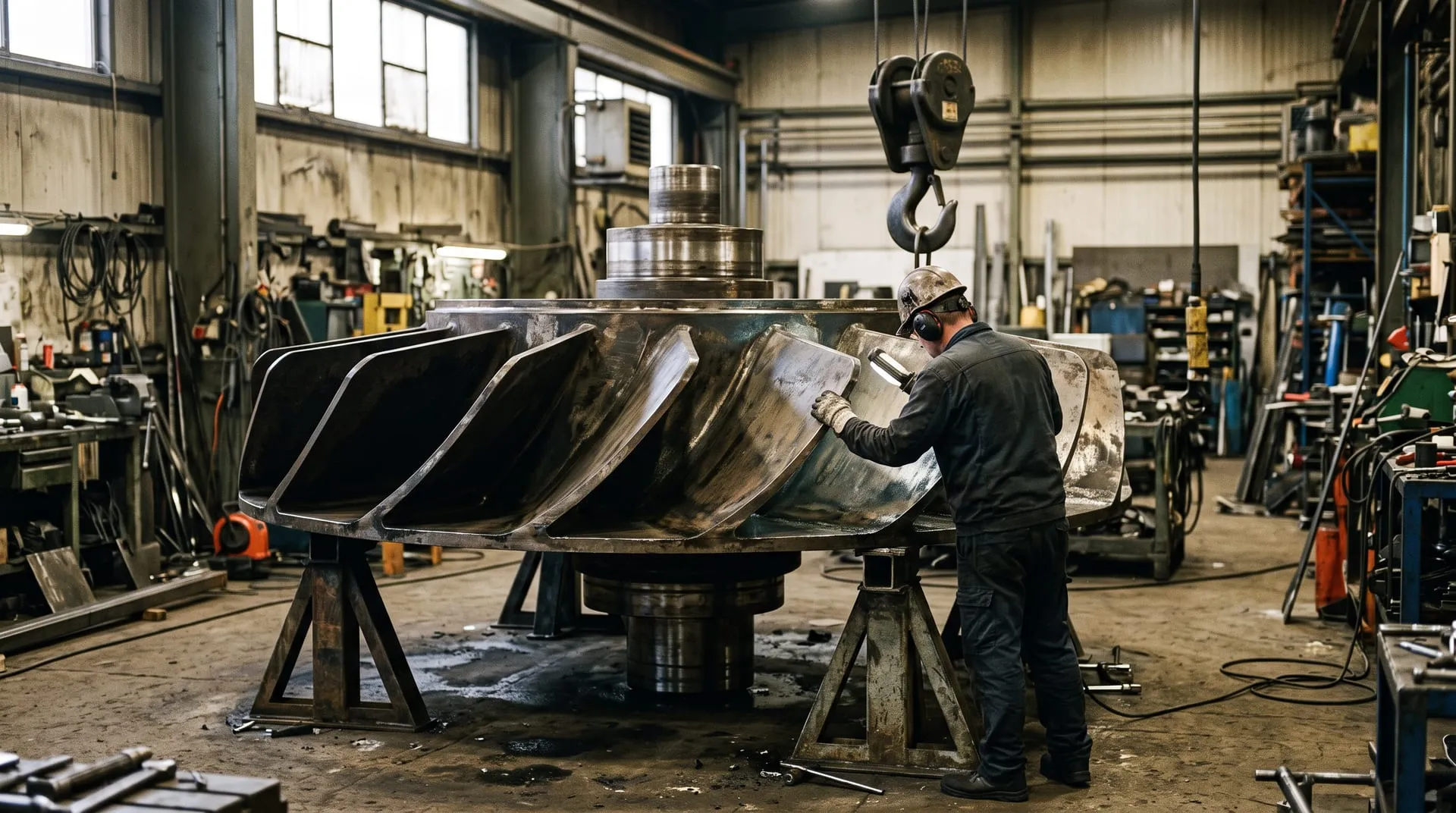
Single-plane balancing works for narrow wheels. Wider wheels and double-inlet fans often need two-plane balancing. When the wheel is damaged, it may come out for repair and dynamic balancing in the shop.
Should you clean or repair the wheel before balancing?
Yes. Balancing a dirty or damaged wheel only holds until the buildup shifts or the crack grows. Clean the wheel first, inspect the blades and welds, and repair any damage. Then balance. If the wheel is badly eroded or cracked, it may need a rebuild or replacement before balancing makes sense.
For fans on dust collectors and process exhaust, baghouse and dust collection problems such as torn bags can send dust through the fan and speed up buildup and wear. Fixing the source cuts down on how often the fan needs balancing.
How can you reduce how often a fan needs balancing?
Keep the wheel clean, trend vibration, and fix the cause of buildup or wear. Many plants add fan vibration checks to their regular PM rounds and schedule cleaning before buildup gets heavy. Wear-resistant coatings or hardfacing on blade edges can also slow erosion on fans handling abrasive dust.
Keep fans in balance longer
- Trend vibration on every critical fan during PM rounds
- Clean on a schedule that matches the gas stream
- Inspect blades and welds during outages
- Check alignment after any motor or bearing work
- Keep balance records so you know each fan’s history
Is your fan shaking now?
Our crews balance industrial fans in place and in our Portage shop, and pair the work with alignment, bearing replacement and equipment rebuilds when the fan needs more. See our fan balancing service, or call (219) 386-1506 if a fan is shaking now.