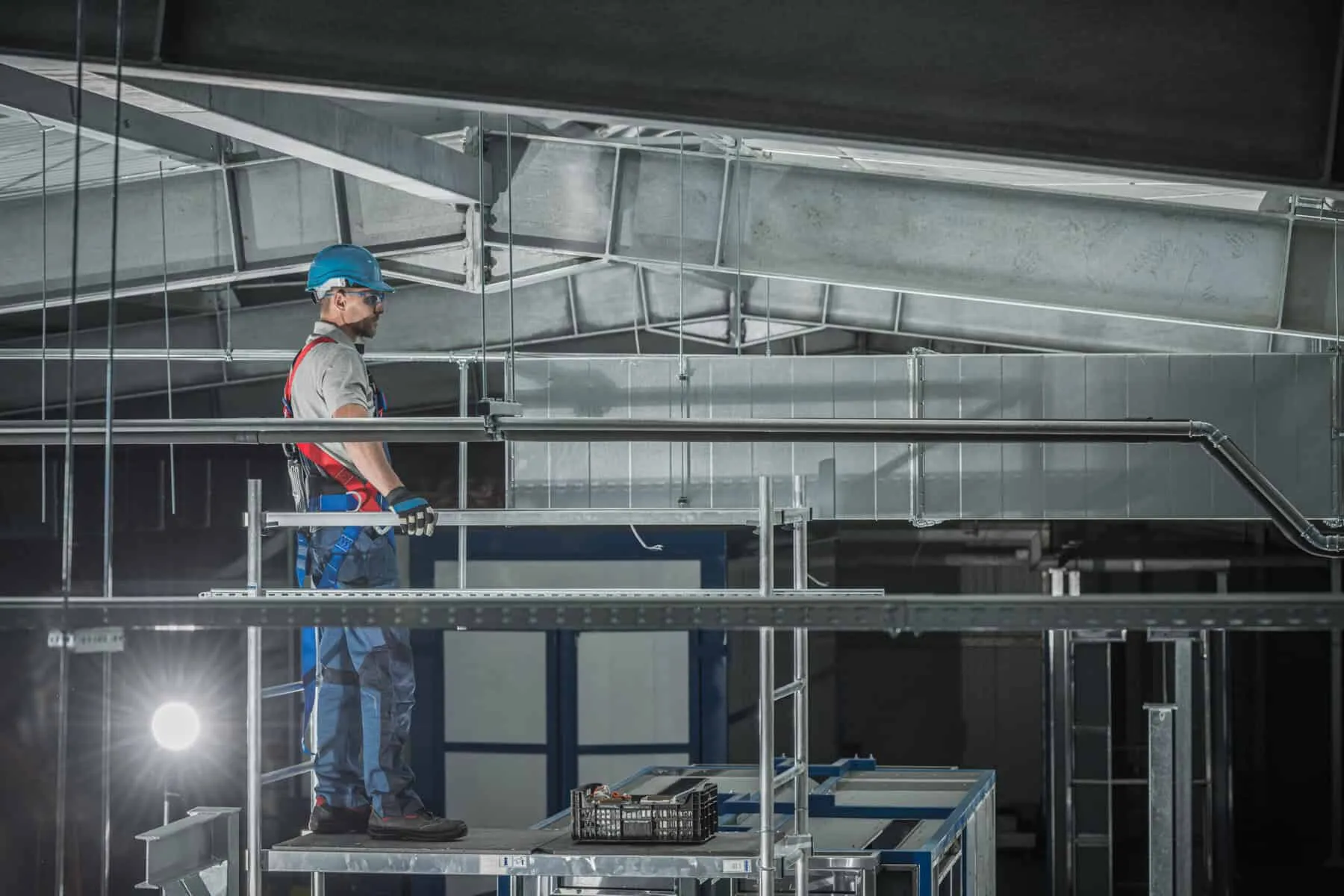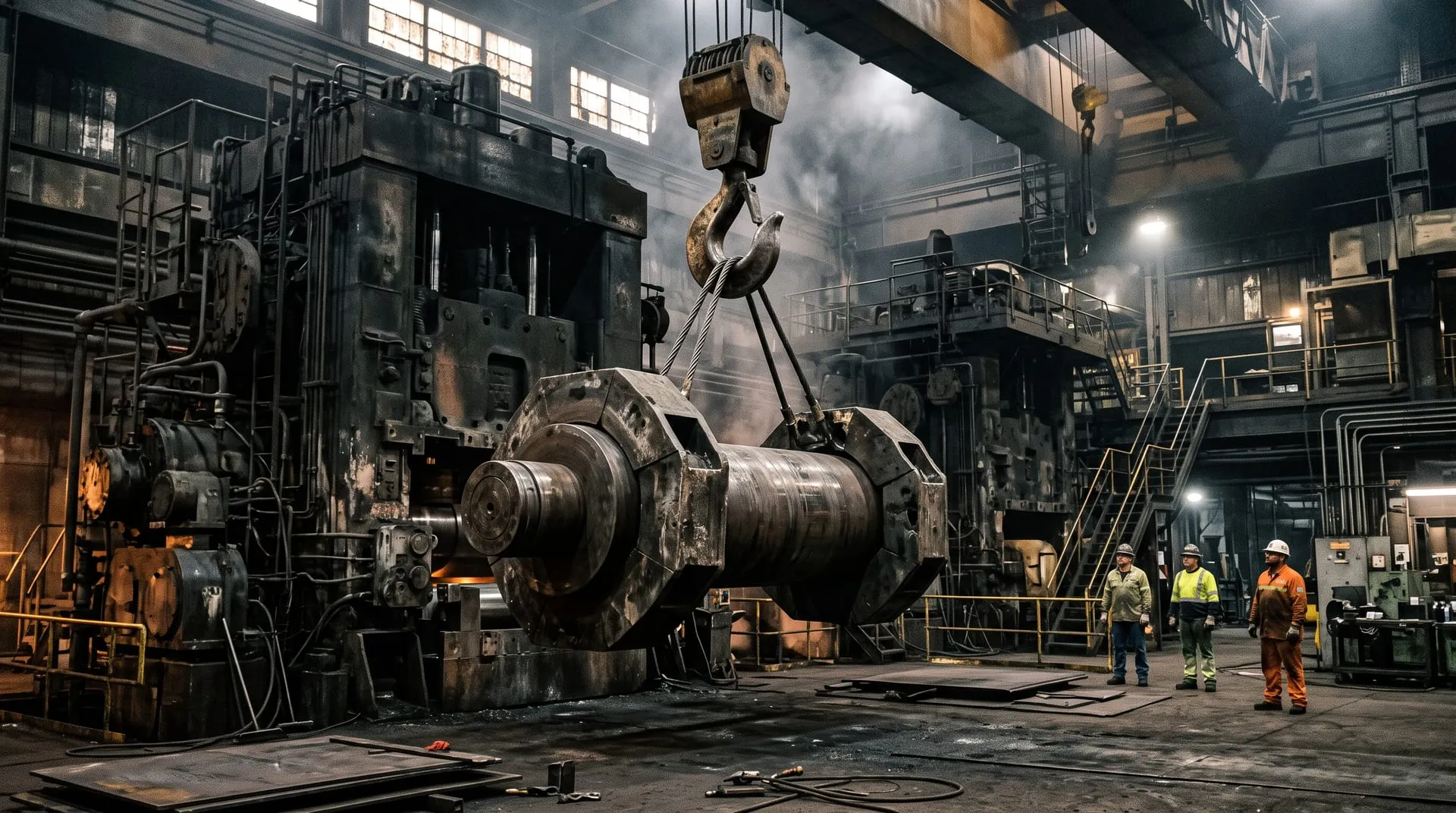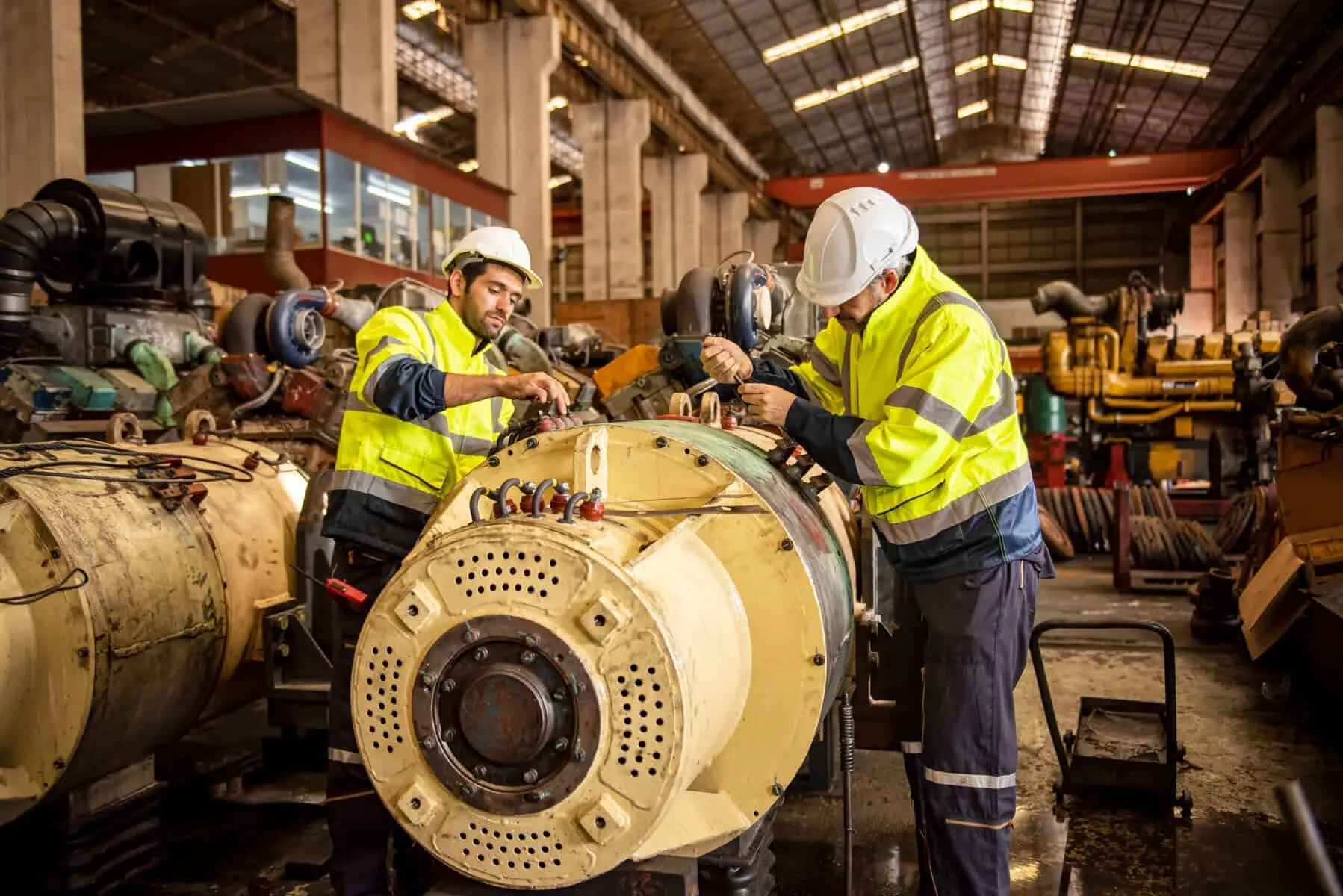
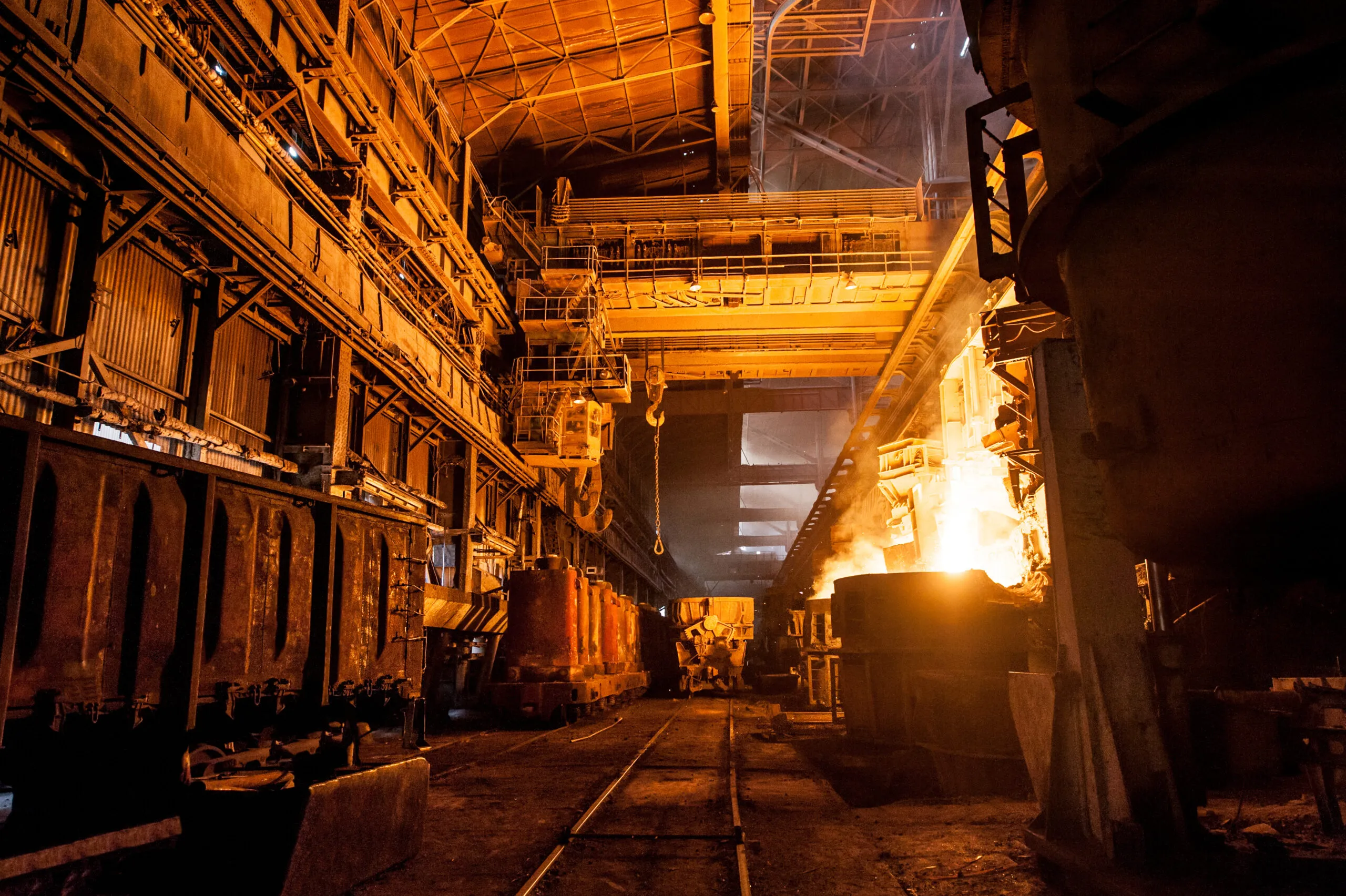
At a steel mill, a millwright installs, aligns, repairs and moves the heavy mechanical equipment that makes and moves steel. The work covers roll changes, gearbox and drive rebuilds, conveyor and crane systems, laser shaft alignment, fan balancing and rigging during outages. Millwrights work to drawings and tolerances, and many also weld, cut and fabricate on the same job.
Key takeaways
- Millwrights own the mechanical side of the mill: setting, aligning, rebuilding and moving equipment.
- Every day starts with safety: a job hazard analysis, lockout/tagout and the right permits.
- Outages are where the big jobs happen, on tight schedules.
- Contract crews fill the peaks and bring shop capacity the plant may not have.
What equipment do millwrights work on in a steel mill?
Millwrights work on almost every piece of rotating and moving equipment in a mill. That includes rolling mill stands and their drives, gearboxes, pumps, fans, conveyors, cranes, ladle and furnace equipment, cooling beds, coilers and material handling systems. If it turns, lifts, slides or carries a load, a millwright probably maintains it.
Fig. 1
| Area of the mill | Typical millwright work |
|---|---|
| Melt shop and furnaces | Furnace equipment, ladle cars, tilting mechanisms, fume system fans |
| Casters | Segment changes, roll and bearing work, drive alignment |
| Hot strip and rolling mills | Roll changes, chock and bearing work, spindle and drive repairs |
| Finishing and coating lines | Line rolls, tension bridles, coilers, uncoilers |
| Material handling | Conveyors, transfer cars, cranes, scales |
| Utilities | Pumps, cooling water systems, blowers, compressors |
| Environmental systems | Baghouse fans, dampers, rotary airlocks, ductwork |
What does a typical day look like?
A typical day mixes planned work with whatever broke overnight. Crews start with a safety briefing and a job hazard analysis, lock out the equipment, and then work through the job: rigging out a component, measuring wear, rebuilding or replacing parts, setting it back in and aligning it. Breakdowns can change the plan in minutes.
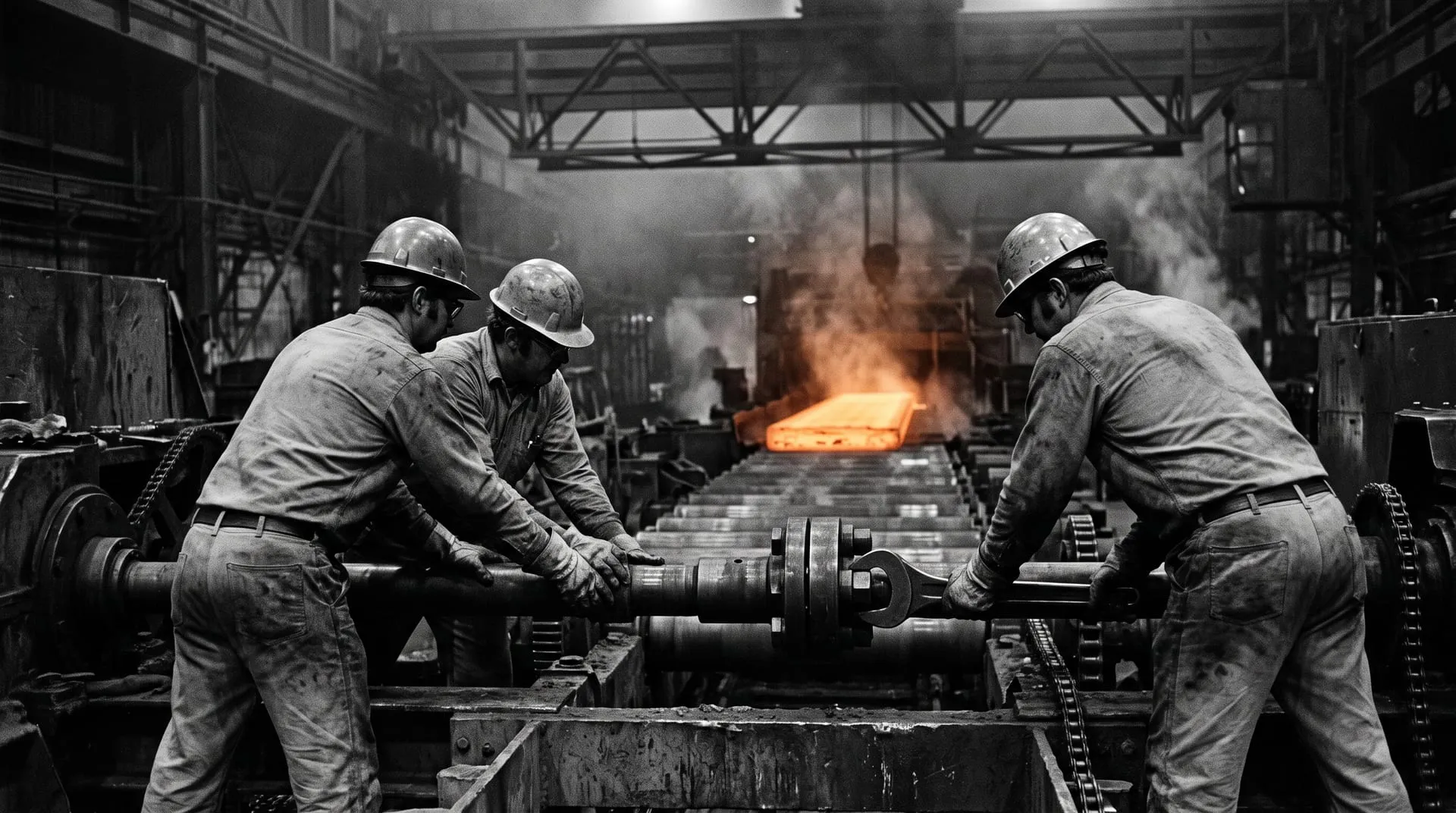
Most days include some version of:
Safety first
Job hazard analysis (JHA), lockout/tagout, and permits for hot work or confined space.
Disassemble and inspect
Pull the component, clean it and measure it against spec.
Repair or replace
Install bearings, seals, gears or rebuilt assemblies.
Set and align
Rig the unit into place, shim it and laser align it.
Test and hand off
Run the equipment, check vibration and temperatures, and return it to operations.
What do millwrights do during a mill outage?
During an outage, millwrights carry out the large jobs that cannot happen while the mill is running. That includes major rebuilds, equipment replacements, roll stand overhauls, conveyor replacements, alignment and installation of new equipment. Outages run on tight schedules, so planning and crew coordination matter as much as technical skill.
Typical outage scope
- Gearbox, pump and motor change-outs
- Roll changes and stand overhauls
- Conveyor and drive replacement
- New equipment installation and setting
- Laser alignment of every drive that was disturbed
- Structural and pipe repairs with welders on the same crew
What tools and skills does a steel mill millwright use?
Steel mill millwrights use rigging gear, precision measuring tools, alignment systems and welding equipment. The core skills are reading drawings, rigging heavy loads safely, measuring to tolerance, and rebuilding mechanical assemblies. Many also do torch cutting, welding and basic machining so a job can keep moving without waiting on another trade.
| Skill | Tools commonly used |
|---|---|
| Rigging and setting | Chain falls, come-alongs, jacks, cribbing, cranes |
| Precision measurement | Micrometers, dial indicators, feeler gauges, levels |
| Alignment | Laser alignment systems, dial indicator brackets, shims |
| Rebuilding | Bearing heaters, pullers, presses, torque tools |
| Welding and cutting | Stick, MIG and TIG welders, torches |
| Troubleshooting | Vibration meters, infrared thermometers |
How is a millwright different from other trades in the mill?
A millwright owns the mechanical side of the equipment: setting it, aligning it, rebuilding it and keeping it running. Electricians handle power and controls, pipefitters handle piping systems, and ironworkers handle structural steel. On a real job those lines blur, and a good millwright crew works closely with every trade.
In practice, millwrights are the ones who:
- Set a new gearbox on its base and align it to the motor;
- Pull a failed pump, rebuild it and put it back;
- Replace conveyor pulleys, idlers and drives;
- Work with electricians on motor changes and with controls and automation techs on startup.
How do millwrights keep a steel mill safe?
Safety is part of every task. Millwrights in a mill follow lockout/tagout before touching equipment, complete a job hazard analysis on every job, and work under permits for hot work and confined space entry. Fall protection, crane and rigging rules and heat stress controls are part of the routine in a hot environment.
Why do mills hire contract millwrights?
Mills hire contract millwrights to handle peaks in work, large outages, specialized rebuilds and emergency breakdowns. A contractor adds trained crews when the plant’s own maintenance team is stretched, and brings shop capacity for machining and fabrication that may not exist inside the mill.
Reasons mills commonly bring in a contractor:
- Outage work that needs more hands than the in-house crew has;
- Rebuilds that need a machine shop for parts;
- Emergency repairs at night or on weekends;
- Installation and equipment retrofitting projects;
- Specialized work like fan balancing and laser alignment.
Contractors working inside a mill usually need prequalification. South Shore Industrial is an ISNetworld member contractor and is prequalified through Avetta.
What is millwright work like in Northwest Indiana?
Northwest Indiana is home to integrated steel mills along the lakefront, finishing lines and the plants that supply them. Millwright work here means heavy equipment, hot environments and tight outage windows. Our Portage shop is a short drive from the mills in Gary, Burns Harbor and East Chicago.
You can see one example in our Gary steel mill retrofit project, where the crew combined fabrication, retrofitting, alignment and process pipe work.
Need millwrights for your mill?
Our crews handle millwright services for steel mills across Northwest Indiana and Chicagoland, from planned outages to 24/7 breakdowns. Contact us or call (219) 386-1506 to talk to a crew lead.