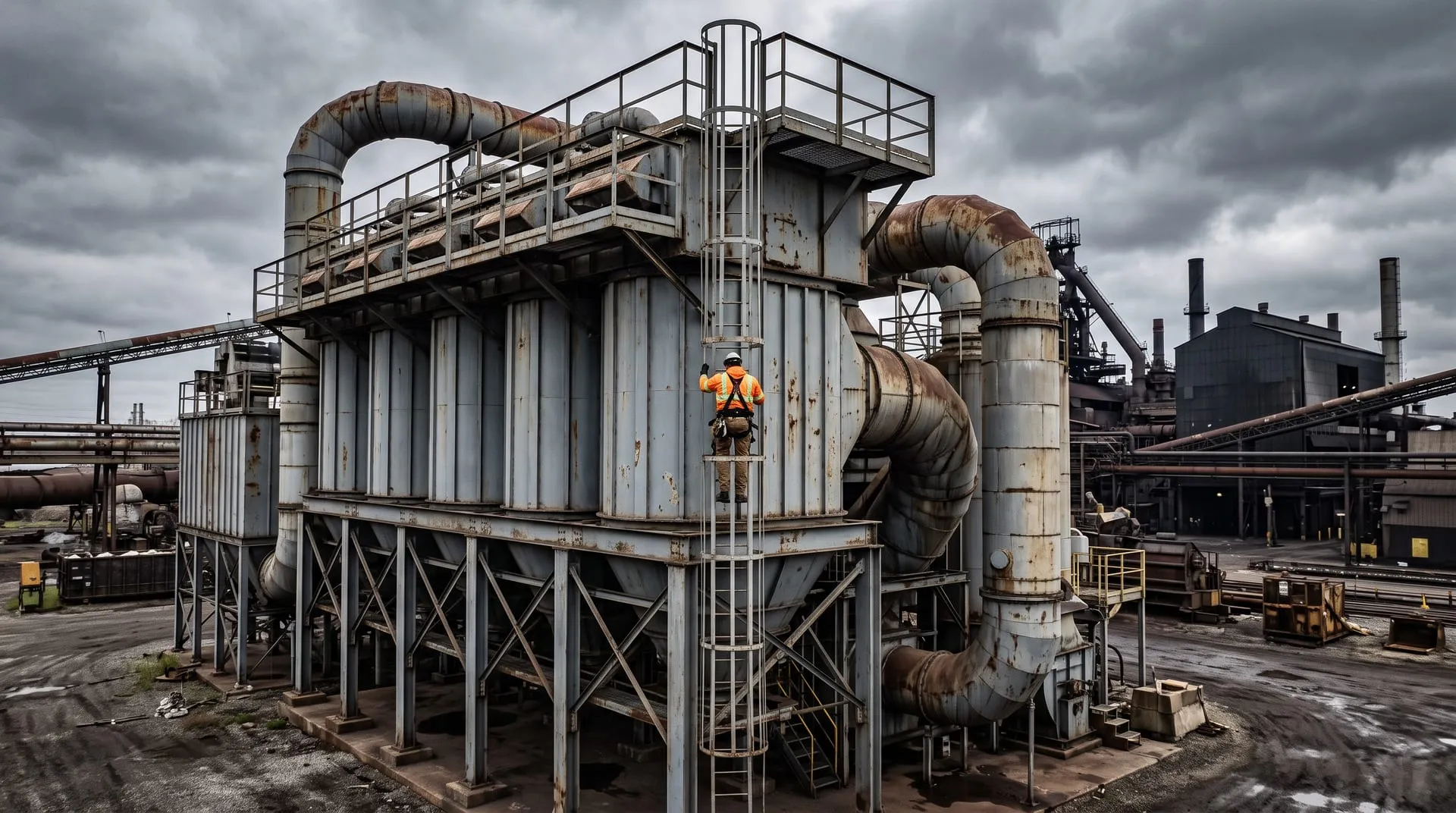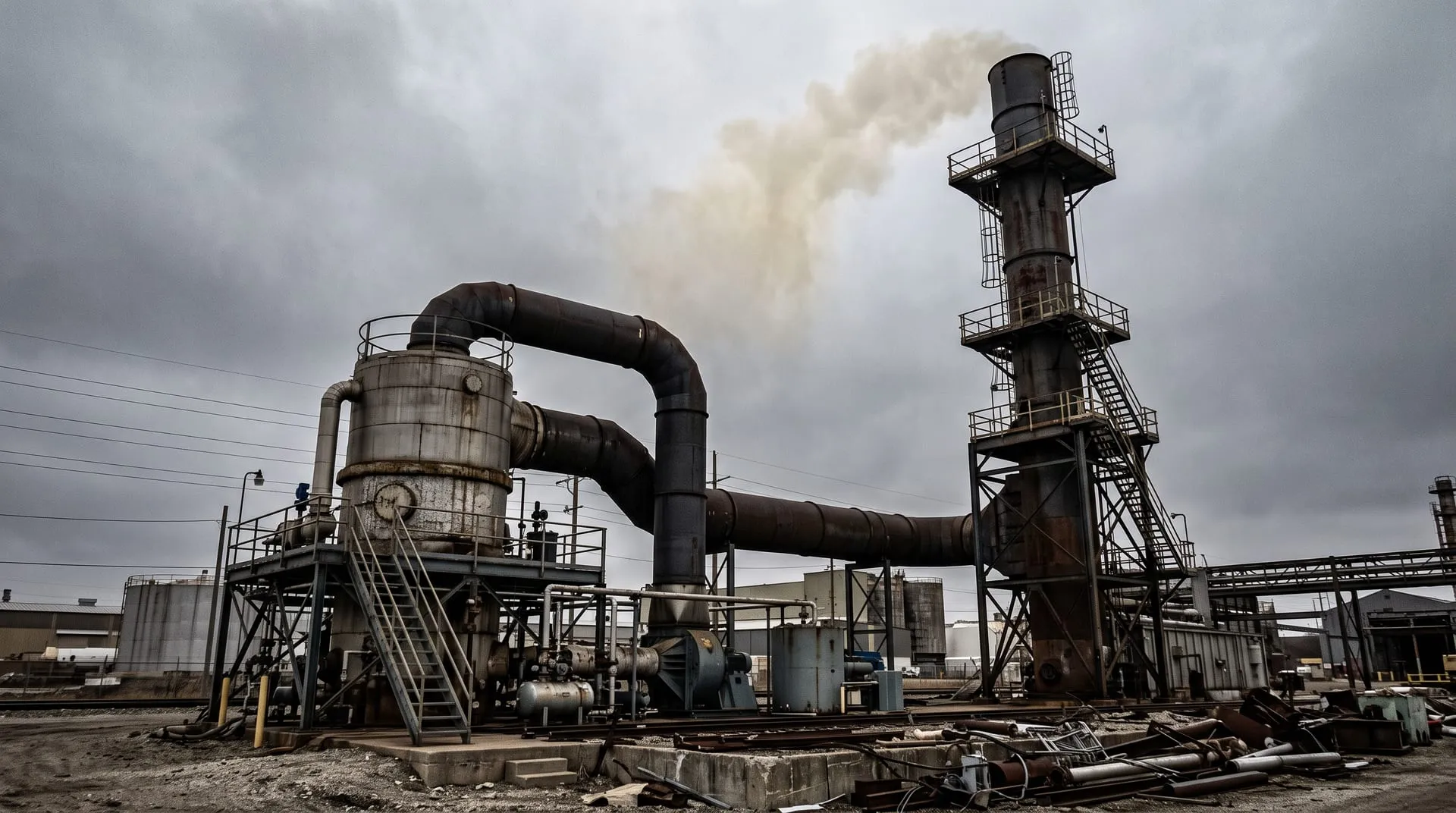
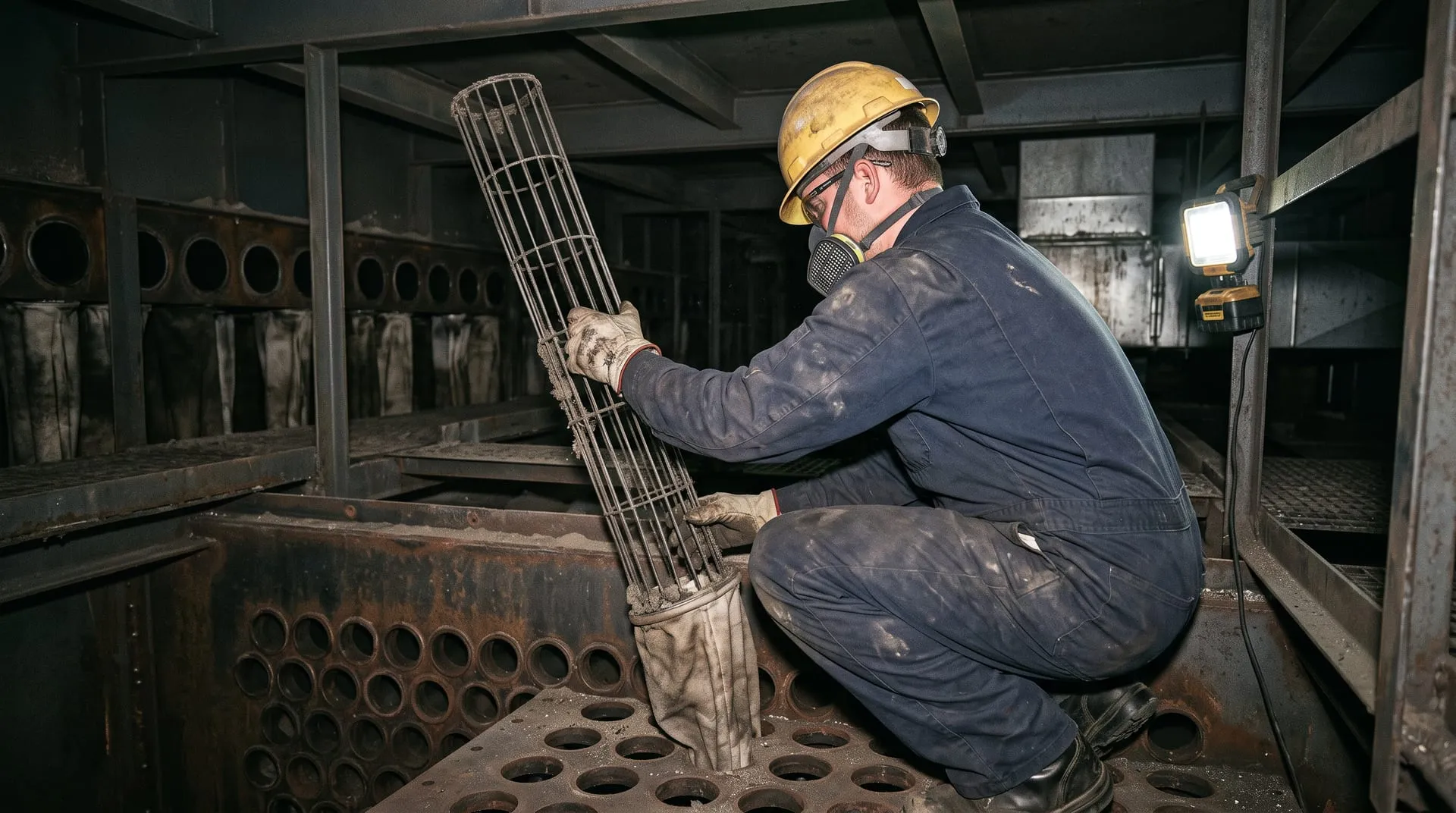
A baghouse stays in compliance when it keeps performing the way your air permit assumes it will. That means tracking differential pressure, confirming pulse cleaning works, watching for visible emissions and leaks, keeping hoppers and airlocks discharging, and inspecting bags, cages and seals on a schedule. Confirm your specific monitoring and recordkeeping requirements with your environmental team.
Key takeaways
- Know your unit's normal differential pressure range, record it every shift, and act when it moves.
- Most failures start quietly: a dead pulse valve, water in the air header, a worn airlock seal.
- Change bags based on trends and inspections, not just the calendar.
- Your environmental team interprets the permit. Maintenance keeps the equipment able to meet it.
Why does baghouse maintenance matter for compliance?
Air permits are written around equipment that works as designed. If bags tear, cleaning fails or a hopper overfills, emissions can rise and capture at the hoods can drop. Good maintenance keeps the baghouse doing its job, and good records show that it was. Both matter when an inspector asks.
Fig. 1
Many permits and compliance plans include requirements such as monitoring and recording differential pressure, visible emissions observations, bag leak detection on some sources, inspection and maintenance logs, and corrective action when a reading moves outside its normal range. Your environmental team knows which of these apply to your unit.
What should be checked every shift?
Every shift, check differential pressure, confirm the pulse cleaning cycle is running, look at the stack or outlet for visible emissions, and make sure hoppers are discharging. These are fast checks, and they catch most problems before they become an emission event or a shutdown.
Every shift
- Differential pressure recorded and within your normal range
- Pulse cleaning sequence running; you can hear or see each valve fire
- Compressed air pressure to the header at the OEM setting
- No visible emissions at the stack or outlet
- Hoppers discharging; no high-level alarms
- Rotary airlocks or screw conveyors running
- Fan running normally, no unusual noise or vibration
- Bag leak detector reading normal, if installed
- Readings and any corrective action logged
Fig. 2
What should be checked every week?
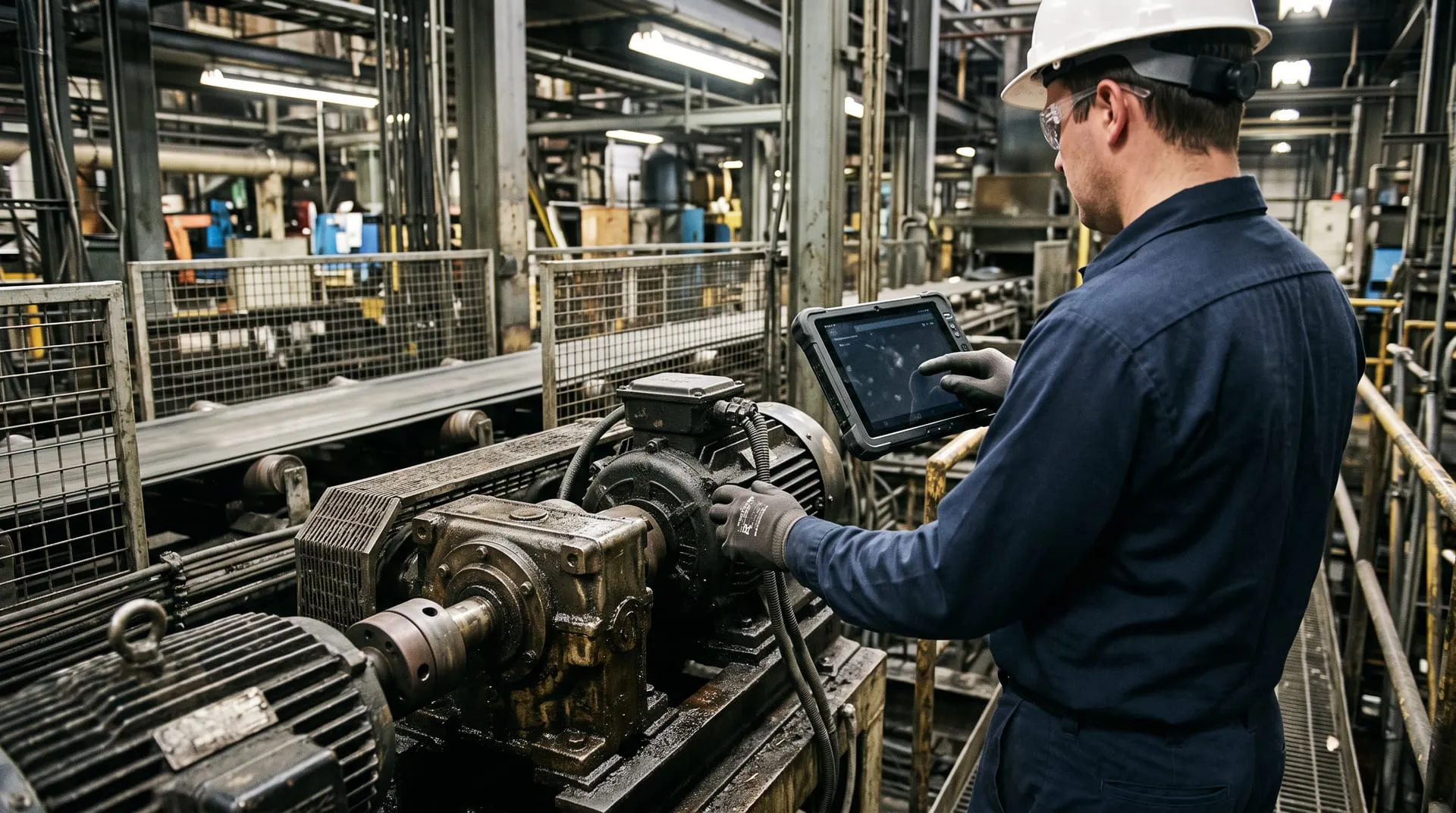
Weekly checks look at the parts that wear and fail quietly. Inspect diaphragm valves and solenoids, drain moisture from the compressed air system, check airlock seals and drives, inspect door gaskets and look for leaks in ductwork and housings. Trend differential pressure to spot slow changes.
Every week
- Diaphragm valves and solenoids tested; failed valves replaced
- Compressed air dryer and drains working; no water in the header
- Rotary airlock tips, seals and drive chain checked
- Access door gaskets and hatches sealing
- Ductwork, expansion joints and housing checked for holes and leaks
- Dampers moving freely and set correctly
- Differential pressure trend reviewed for drift
- Fan bearing temperatures and vibration checked
What should be done monthly or quarterly?
Monthly and quarterly work goes inside the unit. Inspect the clean side for dust that signals a leak, check bags and cages in a sample of rows, inspect tubesheet seals and look at the hoppers and structure for corrosion or buildup. Many plants also check hood capture at the source.
| Task | What to look for | Why it matters |
|---|---|---|
| Clean air plenum inspection | Dust deposits, streaks near bag outlets | Shows which bags are leaking |
| Bag and cage inspection | Holes, wear at the bottom, cage corrosion | Worn bags cause leaks; bad cages tear bags |
| Tubesheet seal check | Gaps, loose snap bands | Leaks bypass the filters |
| Hopper inspection | Buildup, bridging, corrosion | Overfilled hoppers re-entrain dust onto bags |
| Hood and capture check | Dust escaping at pickup points | Poor capture at the source |
| Leak test with fluorescent powder | Glowing spots on the clean side | Pinpoints failed bags and seals |
| Fan inspection and balance | Wheel buildup, wear, vibration | Lost airflow reduces capture |
What should happen during an outage?
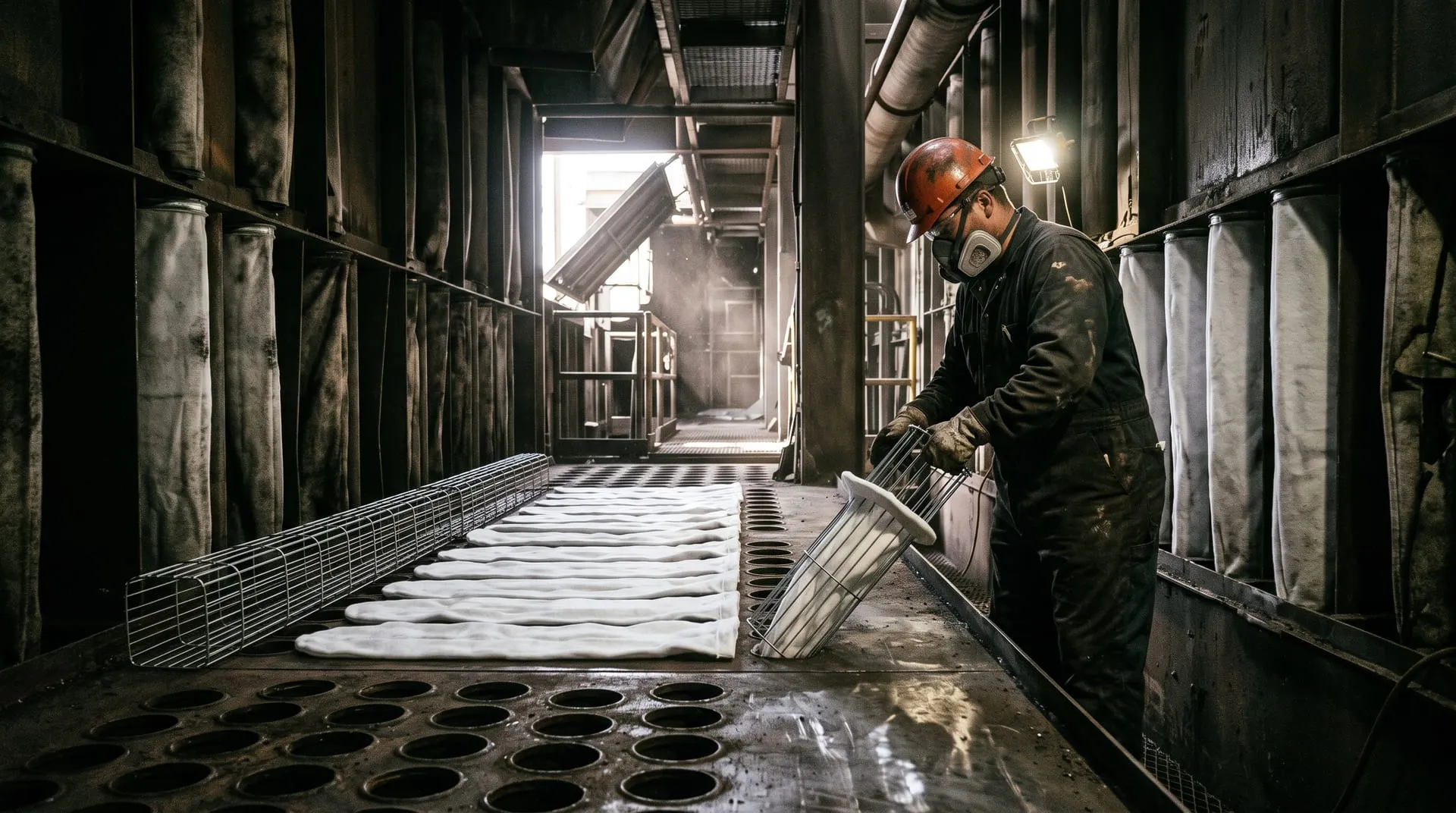
Outages are the time for bag change-outs, airlock rebuilds, structural and duct repairs, and fan work. Plan bag replacement around differential pressure trends and inspection results, not just the calendar. Use the downtime to fix the issues that cause repeat failures.
Each planned outage
- Bags and cages replaced as needed; venturis and snap bands checkedEach outage
- Tubesheet cleaned and inspected for cracks or warpingEach outage
- Rotary airlocks rebuilt or replacedAs needed
- Hoppers cleaned; level sensors and vibrators testedEach outage
- Housing, ductwork and supports repaired; corroded sections replacedAs needed
- Fan wheel cleaned, inspected and balancedEach outage
- Motor and fan drive laser alignedEach outage
- Pulse header, valves and controls testedEach outage
- Insulation and heat tracing repaired where condensation is a problemAs needed
What problems cause the most baghouse failures?
The most common problems are failed pulse cleaning, moisture, airflow imbalance and worn bags. Each one shows up in the differential pressure readings or as visible emissions. Matching the symptom to the cause saves time and keeps you from replacing bags that are not the real problem.
| Symptom | Likely causes |
|---|---|
| High differential pressure | Blinded bags, failed pulse valves, low air pressure, moisture, high airflow |
| Low or falling differential pressure | Torn or missing bags, leaks, reduced fan airflow |
| Visible emissions | Failed bags, tubesheet leaks, poor bag seating |
| Dust escaping at hoods | Low airflow, damper problems, duct leaks, fan wear |
| Frequent bag failures | Abrasion at inlet, cage damage, chemical attack, condensation |
How does the fan affect baghouse performance?
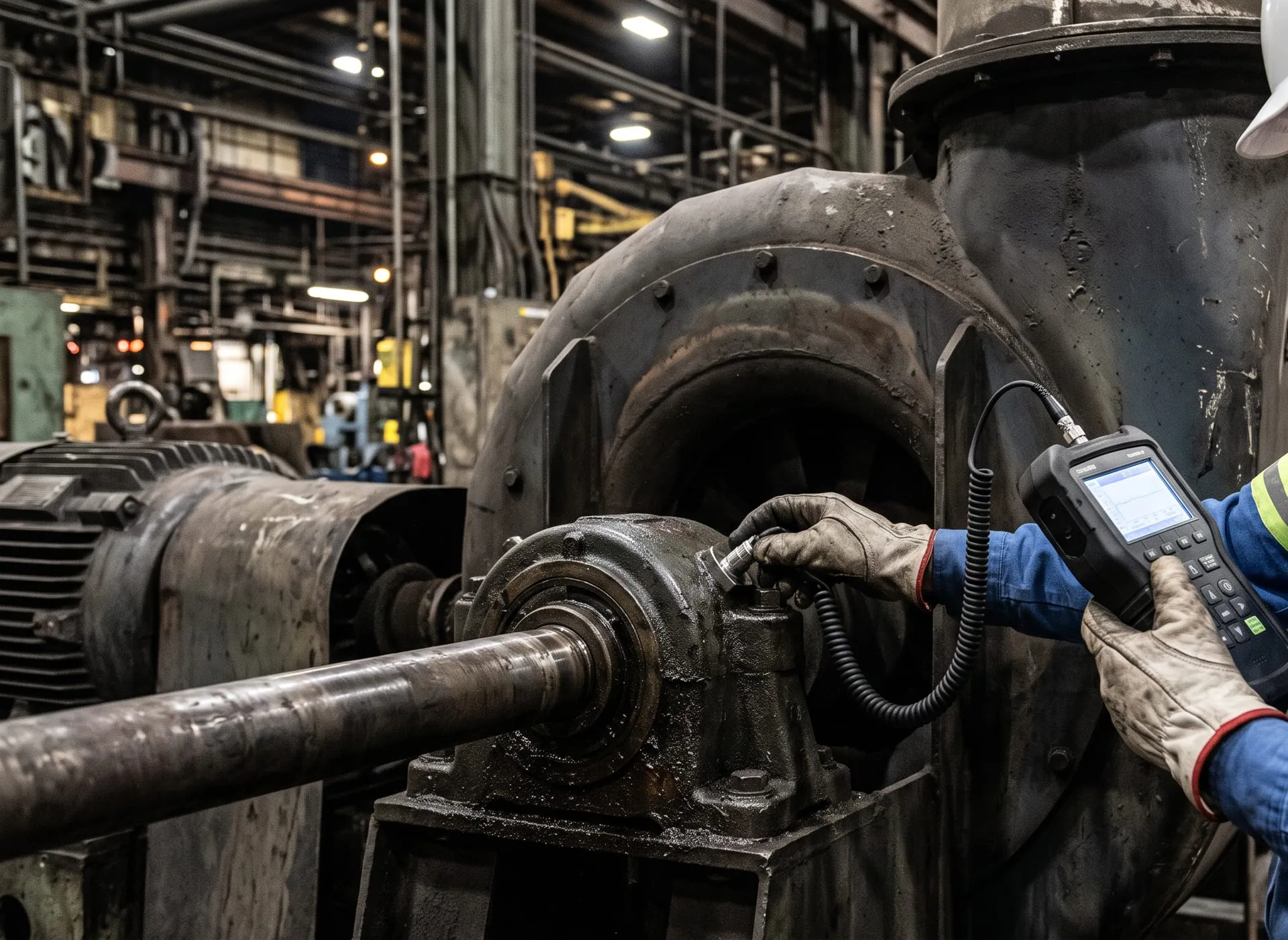
The fan moves the air that the whole system depends on. A worn or out-of-balance fan delivers less airflow, which reduces capture at the hoods even if the bags are fine. Vibration from imbalance also damages bearings and ductwork. Keep the fan on your inspection list and balance it when readings rise.
See signs your industrial fan needs balancing and our fan balancing service for more.
Keep your dust collector working as designed
Our crews maintain, repair and troubleshoot baghouses, dust collectors, airlocks, fans and ductwork across Northwest Indiana and Chicagoland. See our baghouse and dust collection and environmental systems services, or contact us to schedule an inspection.