In the first hour after a breakdown, make the equipment safe before anything else. Stop it, lock it out, release stored energy and secure the area. Then gather the facts: what failed, when, what the machine was doing, and the make and model. Take photos, keep the failed parts, and call a repair crew with that information ready.
The first hour
What should you do in the first 10 minutes?
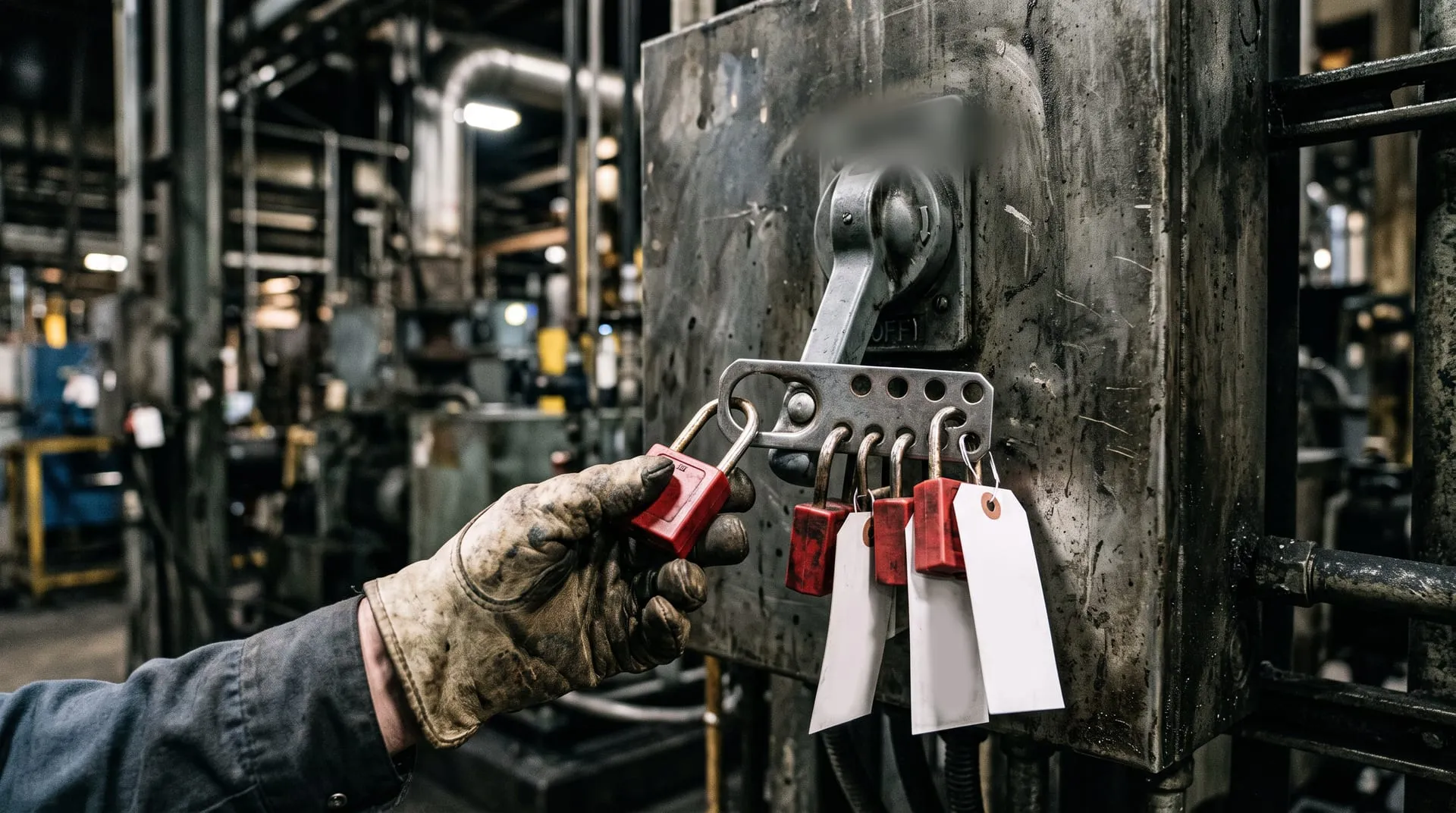
In the first 10 minutes, stop the equipment, keep people away and isolate energy. Follow your plant’s lockout/tagout (LOTO) procedure for every energy source, including electrical, hydraulic, pneumatic, steam, gravity and stored mechanical energy. Nobody should reach in, climb on or start troubleshooting until the machine is locked out and verified.
Stop the equipment
Use normal or emergency stops.
Account for people
Make sure everyone is clear and no one is hurt.
Isolate energy
Apply lockout/tagout per plant procedure.
Release stored energy
Bleed hydraulic and pneumatic pressure, block or lower suspended loads, and let rotating parts come to rest.
Verify zero energy
Try the start controls and check gauges before work begins.
Secure the area
Use barricades, tape or a spotter.
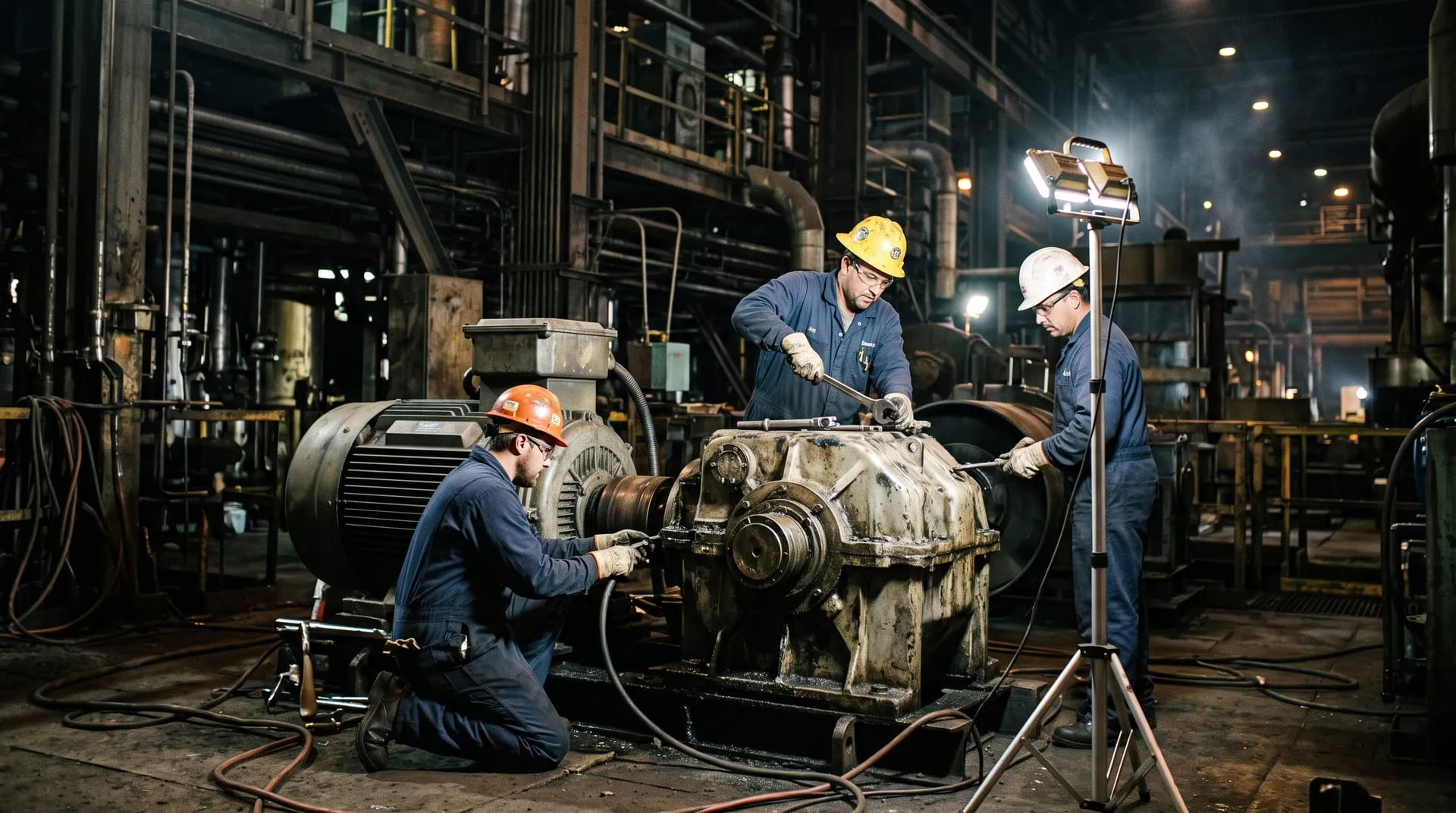
Fig. 1
How do you secure the area?
Secure the area by keeping everyone out who does not need to be there and controlling secondary hazards. Breakdowns often create spills, hot surfaces, fire risks, suspended loads and damaged structures. Barricade the area, post a person if needed, and deal with hazards before anyone starts work.
Check for secondary hazards
- Spills of oil, hydraulic fluid, chemicals or product, which cause slips and environmental issues
- Fire risk from hot surfaces, sparks, or leaking fuel or oil near heat
- Suspended or unstable loads, such as material on a stopped conveyor or a partly lifted part
- Structural damage to bases, supports, platforms or guards
- Confined spaces that may need a permit before entry
- Hot work, which needs a hot work permit before cutting or welding
What information should you gather?
Gather the facts while they are fresh. Write down what failed, when it happened, what the machine was doing, and what operators saw, heard or smelled. Record alarms and readings. Note the make, model and serial number, and take photos from a safe position. This information speeds up diagnosis.
| Information | Why it helps |
|---|---|
| Equipment type, make, model, serial number | Identifies parts, drawings and OEM data |
| Time of failure and what the machine was doing | Points to the failure mode |
| Alarms, fault codes and HMI readings | Narrows down controls and hydraulic issues |
| Noises, smells, smoke or vibration before failure | Separates bearing, gear, electrical and hydraulic causes |
| Photos and video from a safe position | Lets the crew plan before arriving |
| Recent maintenance or changes | Recent work is a common factor |
| Spare parts on hand | Determines whether parts must be machined or ordered |
| Drawings and manuals | Speeds up repair and fabrication |
Should you preserve the failed parts?
Yes. Keep broken parts, debris, oil samples and anything else related to the failure. Do not clean or throw them away. Failed parts tell the repair crew why the machine broke, and fixing the cause is how you avoid a repeat. If an incident investigation follows, your safety team will need them too.
Preserve the evidence
- Bag and tag broken parts, fragments and fasteners
- Take an oil sample from gearboxes and hydraulic systems if safe to do so
- Photograph wear patterns, cracks and debris before anything is moved
- Keep notes on settings, readings and operator observations
Who should you call, and when?
Call your supervisor and maintenance lead first, according to your plant’s procedure. If the job needs outside help, call your repair contractor as soon as the area is safe and you have the basic facts. You do not need every answer before calling. The sooner the crew knows what you are facing, the sooner it can plan.
For 24/7 emergency repair in Northwest Indiana and Chicagoland, call South Shore Industrial at (219) 386-1506. We dispatch a field crew with welding and rigging gear from our Portage shop, diagnose on site, and fabricate replacement parts in our machine shop when OEM parts are not available.
Have this ready when you call
- Your name, plant and callback number
- Site address, gate and access instructions
- Contractor safety requirements and site orientation needs
- The information from the table above
What should you avoid in the first hour?
Avoid restarting the machine, working on it before lockout, and removing parts without documenting them. Each of these can make the damage worse, destroy evidence or hurt someone. Avoid guessing at the cause under pressure. A short pause to make it safe and gather facts usually shortens the repair.
| Don’t | Why |
|---|---|
| Restart to “see what happens” | Can turn a repairable failure into a destroyed component |
| Work before lockout is verified | Stored energy causes serious injuries |
| Throw out broken parts | Loses the evidence of the root cause |
| Cut or weld without a hot work permit | Fire and explosion risk |
| Enter confined spaces without a permit | Atmospheric and engulfment hazards |
| Rush a temporary fix without review | Temporary fixes fail at the worst time |
How do you prepare before the next breakdown?
Prepare by having a written emergency plan, current equipment records, critical spares and a contractor already approved to work in your plant. Contractor prequalification takes time. Having it done ahead means a crew can start sooner. South Shore Industrial is an ISNetworld member contractor and is prequalified through Avetta.
Before the next one
- Keep a list of critical equipment with make, model, serial number and drawings.
- Stock spares for machines with long lead times.
- Post the emergency contractor number in the maintenance shop.
- Build preventive maintenance around your most critical machines, and review breakdowns to fix root causes.
Line down right now?
Call (219) 386-1506, day or night. Our emergency repair crews handle breakdowns across Northwest Indiana and Chicagoland. See our emergency page for what to expect, or contact us to set up an emergency plan before you need one.